

In electrical equipment manufacturing, the choice of conductor material directly affects the product’s safety, reliability, and cost. Paper covered wire and bare copper conductors are two distinct conductor products, each playing an irreplaceable role in specific application areas.
Many purchasing personnel and engineers easily confuse the applicable scenarios for these two types of products when making selections. This article systematically compares paper covered wire and bare copper conductors from six dimensions: product definition, insulation performance, application scenarios, manufacturing process, safety, and selection guidelines, to help readers make the right selection decisions.
I. Product Definition
1.1 Paper Covered Wire
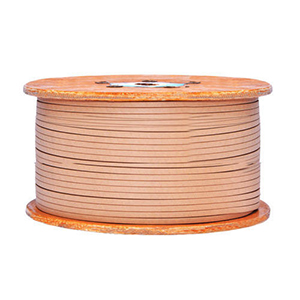
Paper covered wire is an insulated wire with copper or aluminum as the conductor, and one or more layers of insulating paper tightly wound around the conductor surface.
Insulation Paper Types:
- Kraft Paper: Class A (105°C)
- Manila Paper: Class A
- High-Density Kraft Paper: Class A
- Nomex Paper (Aramid Paper): Class C (220°C)
Typical Applications: Oil-immersed transformers, dry-type transformers, reactor windings
1.2 Bare Copper Conductors
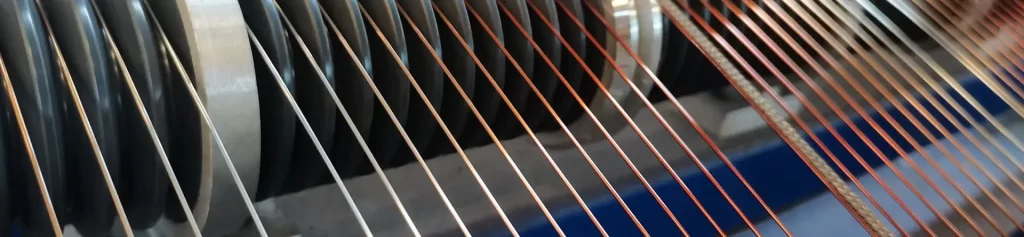
Bare copper conductors are copper conductors with no insulation layer on their surface.
Common Forms:
- Round copper wire: Diameter 0.5-12mm+
- Copper busbar: Rectangular cross-section
- Copper stranded wire: Multi-strand copper wire twisted together
- Copper foil: Thin sheet
Typical Applications: Grounding wire, busbar, brush wire
II. Comparison of Insulation Performance
2.1 Breakdown Voltage
| Performance Indicators | Paper Covered Wire | Bare Copper Conductor |
|---|---|---|
| Insulation Performance | Yes (depending on paper layers) | No |
| Breakdown Voltage | 1-10kV (depending on paper type and layers) | No insulation, cannot withstand voltage |
| Insulation Class | Class A (105°C) or Class C (220°C, Nomex) | No |
The insulation paper layers of paper covered wire provide basic inter-turn insulation and are commonly used in oil-immersed transformers, where the insulating oil and insulating paper together form a complete insulation system.
Bare copper conductors lack an insulation layer and cannot be directly used in winding applications requiring electrical insulation.
2.2 Dielectric Properties
Paper Covered Wire:
- The dielectric constant of the insulating paper is approximately 2.0-3.5
- It has good insulation performance in a dry state
- Insulation performance decreases after moisture absorption; therefore, insulating oil is required for protection in oil-immersed transformers
Bare Copper Conductor:
- No insulation layer, no dielectric properties
- The conductor surface is directly exposed to the environment
2.3 Thermal Properties
Paper Covered Wire:
- Standard cable paper: Maximum operating temperature 105°C (Class A)
- Nomex paper: Maximum operating temperature 220°C (Class C)
- Thermal aging: Insulation paper undergoes thermal degradation at high temperatures
Bare Copper Conductor:
- The copper conductor itself has no temperature limit (except for mechanical strength considerations)
- Actual operating temperature is limited by the surrounding insulation materials or environment
III. Application Scenarios Comparison
3.1 Main Applications of Paper Covered Wire
Oil-Immersed Transformers: Paper covered wire is the most commonly used insulated conductor in oil-immersed transformer windings. The insulating paper and insulating oil work together to provide a reliable insulation system.
Reactors: In high-power reactors, paper covered wire provides necessary inter-turn insulation.
Dry-Type Transformers: Class C (220°C) insulation can be achieved using Nomex paper covered wire.
Specialty Transformers: Electric furnace transformers, rectifier transformers, etc.
3.2 Main Applications of Bare Copper Conductors
Grounding Systems: Bare copper wire is the preferred material for grounding systems, possessing excellent conductivity and corrosion resistance.
Busbars: Copper busbars in distribution cabinets and switchgear, used for high current transmission.
Brush Wires: Brush connection wires in motors and generators.
Overhead Lines: Bare copper stranded wire is used in overhead transmission lines.
Connectors: Electrical connectors, terminals, etc.
3.3 Application Scenarios Differentiation
| Judgment Criteria | Select Paper Covered Wire | Select Bare Copper Conductor |
|---|---|---|
| Inter-turn insulation required? | Yes | No |
| Used for windings? | Yes | No |
| Used for grounding? | No | Yes |
| Used for busbars? | No | Yes |
| Working in insulating oil? | Yes | Depends |
IV. Manufacturing Process Comparison
4.1 Paper Covered Wire Manufacturing Process
Conductor Preparation: Copper or aluminum conductor, surface must be clean and free of oxidation.
Paper Wrapping:
- Single paper wrapping: One layer of insulating paper
- Double paper wrapping: Two layers of insulating paper, inner and outer paper seams staggered
- Multiple paper wrapping: Three or more layers, used in high-voltage applications
Tension Control: Appropriate tension is required during paper wrapping to ensure the paper layers are tightly attached to the conductor, but without excessive stretching that could cause paper damage.
Quality Inspection:
- Paper layer thickness
- Breakdown voltage
- Appearance (no damage, no warping)
4.2 Bare Copper Conductor Manufacturing Process
Drawing: The copper rod is drawn through multiple dies, gradually reducing its diameter to the target size.
Annealing: Eliminates cold working stress, restoring conductivity and flexibility.
Stranding (if required): Multiple strands of copper wire are stranded together to improve flexibility.
Shaping (if required): Rolled or extruded into a rectangular cross-section (copper busbar).
4.3 Process Complexity
The manufacturing process of paper covered wire is more complex than that of bare copper conductor, increasing the paper winding process and quality control requirements. This is also reflected in the cost difference between the two.
V. Safety Comparison
5.1 Electrical Safety
Paper Covered Wire:
- Insulating paper provides basic electrical isolation, preventing inter-turn short circuits
- In oil-immersed transformers, the insulating oil further enhances insulation performance
- Insulating paper absorbs moisture, reducing insulation performance; sealing or oil immersion is necessary
Bare Copper Conductor:
- No insulation protection; direct contact may lead to short circuits or electric shock
- Safety must be ensured through external insulation (such as insulating sleeves or insulating supports)
- In grounding applications, exposure is a design requirement to ensure reliable grounding
5.2 Thermal Safety
Paper Covered Wire:
- Insulating paper is flammable and may burn at high temperatures
- In oil-immersed transformers, the flame-retardant properties of the insulating oil provide additional protection
- Nomex paper is self-extinguishing and offers better fire resistance
Bare Copper Conductor:
- The copper conductor itself is non-flammable
- No insulation layer, eliminating the risk of insulation material combustion
- However, a high-temperature arc may occur during a short circuit
5.3 Mechanical Safety
Paper Covered Wire:
- The insulating paper is relatively fragile and easily damaged during transportation and winding
- Handle with care to avoid mechanical damage leading to insulation failure
Bare Copper Conductor:
- No insulation layer, no insulation damage issues
- The copper conductor itself has good mechanical strength
VI. Selection Guide
6.1 Scenarios for Selecting Paper Covered Wire
- Oil-immersed transformer windings
- Dry-type transformer windings (Nomex paper)
- Reactor windings
- Winding applications requiring insulation
- Operating temperature not exceeding the insulation paper grade limit
6.2 Scenarios for Selecting Bare Copper Conductors
- Grounding systems
- Busbars
- Electrical connection conductors
- Overhead transmission lines
- Brush connection wires
- Applications where insulation is not required
6.3 Specifications Confirmation
Paper Covered Wire:
- Conductor material (copper/aluminum)
- Conductor size
- Insulation paper type
- Number of paper layers
- Breakdown voltage requirements
- Insulation class
Bare Copper Conductor:
- Conductor material (pure copper/copper alloy)
- Conductor size
- Flexibility requirements
- Surface finish (if required)
Conclusion
Paper covered wire and bare copper conductor are two completely different conductor products and cannot be simply substituted for each other.
Paper covered wire provides electrical insulation through an insulating paper layer and is mainly used in the winding manufacturing of equipment such as transformers and reactors. Bare copper conductors do not have an insulation layer and are mainly used in grounding systems, busbars, and other applications where insulation is not required.
The key to correct selection is to clearly define the application requirements: if winding insulation is required, choose paper covered wire; if it is used for grounding, busbars, or connecting conductors, choose bare copper conductors. In transformer manufacturing, the two are often used together, each playing an irreplaceable role.
Collaborating with professional conductor material manufacturers to select appropriate product specifications and insulation configurations based on specific application requirements is an effective way to ensure product quality and safety.