

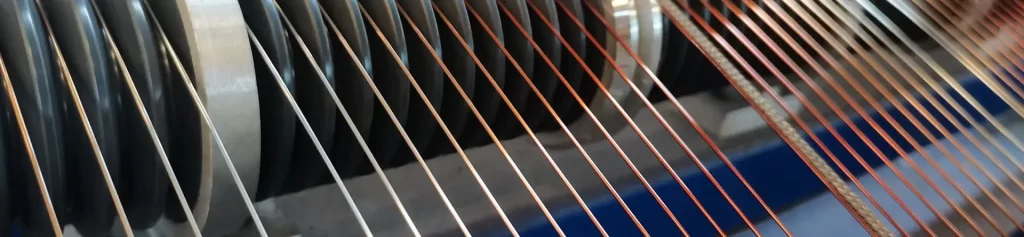
Fiberglass covered magnet wire is a key insulating material in electromagnetic equipment such as motors, transformers, and generators. Compared with traditional enameled wire, fiberglass covered magnet wire, with its superior high-temperature resistance, excellent electrical insulation strength, and reliability in extreme environments, is widely used in high-voltage motors, transformers, welding equipment, and precision instruments. With the continuous development of industrial technology, the performance requirements of electromagnetic equipment are increasing. As an important type of winding wire, a thorough understanding of the technical characteristics, classification system, selection points, and application fields of fiberglass covered magnet wire is of significant practical importance for electrical engineers and product developers.
This article will provide a comprehensive and systematic technical overview of fiberglass covered magnet wire, offering a reference for relevant engineering and technical personnel.
II. Basic Concepts of Fiberglass-Coated Magnet Wire
2.1 Definition and Structural Characteristics
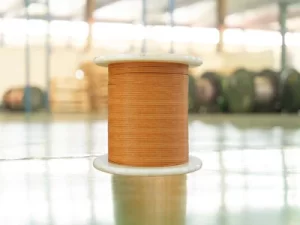
Fiberglass-coated magnet wire is an insulated winding wire with a conductor such as copper or aluminum, and an outer layer wrapped with fiberglass material. Fiberglass, as an inorganic non-metallic material, is renowned for its excellent heat resistance, insulation, and mechanical strength, and is a core component of high-performance insulation systems. Structurally, fiberglass-coated magnet wire typically consists of three layers: the first layer is a conductive metal conductor, usually electrolytic copper or oxygen-free copper, and the conductor shape can be round, flat, or rectangular; the second layer is the inner insulation layer, usually made of fiberglass filaments wrapped or impregnated with insulating varnish; the third layer is the outer protective layer, used to enhance mechanical protection and abrasion resistance. According to the NEMA MW 1000 standard and related industry specifications, the naming of fiberglass-coated magnet wire usually includes key parameters such as conductor size, insulation class, and fiberglass type.
For example, commonly used models include product series with different thermal classes such as GL power class insulation, F class insulation, and H class insulation.
2.2 The essential difference between enameled wire and magnetic wire
Enameled wire is an insulated conductor formed by coating organic resins (such as polyester imide, polyamide-imide, etc.), resulting in a continuous, uniform, and smooth insulation layer. Fiberglass-coated magnetic wire, on the other hand, uses a fiberglass filament wrapping process, resulting in an insulation layer with a distinct fibrous structure, a feature that gives it unique performance advantages. From a manufacturing process perspective, enameled wire forms a uniform insulation layer through multiple coating and baking processes, resulting in faster production lines and relatively lower costs. Fiberglass-coated magnetic wire, however, requires winding fiberglass filaments around the conductor, followed by impregnation and curing, a more complex process, but achieving higher insulation levels and better heat resistance.
From an application perspective, enameled wire is suitable for general motors, transformers, and general industrial applications, with operating temperatures typically between 130°C and 180°C. Glass fiber coated magnetic wire, on the other hand, is specifically designed for applications requiring high temperature, high pressure, and high reliability, with operating temperatures reaching 200°C to 240°C or even higher.
III. Technical Characteristics of Glass Fiber Coated Magnetic Wire
3.1 Heat Resistance
The most significant technical advantage of glass fiber coated magnetic wire lies in its excellent heat resistance. Glass fiber is an inorganic material with a melting point typically above 800°C to 1000°C, and it does not undergo thermal decomposition or performance degradation within its normal operating temperature range. According to IEC and NEMA standards, the thermal class of glass fiber coated magnetic wire is generally classified as follows: Class F insulation (155°C), Class H insulation (180°C), and Class C insulation (above 240°C). In practical applications, the continuous operating temperature of fiberglass-coated magnetic wire can reach 200°C to 250°C, and it can withstand high-temperature shocks exceeding 300°C for short periods.
This superior heat resistance makes fiberglass-coated magnetic wire particularly suitable for high-temperature working environments. In high-temperature industrial fields such as steel metallurgy, glass manufacturing, and cement production, motors and transformers need to operate continuously at temperatures far exceeding conventional environments, making fiberglass-coated magnetic wire the only reliable choice.
3.2 Electrical Insulation Performance
Fiberglass-coated magnetic wire exhibits excellent electrical insulation performance, primarily reflected in the following aspects: Regarding breakdown voltage, fiberglass materials possess very high dielectric strength, typically ranging from 20 kV/mm to 40 kV/mm. After impregnation treatment, the overall breakdown voltage of fiberglass-coated magnetic wire can be further improved, ensuring electrical safety in high-voltage applications. Regarding insulation resistance, glass fiber coated magnetic wire exhibits extremely high insulation resistance in a dry state, typically exceeding 10^12 Ω·cm. Even under high temperature and high humidity environments, the decrease in insulation resistance is relatively limited, ensuring the operational reliability of electrical equipment.
In terms of dielectric loss, glass fiber materials have a low dielectric loss tangent (tanδ), typically in the range of 0.001 to 0.01. This means that energy loss is lower in AC high-voltage applications, which is beneficial for improving the operating efficiency of electrical equipment.
3.3 Mechanical Properties
The mechanical properties of glass fiber coated magnetic wire are another important advantage: In terms of tensile strength, glass fiber filaments have very high tensile strength, typically in the range of 1000 MPa to 3000 MPa. This allows glass fiber coated magnetic wire to withstand greater mechanical stress and is less prone to breakage or damage during winding. Regarding wear resistance, the outer layer of glass fiber coated magnetic wire undergoes impregnation treatment, significantly improving surface hardness and exhibiting excellent wear resistance. During automated winding, it can withstand greater friction, reducing insulation failure caused by mechanical damage.
Regarding flexibility, although glass fiber coated magnetic wire is not as flexible as enameled wire, its flexibility can be improved to some extent through reasonable structural design (such as using multi-strand stranded conductors), meeting the process requirements of bending and winding.
3.4 Chemical Stability
Glass fiber coated magnetic wire exhibits good chemical stability, maintaining stable performance in various harsh chemical environments. In terms of oil resistance, specially impregnated glass fiber coated magnetic wire can withstand immersion in mineral oils such as transformer oil and lubricating oil, making it suitable for applications such as oil-immersed transformers. Regarding corrosion resistance, glass fiber materials have good resistance to most acids, alkalis, and salts, only corroding under extreme conditions such as hydrofluoric acid and high-temperature strong alkalis. This characteristic makes it suitable for corrosive environments such as chemical and marine environments.
In terms of weather resistance, fiberglass-coated magnetic wire exhibits excellent UV resistance and aging resistance, making it suitable for outdoor electrical equipment.
IV. Classification and Specifications System of Fiberglass-Coated Magnetic Wire
4.1 Classification by Thermal Class
According to standards such as IEC 60317 and NEMA MW 1000, fiberglass-coated magnetic wire can be classified into the following main categories by thermal class: Class 155 (F class) insulation is the lowest thermal class type of fiberglass-coated magnetic wire, typically using modified polyester or polyester-imide impregnation varnish, with a maximum continuous operating temperature of 155°C. This type of product is characterized by relatively low cost and is suitable for general-purpose motors and transformers with low heat resistance requirements. Class 180 (H class) insulation is the most widely used type of fiberglass-coated magnetic wire, using silicone or polyamide-imide impregnation varnish, with a maximum continuous operating temperature of 180°C. These products offer excellent overall performance and a high cost-performance ratio, and are widely used in high-voltage motors, transformers, and reactors.
Insulation of Class 200 and above is a special product for high-temperature resistance, using high-performance materials such as silicone resin, polytetrafluoroethylene, or polyimide, with a maximum continuous operating temperature of 200°C to 260°C. These products are more expensive and are mainly used in extreme high-temperature environments such as aerospace, deep well drilling, and steel metallurgy.
4.2 Classification by Conductor Material
Based on the different conductor materials, glass fiber coated magnetic wire can be divided into two main categories: copper conductor and aluminum conductor. Copper conductor: Glass fiber coated magnetic wire is the most common type. Copper has excellent conductivity and machinability, making it the preferred conductor material for high-reliability electrical equipment. The conductivity of copper conductor is approximately 1.64 times that of aluminum, allowing for a significant reduction in conductor cross-sectional area for the same current carrying capacity.
Aluminum conductor: Glass fiber coated magnetic wire is an economical choice. Aluminum has a density only about 30% that of copper, giving it a significant advantage in applications requiring weight reduction. In recent years, with improvements in aluminum conductor processing technology, the application range of glass fiber-coated magnetic wire has been continuously expanding.
4.3 Classification by Structural Form
Based on different structural forms, glass fiber-coated magnetic wire can be classified into the following types: Paper-coated wire is a type of wire where cable paper serves as the insulation layer, with glass fiber coating only acting as a mechanical protection layer. This structure has a lower cost and is suitable for traditional applications such as oil-immersed transformers. Glass fiber-coated wire uses glass fiber filaments as the main insulation layer and is the most typical type of glass fiber-coated magnetic wire. Depending on the number of insulation layers, it can be divided into single-layer glass fiber-coated wire and double-layer glass fiber-coated wire; the latter has higher insulation strength and better protective performance.
Enamelled glass fiber-coated wire adds a thin enamel coating to the inner layer of the glass fiber coating, further improving insulation performance and surface smoothness. This structure is particularly suitable for windings in high-voltage motors and precision instruments.
4.4 Parameter System
The parameter system for glass fiber-coated magnet wire is relatively complex, mainly including the following key indicators: Conductor size is the primary parameter. For round conductors, the conductor diameter is usually expressed in AWG (American wire gauge) or mm (metric); for flat conductors, the width, thickness, and corner radius need to be specified. For rectangular conductors (such as copper foil for transformers), the parameters are more complex, requiring the specification of geometric dimensions such as width, thickness, and chamfers. Insulation thickness is a key parameter affecting electrical performance.
The insulation thickness of glass fiber-coated magnet wire is typically between 0.2 mm and 2.0 mm, depending on the voltage level and heat resistance requirements. Insulation thickness directly affects the winding size, breakdown voltage, and heat dissipation performance. Electrical performance parameters include breakdown voltage, insulation resistance, and dielectric loss. Breakdown voltage is typically required to be in the range of several kV to tens of kV, depending on the application voltage level.
V. Manufacturing Process of Glass Fiber Coated Wire
5.1 Conductor Manufacturing
Conductor manufacturing is the first step in the production of glass fiber coated wire. Copper conductors are typically made from electrolytic copper rods through multiple drawing processes to achieve the required dimensions. Intermediate annealing is required during drawing to eliminate work hardening and restore the conductor’s flexibility. After drawing, the conductor needs to be cleaned to remove surface oil, oxide scale, and other impurities.
The quality of cleaning directly affects the effectiveness of subsequent insulation processes and the electrical performance of the final product. For flat or rectangular conductors (such as copper foil used in transformers), rolling is typically used. Rolling provides precise dimensional tolerances and good surface quality.
5.2 Glass Fiber Wrapping
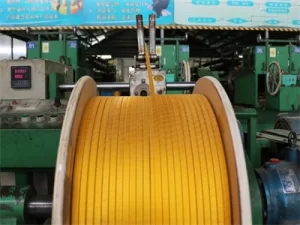
Glass fiber wrapping is the core process for forming the insulation layer. Glass fiber filaments are usually supplied in the form of glass fiber yarn, with yarn counts ranging from several hundred to several thousand tex. The appropriate yarn count is selected based on the required insulation thickness. The wrapping process is typically carried out using a dedicated wrapping machine.
The conductor enters the wrapping head through the pay-off device. After passing through a tension control device, the fiberglass yarn is wound around the conductor surface at a specific angle and pitch. The wrapping angle is typically between 10° and 30°, and the wrapping density is determined according to the insulation class requirements. To ensure the uniformity and integrity of the insulation layer, double wrapping is usually required.
The first and second layers are wrapped in opposite directions (forward and reverse) to eliminate overlap gaps and improve overall insulation performance.
5.3 Impregnation and Curing
The semi-finished product after wrapping needs to undergo impregnation. The choice of impregnating varnish depends on the thermal class requirements: Class F insulation typically uses modified polyester impregnating varnish, Class H insulation uses silicone impregnating varnish or polyamide-imide impregnating varnish, and Class C insulation requires a special resin resistant to higher temperatures. The impregnation process typically employs vacuum impregnation or pressure impregnation. Vacuum impregnation effectively eliminates air bubbles inside the insulation layer, increasing impregnation density and electrical strength.
Pressure impregnation accelerates varnish penetration and improves production efficiency. After impregnation, curing is required. Curing takes place in an oven, with the temperature increased according to a specific curve to allow the impregnating varnish to cross-link and solidify, forming a tough insulation layer. The curing temperature and time depend on the type of impregnating varnish, generally ranging from 150°C to 250°C.
VI. Testing and Quality Control of Fiberglass-Coated Magnetic Wire
6.1 Routine Test Items
Routine tests for fiberglass-coated magnetic wire mainly include three categories: visual inspection, dimensional measurement, and electrical performance testing. Visual inspection mainly observes whether the insulation layer surface is smooth, continuous, free of bubbles, peeling, impurities, and other defects. For fiberglass-coated magnetic wire, it is also necessary to check whether the fiberglass wrapping is uniform, tight, and free of looseness. Dimensional measurement includes the detection of conductor dimensions (diameter or width and thickness), insulation layer thickness, outer diameter, and other parameters.
Dimensional tolerances directly affect the winding fill factor and electrical performance. Electrical performance testing is a crucial aspect of quality control, primarily including the following test items: Withstand voltage test (breakdown voltage test) is the core item for verifying insulation strength. During the test, a gradually increasing AC voltage is applied between the conductor and the insulation surface until breakdown occurs, and the breakdown voltage value is recorded. The breakdown voltage of fiberglass-coated magnetic wire for high-voltage motors is typically required to be above 10 kV.
Insulation resistance test measures the volume resistivity or surface resistivity of the insulation layer and is a fundamental indicator for evaluating insulation performance. Dielectric loss test (tanδ test) measures the energy loss of the insulation material in an AC electric field. High-frequency dielectric loss may indicate insulation aging or moisture absorption.
6.2 Type Test Items
Type testing is a comprehensive test to verify the product design and process stability, usually conducted during new product development, process changes, or periodic quality assessments. Thermal shock test rapidly cycles the sample between high and low temperatures to verify the reliability of the insulation layer under drastic temperature changes. The thermal shock test temperature range for fiberglass-coated magnetic wire is typically -40°C to +200°C or higher. Life testing involves aging samples at rated operating temperature or higher for extended periods to evaluate the long-term performance stability of insulating materials.
Accelerated aging tests can simulate years or even decades of use within weeks. Transformer oil resistance testing is conducted on glass fiber-coated magnetic wires with oil-immersed transformers. The sample is immersed in transformer oil and held at high temperatures for a certain period before changes in electrical and mechanical properties are detected.
6.3 Quality Control Key Points
Quality control of fiberglass-coated magnetic wire is integrated throughout the entire process, from raw materials and production to finished product inspection. Regarding raw material control, conductor materials (copper or aluminum rods) must meet the corresponding conductivity and purity requirements; the specifications and quality of fiberglass yarn require strict inspection; and the viscosity, solids content, and curing characteristics of the impregnating varnish need to be tested regularly. In terms of process control, the wrapping process requires careful control of parameters such as tension, pitch, and coating density; the impregnation process requires ensuring vacuum level and impregnation time; and the curing process must be strictly performed according to the temperature profile. For finished product inspection, each batch of products requires sampling inspection, including full or partial inspection of appearance, dimensions, and electrical performance.
VII. Application Areas of Fiberglass-Coated Magnetic Wire
7.1 High-Voltage Motors
High-voltage motors are one of the most important application areas for fiberglass-coated magnetic wire. High-voltage motors with rated voltages from 3kV to 10kV or even higher must withstand high electrical stresses in their windings. Fiberglass-coated magnetic wire, with its excellent insulation performance and heat resistance, has become the standard choice for high-voltage motor windings. In high-voltage motors, fiberglass-coated magnetic wire typically uses F-class or H-class insulation products.
The winding structure can be shaped windings (coil type) or loose windings (insertion type), depending on the motor design and power rating. The selection of fiberglass-coated magnetic wire for high-voltage motors requires comprehensive consideration of factors such as voltage rating, insulation thickness, conductor cross-section, and heat resistance requirements. Generally, the higher the voltage rating, the higher the insulation thickness requirement.
7.2 Transformer
Transformers are another important application area for fiberglass-coated magnetic wire. In power transformers, distribution transformers, and special transformers, fiberglass-coated magnetic wire (commonly known as paper-insulated wire or glass fiber-insulated wire) is used to wind the primary and secondary windings. In oil-immersed transformers, fiberglass-coated magnetic wire (or paper-insulated wire) and transformer oil together form the insulation system. The heat resistance and insulation strength of the fiberglass-coated magnetic wire, combined with the transformer oil, ensure the reliability of the transformer during long-term operation.
In dry-type transformers, fiberglass-coated magnetic wire is treated with a vacuum impregnation process, and the winding is cured as a whole, resulting in good moisture resistance and mechanical strength. H-class insulated dry-type transformers are widely used in high-rise buildings, hospitals, data centers, and other places with high fire safety requirements.
7.3 Welding Equipment
Welding machines are one of the traditional application areas of fiberglass-coated magnetic wire. Welding machines generate a large amount of heat during operation, requiring the windings to withstand high temperature rises. The heat resistance advantage of fiberglass-coated magnetic wire is fully utilized in this process. Transformers and reactors in resistance welding machines, arc welding machines, and special welding equipment typically use fiberglass-coated magnetic wire with insulation class H or higher.
Under continuous high-load operation, the reliability and service life of fiberglass-coated magnetic wire are significantly superior to ordinary wire.
7.4 Other Application Areas
In addition to the main application areas mentioned above, fiberglass-coated magnetic wire is also widely used in the following fields: In the rail transit sector, equipment such as subways, light rail, and railway traction motors have extremely high reliability requirements, making fiberglass-coated magnetic wire an ideal choice for these applications. In the mining machinery sector, mining motors and transformers need to operate continuously under harsh conditions, and the heat resistance and reliability of fiberglass-coated magnetic wire meet these requirements. In the aerospace field, special applications such as aircraft generators and satellite power systems have stringent requirements for weight and reliability, and fiberglass-coated magnetic wire is used due to its high strength and lightweight characteristics. In the field of scientific instruments, high-precision measuring equipment and medical equipment have strict requirements for electromagnetic interference, and the excellent insulation performance of fiberglass-coated magnetic wire helps improve the accuracy and stability of the equipment.
VIII. Selection Recommendations and Development Trends
8.1 Selection Points
The rational selection of fiberglass-coated magnetic wire requires comprehensive consideration of multiple factors: Select the thermal class based on operating temperature requirements. If the equipment needs to operate continuously in a high-temperature environment, a product of the appropriate thermal class should be selected. For example, steel metallurgical equipment usually requires H-class or C-class insulation products, while ordinary industrial motors usually choose F-class or H-class products. Determine the insulation thickness based on the voltage level.
High-voltage motors and transformers require thicker insulation layers to withstand electrical stress, and future voltage fluctuations and overvoltage situations need to be considered. Select conductor specifications and structural form based on mechanical requirements. Compact designs requiring high fill factor necessitate precisely sized flat or rectangular conductors, while high flexibility requirements may necessitate multi-strand stranded structures. Protective measures should be selected based on environmental conditions.
In humid, corrosive, or outdoor environments, products with appropriate protective coatings or sheaths are required.
8.2 Development Trends
The glass fiber coated magnetic wire industry exhibits the following development trends: In terms of material innovation, research and development of new high-performance glass fibers and impregnating resins are continuously advancing. Thinner insulation layers and higher thermal classes are the main research directions. Simultaneously, the development of environmentally friendly materials is receiving increasing attention. In terms of process improvement, the application of automated production lines and online testing technologies has improved product quality consistency and production efficiency.
The application of advanced processes such as vacuum impregnation and pressure curing further enhances product performance. In terms of application expansion, with the rapid development of the new energy industry, emerging application areas such as electric vehicle drive motors and wind power generation equipment have placed new technical requirements on glass fiber coated magnetic wires. High power density, high efficiency, and high reliability have become the main goals of product development. In terms of standardization, international standards such as IEC and NEMA are constantly being revised and improved, promoting product quality improvement and the development of international trade.
Simultaneously, localized standards based on the characteristics of each country’s industry are also developing in parallel.