

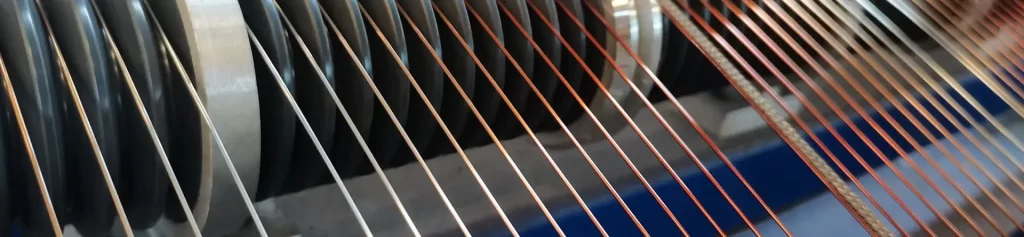
Application of Fine Enameled Copper Wire in Precision Instruments:
Technical Characteristics and Classification. These devices place extremely stringent requirements on the precision, reliability, and performance stability of their internal electronic components. Winding coils, as the core component for electromagnetic conversion in precision instruments, directly affect the measurement accuracy, response speed, and operational stability of the instrument due to the quality and performance of the conductors used. Fine enameled copper wire, typically referring to enameled copper wire with a diameter of less than
mm, is the preferred material for key components in precision instruments such as miniature coils, sensor windings, and electromagnetic actuators. Compared to thick conductors, fine enameled copper wires face unique technical challenges in precision instrument applications: how to maintain excellent conductivity, mechanical strength, and insulation reliability under extremely fine wire diameter conditions; how to meet the requirements of tensile strength and flexibility in high-density winding; and how to achieve higher slot fill factor and smaller volume under the trend of miniaturization. This article will systematically analyze the technical characteristics of fine enameled copper wires, their application scenarios in precision instruments, key selection points, and industry development trends, providing professional reference for precision instrument design engineers and purchasing decision-makers.
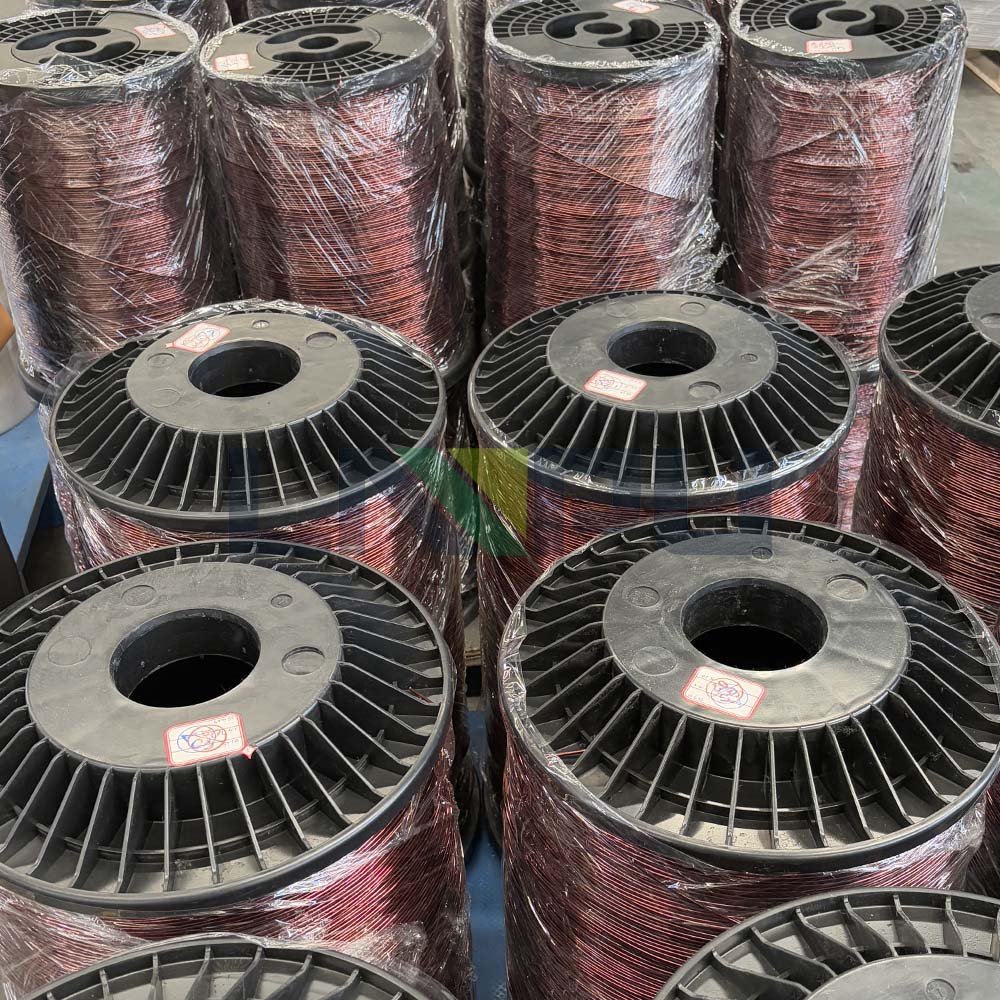
Technical Characteristics and Classification. Based on wire diameter, wires can be broadly categorized into the following ranges: Ultra-fine wire (0.5mm to 0.1mm): This is the most common fine wire range in precision instrument applications, meeting the winding requirements of most micro-motors, sensors, and inductors. Ultra-fine wire (0.1mm to 0.03mm): Suitable for applications with stricter wire diameter requirements, such as micro-sensors, high-frequency transformers, and medical device coils. Very fine wire (below 0.03mm): Primarily used in specialized fields such as micro-electronic components, medical implantable devices, and high-precision measuring instruments, requiring extremely high manufacturing standards. The manufacturing of fine enameled copper wire involves advanced wire drawing and precise enameling processes. Conductor drawing requires gradually drawing a thick copper rod to the desired fine wire diameter, a process that demands extremely high precision in equipment, tension control, and raw material quality. The enameling process requires uniformly coating the surface of the extremely fine conductor with an insulating coating and curing it at high temperatures, requiring extremely strict control of process parameters.
Physical and Electrical Properties of Copper Conductor Copper, as a metallic material with excellent electrical conductivity, plays an irreplaceable role in precision instrument applications. Copper&39;s conductivity can reach 100% IACS (International Standard for Annealed Copper), making it the second best conductive material after silver. Compared to other conductive metals such as aluminum, copper maintains stable electrical properties even under fine wire diameter conditions, which is a key reason for its widespread use in precision instruments. Key physical parameters of copper conductor include: density
g/cm³, melting point 1085°C, tensile strength 220-250 MPa, resistivity
× 10⁻⁸ Ω·m (20°C), temperature coefficient of resistance 0.0039/°C, and coefficient of thermal expansion 17 × 10⁻⁶/°C. These parameters determine the performance of copper conductor under different working environments and are important bases for precision instrument design. Under fine wire diameter conditions, the mechanical properties of copper conductor are particularly critical. Due to the significant reduction in cross-sectional area, the tensile strength and flexibility of the conductor become core factors affecting the winding process and the reliability of the finished product. High-quality fine enameled copper wire must ensure sufficient conductivity while possessing excellent tensile strength, good flexibility, and mechanical durability that allows for repeated bending without breakage.
Insulation System and Thermal Class The insulation system of fine enameled copper wire needs to provide reliable electrical isolation under extremely thin enameling thickness, which places higher demands on the selection of insulation materials and the control of the enameling process. According to the type of insulation material, fine enameled copper wire can be divided into the following categories: Polyester enameled copper wire (QZ/PEW): Thermal class B (130°C), with excellent mechanical and electrical performance balance, is the most widely used general-purpose fine enameled copper wire. It is suitable for components such as micro motors, relays, and inductors in general precision instruments. Polyimide enameled copper wire (QZY): Thermal class H (180°C), introducing an imide structure into the polyester base significantly improves heat resistance, thermal shock resistance, and chemical resistance. Suitable for precision instrument applications with high operating temperatures or stringent reliability requirements. Polyimide enameled copper wire (QZY): Thermal class C (above 220°C), currently the commercially available enameled wire with the best heat resistance. Polyimide enameled coating has excellent high temperature resistance, radiation resistance, and solvent resistance, but its price is relatively high, typically used in special precision instruments with extremely demanding heat resistance requirements. Polyurethane enameled copper wire (QA/UEW): Thermal class BE (130-155°C), its outstanding feature is excellent direct soldering performance; it can be soldered directly without scraping off the enameled coating. Furthermore, polyurethane enameled copper wire possesses excellent dielectric loss performance and high-frequency resistance, making it suitable for high-frequency precision instruments and electronic countermeasures equipment. For precision instrument applications, the uniformity and integrity of the insulation layer are particularly important. Any insulation defects can lead to decreased instrument performance or even functional failure. Therefore, insulation quality control of fine enameled copper wire is a core aspect of product quality.
Selection of Oxygen-Free Copper Rod and High-Quality Copper Conductor Precision instruments have extremely high requirements for the purity and performance consistency of winding materials. In the field of fine enameled copper wire, the selection of raw materials for the copper conductor has a decisive impact on the performance of the final product. Oxygen-free copper rod is the preferred raw material for fine enameled copper wire used in precision instruments. Oxygen-free copper rod has an oxygen content controlled below 20 ppm and a copper purity exceeding 99.95%, exhibiting superior conductivity and ductility. In the production of ultra-fine wire diameters (below 0.1mm), oxygen-free copper rods offer significant advantages: their single-crystal copper structure and excellent ductility allow for continuous drawing to diameters of 0.02mm and even finer without breakage or performance instability. Ordinary copper rods have a relatively high oxygen content, which, while meeting most conventional performance requirements, results in noticeable disadvantages in processing performance and yield in ultra-fine wire diameter applications. For precision instrument manufacturers, selecting fine enameled copper wire made from oxygen-free copper rods is crucial for ensuring product performance and reliability. Although the raw material cost of oxygen-free copper rods is higher, their performance advantages and improved reliability in precision instrument applications far outweigh the increased cost. —
Technical Requirements for Fine Enameled Copper Wire in Precision Instruments
High Precision and Low Resistance Precision instruments have extremely high requirements for measurement accuracy and signal transmission quality. In applications such as sensors and measuring instruments, the resistance value of the winding coil directly affects measurement accuracy and signal attenuation. Fine enameled copper wire, with its excellent conductivity, provides stable and reliable conductivity even with extremely fine wire diameters, meeting the stringent requirements of precision instruments for high precision and low resistance. The temperature coefficient of resistance of copper is approximately
°C, meaning that the resistance change of the copper conductor is relatively predictable and controllable within the operating temperature range. This is a significant technical advantage for precision instrument designs requiring temperature compensation or precise resistance matching.
Excellent Insulation Reliability The operating environment of precision instruments may involve sensitive applications such as weak signal detection, high-frequency signal transmission, and precision measurement. Any defects in the insulation layer can lead to leakage, signal interference, or measurement errors. Fine enameled copper wire must provide reliable electrical isolation under extremely thin insulation layer conditions to ensure accurate transmission of weak signals and reliable precision measurements. High-quality fine enameled copper wire must possess the following characteristics in its insulation layer: uniform coating thickness distribution to eliminate weak points in the insulation; excellent adhesion to ensure no cracking under winding and tension; good voltage resistance to withstand potential overvoltage surges; and stable insulation resistance to maintain performance across the entire operating temperature and humidity range.
Adapting to the Development Trend of Miniaturized High-Density Winding of Precision Instruments The development trend of miniaturization and high density requires fine enameled copper wire to adapt to the winding requirements of smaller volume and more turns. Factors such as wire diameter consistency, surface finish, flexibility, and resilience directly determine the feasibility and yield of high-density winding. In automated winding equipment, fine enameled copper wire must possess stable tension characteristics and consistent unwinding performance to support continuous high-speed precision winding operations. In manual winding or semi-automated scenarios, operators need good feel and controllability of the wire.
Excellent Environmental Resistance Precision instruments may operate under various environmental conditions, including alternating high and low temperatures, humidity changes, vibration and shock, and chemical corrosion. Fine enameled copper wire must possess excellent environmental resistance to ensure stable performance under various operating conditions. For precision instruments operating in humid environments or under temperature cycling conditions, the resistance to damp heat and thermal shock is particularly important. High-quality fine enameled copper wire, through optimized insulation formulation and process control, can achieve excellent resistance to damp heat cycling and thermal shock. —
Analysis of Application Areas of Precision Instruments
Medical Equipment Field Medical equipment is an important application area for fine enameled copper wire. Medical imaging equipment (such as CT, MRI, and ultrasound diagnostic instruments), vital sign monitoring instruments, minimally invasive surgical instruments, implantable medical devices, etc., have extremely stringent requirements for the precision, reliability, and biocompatibility of components. In high-frequency transformers and power inductors of medical imaging equipment, fine enameled copper wire is used to achieve efficient power conversion and precise signal transmission. In high-sensitivity sensors of vital sign monitoring instruments, miniature coils wound with fine enameled copper wire are used to detect weak bioelectrical signals or changes in magnetic fields. For implantable medical devices (such as pacemakers, cochlear implants, and neurostimulators), the selection of fine enameled copper wire must consider biocompatibility, long-term reliability, and miniaturization requirements. These specialized applications demand the highest standards of quality and consistency from enameled wire.
Aerospace Field Aerospace systems have extremely stringent requirements for the reliability and environmental adaptability of components. Applications such as aviation instruments, inertial navigation systems, flight control sensors, and satellite communication equipment require fine enameled copper wire to maintain stable performance under harsh environments such as extreme temperatures, vibration, shock, and radiation. Precision instruments used in aerospace typically require strict military or aviation standard certifications. Suppliers of fine enameled copper wire must possess a comprehensive quality assurance system and traceable test data to meet the high reliability standards required by the aerospace industry.
Metrology and Testing Instruments Metrology and testing instruments have extremely high requirements for measurement accuracy and stability. The performance of the internal winding coils in metrology equipment such as precision voltmeters, ammeters, impedance analyzers, and frequency meters directly affects measurement accuracy. In metrology and testing instruments, fine enameled copper wire is used to manufacture key components such as high-precision voltage transformers, current transformers, and standard resistors. These applications require extremely low temperature coefficients of resistance, precise and consistent resistance values, and excellent long-term stability. The metrology industry&39;s requirements for measurement traceability and repeatability have driven the development of fine enameled copper wire towards higher precision and greater consistency.
Communication Electronic Equipment Modern communication equipment is developing towards higher frequencies, wider bandwidth, and smaller sizes. Applications such as 5G communication base stations, satellite communication equipment, and fiber optic transmission systems place higher demands on the performance of components such as high-frequency transformers, filters, and oscillators. Fine enameled copper wire is mainly used for winding high-frequency transformers in high-frequency communication equipment. High-frequency applications must consider the skin effect—under high-frequency conditions, current tends to distribute on the conductor surface, reducing the effective conductive cross-sectional area. With fine wire diameters, the skin depth of the conductor is relatively large, which is beneficial for high-frequency signal transmission. In addition, the miniature inductors, ferrite beads, chokes, and other passive components widely used in communication equipment are also important application areas for fine enameled copper wire.
Industrial Automation and Precision Control Industrial applications such as industrial robots, servo control systems, precision machine tools, and automated testing equipment require high-precision position sensors, speed sensors, torque sensors, and other key components. Fine enameled copper wire plays a crucial role in the high-precision windings of these sensors. High-precision encoders are core components in the field of industrial automation, and their high precision and high resolution are inseparable from miniature coils wound with fine enameled copper wire. In encoders for servo motors and torque motors, the magnetoresistive or inductive element wound with enameled wire determines the encoder&39;s measurement accuracy and response speed. —
Technical Guide for Selecting Fine Enameled Copper Wire
Wire Diameter Selection The selection of the wire diameter for fine enameled copper wire requires comprehensive consideration of the following factors: Current Load: The current-carrying capacity of fine-diameter conductors is limited, and an appropriate wire diameter needs to be selected based on the actual current magnitude. Generally, the allowable current density of fine enameled copper wire is in the range of 3-10A/mm², with the specific value depending on the operating mode and heat dissipation conditions. Winding Process: Automated winding and manual winding may have different preferences for wire diameter selection. Automated equipment can usually handle finer wire diameters, while manual winding may require the selection of relatively thicker wires to ensure operational feasibility. Space Constraints: The miniaturization trend of precision instruments is driving the development of finer wire diameters, but selection must be made under the premise of meeting electrical performance requirements. Mechanical Strength: Extremely fine wire diameters are more susceptible to damage during winding and use, requiring better process control and protective measures. Based on industry experience, commonly used fine enameled copper wires for precision instruments include: 0.5mm, 0.4mm, 0.3mm, 0.25mm, 0.2mm, 0.15mm, 0.1mm, 0.08mm, 0.05mm, and 0.03mm.
Insulation Type Matching Based on the working requirements and application scenarios of precision instruments, the following insulation type selection recommendations are made: For precision sensors, measuring instruments, and micro motors used in general industrial applications, polyester enameled copper wire (QZ) is an economical and reliable choice, meeting the performance requirements of most applications. For applications with higher operating temperatures (above 130°C) or higher reliability requirements, such as critical components in medical equipment, aerospace sensors, and industrial servo systems, it is recommended to use polyester imide enameled copper wire (QZY) to obtain better heat resistance and long-term reliability.
For specialized applications, such as high-temperature environments, radiation environments, and chemically corrosive environments, polyimide enameled copper wire (QZY-X) or specially insulated enameled copper wire should be selected. For high-frequency applications, such as communication equipment, RF instruments, and precision impedance measurement equipment, it is recommended to use polyurethane enameled copper wire (QA/UEW), as its excellent direct soldering performance and low dielectric loss characteristics are beneficial for high-fidelity transmission of high-frequency signals.
Thermal Class Selection The following factors should be considered when selecting the thermal class for precision instruments: Operating ambient temperature: The actual operating temperature of the winding should be at least 20°C lower than the selected thermal class for a safety margin. For example, if the operating temperature is 100°C, a 180°C thermal class should be selected. Heat dissipation conditions: Natural heat dissipation and forced cooling have a significant impact on the actual temperature rise of the winding. Applications with poor heat dissipation conditions require a higher thermal class. Lifespan Requirements: If the precision instrument is designed for a long service life, the margin for the insulation class should be appropriately increased to delay insulation aging. Reliability Class: For precision instruments that are not repairable or have extremely high repair costs, it is recommended to select a higher thermal class and higher quality insulation materials.
Copper Conductor Raw Material Selection For fine enameled copper wires used in precision instruments, it is recommended to prioritize products made from oxygen-free copper rods, especially in the following applications: Ultra-fine wire diameter applications (below 0.1mm): The excellent ductility and processing performance of oxygen-free copper rods ensure stable production of ultra-fine wire diameters. Applications with high reliability requirements: Such as medical equipment, aerospace, and military equipment, oxygen-free copper rod products can provide more stable and reliable performance. High-frequency applications: The low oxygen content and excellent surface quality of oxygen-free copper rods are beneficial for the transmission of high-frequency signals.
Standards and Certification Requirements Fine enameled copper wire for precision instruments should meet the following standards and certifications: International Standards: IEC 60317 winding wire series standards, NEMA MW 1000 magnet wire standard, GB/T 7673 Chinese national standard for winding wire. Safety and Environmental Certifications: UL certification, RoHS compliance, REACH compliance. Industry-Specific Certifications (depending on the application field): For example, medical equipment needs to comply with ISO 13485 quality management system requirements, and aerospace needs to comply with relevant military or aviation standards. —
Key Considerations for Fine Enameled Copper Wire in Precision Instrument Design
Skin Effect and High-Frequency Design When alternating current passes through a conductor, the phenomenon that the current tends to distribute on the conductor surface is called the skin effect. The skin depth decreases as the signal frequency increases. In the design of high-frequency precision instruments, the influence of the skin effect cannot be ignored. The formula for calculating skin depth is: δ = √(2ρ/ωμ), where ρ is the conductor resistivity, ω is the angular frequency, and μ is the permeability. At a frequency of 20kHz, the skin depth of copper is approximately 0.47mm; at a frequency of 100kHz, the skin depth is approximately 0.21mm. For precision instruments operating at high frequencies, selecting an appropriate diameter of enameled copper wire to ensure that the skin depth is greater than the conductor radius is crucial for guaranteeing the effective conductive cross-sectional area. When the operating frequency is extremely high, it may be necessary to use Litz wire (woven from multiple strands of insulated fine wire) to reduce the impact of the skin effect.
Temperature Rise and Heat Dissipation Design The high precision requirements of precision instruments often impose strict limitations on temperature rise. The temperature rise of the windings not only affects the insulation life but may also cause component parameter drift, affecting measurement accuracy. Temperature rise control of fine enameled copper wire needs to comprehensively consider the following factors: copper loss caused by operating current, core loss (if any), heat dissipation conditions (natural cooling or forced air cooling), and ambient temperature. In precision instrument design, it is typically necessary to control the winding temperature rise to a low level (usually no more than 40-60°C) through reasonable winding design, effective heat dissipation measures, and appropriate thermal class selection to ensure the long-term measurement stability and accuracy retention of the instrument.
Mechanical Stress and Reliability Precision instruments may operate under mechanical stress conditions such as vibration, impact, and bending. The mechanical reliability of fine enameled copper wire is crucial for the long-term stable operation of the instrument. Winding design needs to consider: the mechanical strength of the conductor under bending and tension; the integrity of the insulation layer under mechanical stress; and the fatigue resistance of the coil structure under vibration. For precision instruments with vibration or motion requirements, the winding may need to be reinforced, such as impregnation treatment, adhesive fixing, and elastic support design, to improve mechanical reliability.
Electromagnetic Compatibility and Interference Immunity The operation of precision instruments often involves the processing of weak signals and precision measurement. The impact of electromagnetic interference (EMI) on instrument performance needs to be fully considered from the design and component selection stages. At the component level, selecting winding materials and structural designs with low leakage flux and low electromagnetic radiation helps reduce the impact of electromagnetic interference. At the system level, shielding and grounding designs of winding coils, and anti-interference treatment of signal lines are all important measures to ensure the electromagnetic compatibility of precision instruments. — Chapter Six Industry Development Trends and Outlook
Breakthrough in Ultra-fine Wire Diameter Technology As precision instruments develop towards higher precision and smaller size, the demand for ultra-fine enameled copper wire continues to grow. Currently, ultra-fine wire diameter products of 0.02mm and even finer have been applied in some high-end fields, and are expected to be promoted in more precision instrument fields in the future. The development direction of ultra-fine wire diameter technology includes: further improving the smelting and drawing process of oxygen-free copper rods; developing new insulation materials to meet the performance requirements of extremely thin insulation layers; and improving the yield and batch consistency of ultra-fine wire diameter products.
High Frequency and Application of New Materials The high-frequency development of precision instruments has put forward new technical requirements for enameled copper wire. The application of wide-bandgap semiconductors (SiC, GaN) has driven the development of power electronic devices towards higher switching frequencies, which places higher demands on the performance of enameled copper wires used in high-frequency transformers and inductors. Research and development of new insulating materials continues, including: low-dielectric-loss insulating varnishes to reduce dielectric loss in high-frequency applications; high-thermal-conductivity insulating materials to improve heat dissipation; and nano-modified insulating coatings to enhance insulation strength and durability.
Intelligent Manufacturing and Quality Improvement The application of intelligent manufacturing technology in the production of fine enameled copper wire is becoming increasingly widespread. The introduction of technologies such as online inspection, intelligent sorting, and traceability systems has significantly improved the consistency and reliability of product quality. For precision instrument manufacturers, selecting enameled copper wire suppliers with intelligent manufacturing capabilities and a sound quality control system is a crucial guarantee for ensuring product quality.
Green Environmental Protection and Sustainable Development Environmental regulations and the concept of sustainable development are driving the enameled copper wire industry towards a more environmentally friendly direction. The research and application of environmentally friendly insulating materials such as water-based varnishes and solvent-free varnishes are accelerating to reduce environmental pollution during production and use. Furthermore, the efficient utilization of copper as a scarce resource is also an important issue for the sustainable development of the industry. Improving product performance and extending service life while reducing material consumption and waste generation are important ways to achieve green manufacturing. —
Conclusion Fine enameled copper wire, as a key material for core components of precision instruments, directly affects the performance, accuracy, and reliability of these instruments due to its technical characteristics and quality level. In precision instrument design, the selection of fine enameled copper wire needs to comprehensively consider the following core factors: Wire diameter selection: Based on current load, winding process, space constraints, and mechanical strength requirements, rationally select the wire diameter of the fine enameled copper wire. Insulation type matching: Based on operating temperature, reliability requirements, and application scenarios, select a suitable insulation type (polyester, polyimide, polyimide, or polyurethane). Thermal class determination: Based on operating environment temperature, heat dissipation conditions, and lifespan requirements, select a thermal class with sufficient safety margin. Raw Material Quality: For critical applications in precision instruments, it is recommended to use fine enameled copper wire made from oxygen-free copper rods to ensure optimal conductivity and mechanical reliability. Supplier Qualifications: Choose suppliers with a complete quality management system and the ability to provide complete certification documents to ensure that products meet design and application requirements. With the continuous expansion of precision instrument applications and the increasing performance requirements, fine enameled copper wire technology will also develop towards ultra-fineness, high frequency, environmental friendliness, and intelligence. Precision instrument manufacturers should establish long-term and stable cooperative relationships with professional enameled copper wire suppliers to jointly promote technological progress and industrial upgrading in the precision instrument industry. —
Manufacturer Information Zhengzhou LP Industry Co., Ltd. is a source manufacturer with 30 years of experience in the electrical wire field, specializing in a full range of products including copper wire, aluminum wire, and copper-clad aluminum composite materials. The company boasts a 60-acre modern production base, certified by ISO9001, ISO14001, and ISO45001 triple management systems. Its products have obtained international authoritative certifications such as UL, REACH, and RoHS, and comply with mainstream standards such as IEC, GB, JIS, and NEMA. The company offers a complete range of products, covering the entire round wire range from 0.06-1.7to mm, providing high-quality fine-gauge enameled copper wire solutions for customers in the precision instrument industry.