

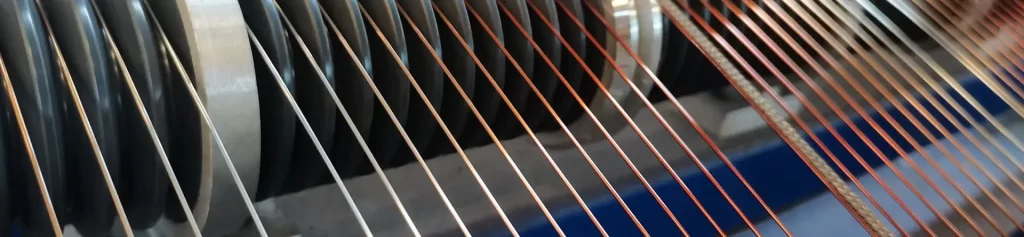
Enameled flat aluminum wire is a special product form in the field of magnet wire. Compared with round wire, flat aluminum wire, with its unique geometric advantages of rectangular cross-section, demonstrates irreplaceable value in fields such as transformers, high-power motors, and new energy vehicle drive motors.
With the popularization of 800V high-voltage platforms in new energy vehicles and the continuous growth in demand for high-power transformers, the market attention on enameled flat aluminum wire is rapidly increasing. This article provides engineers and purchasing decision-makers with a systematic technical guide from six dimensions: product definition, geometric advantages, manufacturing process, application scenarios, quality control, and selection guidelines.
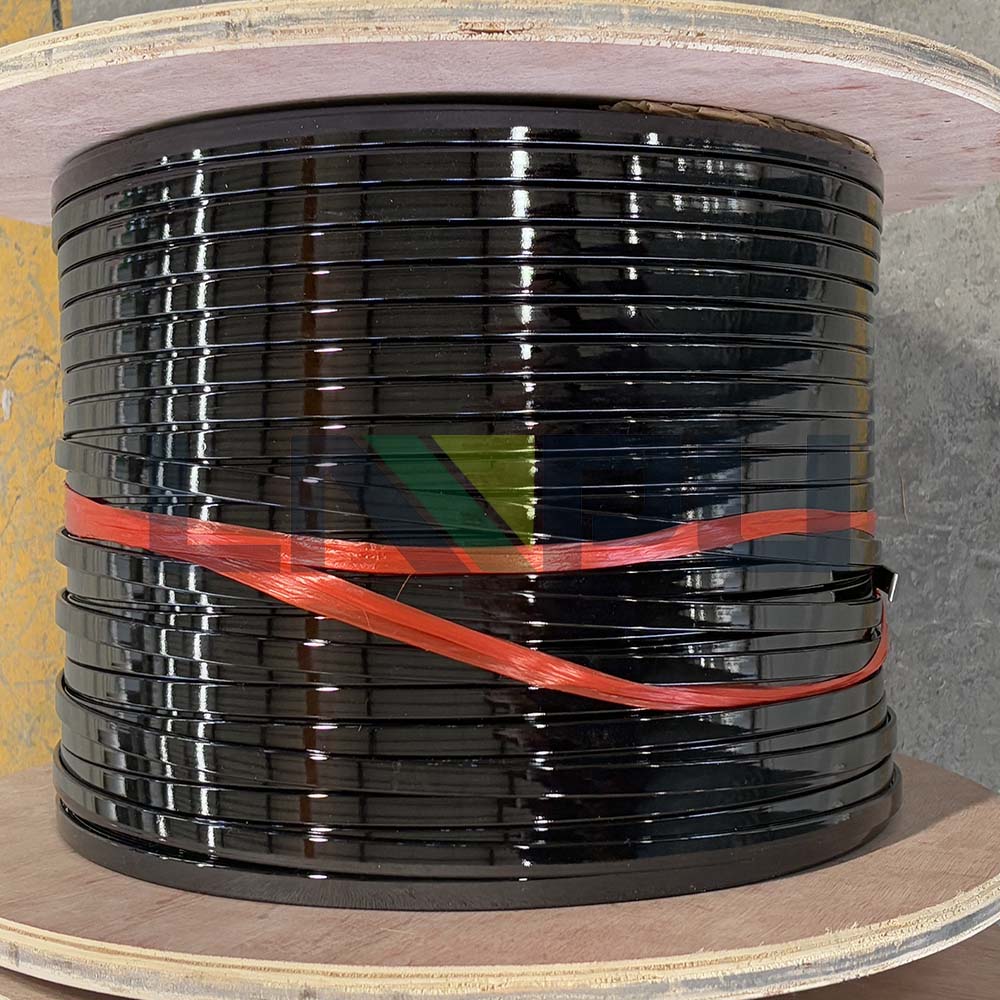
I. Product Definition of Enameled Flat Aluminum Wire
Enameled flat aluminum wire is a magnet wire product with a rectangular cross-section, using electrical aluminum (purity ≥99.5%) as the conductor. The conductor is rolled, annealed, coated with one or more layers of insulating varnish, and then baked and cured.
Typical Specifications Range:
- Thickness (side a): 0.8-10mm
- Width (side b): 2-25mm
- Width-to-thickness ratio: Typically not exceeding 10:1 to ensure the feasibility of the winding process
Insulating Varnish Types:
- Polyurethane (UEW): Class 130/155
- Polyester (PEW): Class 130/155
- Polyesterimide (PEIW/EIW): Class 155
- Polyesterimide/Polyamide-imide (EI/AIW): Class 180/200
II. Geometric Advantages of Enameled Flat Aluminum Wire
2.1 High Slot Fill Rate
The greatest geometric advantage of flat aluminum wire is its high slot fill rate. In motor and transformer windings, the theoretical highest slot fill rate for round wire is approximately 78.5% (hexagonal close packing), while flat aluminum wire, through close packing, can achieve a slot fill rate of over 90%.
High slot fill rate means:
- More conductors can be accommodated within the same window area
- When using aluminum conductors, a compact winding design can still be achieved by increasing the cross-sectional area to compensate for conductivity differences
- Increased power density
2.2 Excellent Heat Dissipation Performance
The flat cross-section of flat aluminum wire provides a larger surface area to volume ratio, with a heat dissipation area 20-40% larger than that of round wire of the same cross-sectional area. In high-power applications, this heat dissipation advantage can effectively reduce winding temperature rise.
2.3 Mechanical Stability
Flat aluminum wire is more densely packed in the winding, resulting in a more stable overall winding structure and better resistance to vibrations and deformations caused by electromagnetic forces. This is especially important for high-power motors and transformers.
2.4 Compact End Dimensions
The ends (the part of the winding extending out of the iron core) of flat aluminum wire windings are more compact than those of round wire windings, which can reduce the axial dimension of the motor and reduce the amount of aluminum used at the ends.
III. Key Manufacturing Processes
3.1 Rolling and Forming
The manufacturing of flat aluminum conductors typically employs a rolling process:
Blank Preparation: Large-section aluminum rods or bars are selected as blanks, with aluminum purity ≥99.5%.
Multi-Pass Rolling: The blank is gradually rolled to the target thickness and width through multiple passes. The compression rate of each pass is controlled within a reasonable range to avoid cracking of the aluminum material.
Annealing Treatment: The rolled aluminum conductor requires annealing to eliminate cold working stress and restore conductivity and flexibility. Annealing temperature is typically between 300-500°C, carried out under a protective atmosphere.
3.2 Enameling and Baking
The enameling process for flat aluminum wire is basically the same as that of round wires, but the following points should be noted:
Edge Coating: The enamel coating at the corners of flat wires is prone to thinning; it is necessary to ensure that the edge enamel coating thickness meets insulation requirements.
Flat Coating Uniformity: The wide surface of the flat wire needs to ensure uniform enamel coating, free from drips or accumulation.
Thin Coating Multiple Times: A thin coating multiple times process is used to ensure a dense, uniform, and defect-free enamel coating.
3.3 Quality Inspection
Dimensional Inspection: Thickness, width, and corner radius meet design requirements.
Enamel Coating Inspection: Breakdown voltage, flexibility, and enamel coating continuity (spark test).
Conductor Performance: Conductivity ≥61% IACS, surface quality free from oxidation and scratches.
IV. Main Application Scenarios
4.1 Transformer Windings
Flat aluminum wire windings are the most traditional application in transformers:
Power Distribution Transformers: Flat aluminum wire windings allow for compact designs, reducing material costs.
Dry-Type Transformers: Flat aluminum wire windings have good heat dissipation, suitable for natural cooling or forced air cooling in dry-type transformers.
Electric Furnace Transformers: In electric furnace transformers with high current and low voltage, the high current-carrying capacity and heat dissipation advantages of flat aluminum wire are fully utilized.
4.2 High-Power Motors
Industrial Motors: In high-power industrial motors, flat aluminum wire windings can improve power density and reduce manufacturing costs.
Wind Turbines: Large wind turbine stator windings use flat aluminum wire, which can improve slot fill rate and heat dissipation.
4.3 New Energy Vehicle Drive Motors
New energy vehicle drive motors are the fastest-growing application area for enameled flat aluminum wire:
High Power Density: Flat aluminum wire windings can achieve higher slot fill rate, increasing motor power density.
Heat Dissipation Advantages: The heat dissipation performance of flat aluminum wire helps the motor maintain low temperature rise under high loads.
Cost Control: Compared to flat copper wire, flat aluminum wire can reduce winding material costs.
Flat Wire Forming: Flat aluminum wire needs to have good bending and forming properties to meet the requirements of winding forms such as hairpin or wave winding.
4.4 Other Applications
- Reactors: Reactors wound with flat aluminum wire have a compact structure and good heat dissipation
- Generators: Stator windings for small and medium-sized generators
- Induction Heating Equipment: High-current induction coils
V. Quality Control Key Points
5.1 Raw Material Control
- Aluminum purity ≥99.5%, ensuring conductivity meets standards
- Stable quality of insulating varnish, good batch consistency
5.2 Process Control
| Process | Control Points | Inspection Items |
|---|---|---|
| Rolling | Compression ratio, rolling temperature | Dimensional accuracy, surface quality |
| Annealing | Temperature profile, protective atmosphere | Conductivity, flexibility |
| Coating | Enamel thickness, uniformity | Breakdown voltage, appearance |
| Baking | Temperature profile, time | Enamel curing degree, flexibility |
5.3 Factory Inspection
- Dimensions: Thickness, width, corner radius
- Electrical: Breakdown voltage, conductor resistance
- Mechanical: Flexibility, bending test
- Appearance: Uniform enamel coating, defect-free
VI. Selection Guide
6.1 Specifications
Determine the thickness and width of the flat wire based on the winding design. Note:
- Width-to-thickness ratio should not exceed 10:1
- Consider the processing capabilities of the winding equipment
- Ensure the winding window size meets requirements
6.2 Insulation Class
Select the appropriate insulation class based on the operating temperature:
- Class 130/155: General industrial applications
- Class 180/200: High-temperature applications such as new energy vehicles and variable frequency motors
6.3 Conductor Material
- Pure Aluminum: 61% IACS conductivity, lowest cost
- Aluminum Alloy: Higher strength, suitable for applications requiring mechanical strength
6.4 Certification Requirements
Ensure the product meets relevant certification requirements such as UL, IEC, and NEMA.
Conclusion
Enameled flat aluminum wire, with its high slot fill rate, excellent heat dissipation performance, and cost advantages, is increasingly widely used in transformers, high-power motors, and new energy vehicle drive motors. Through reasonable specification selection, insulation design, and process control, flat aluminum wire windings can achieve performance levels comparable to flat copper wire windings, while significantly reducing manufacturing costs.
For applications seeking high power density and cost-effectiveness, enameled flat aluminum wire is a technology solution worthy of close attention.