


Overview of Electric Vehicle Onboard Transformers
Core Functions of Onboard Transformers
Core Functions of Onboard Transformers The transformer system in an electric vehicle undertakes the core task of power conversion and distribution, mainly including the following two types: DC-DC Converters are the key interface between the high-voltage and low-voltage systems of an electric vehicle. Their main function is to convert the high-voltage DC power (typically 300V to 800V) from the power battery pack into low-voltage DC power (typically 12V to 48V), providing a stable power supply for low-voltage loads such as onboard electronic devices, lighting systems, entertainment systems, and power steering systems. The conversion efficiency and power density of DC-DC converters are core indicators for measuring their technological advancement.
OBC (On-Board Charger) is responsible for the energy conversion between external power sources and the power battery. Its working principle is to convert AC mains power (AC) into DC power (DC) and charge the power battery with appropriate current and voltage according to the instructions of the battery management system. The charging power of OBC directly affects the charging speed.
Currently, the mainstream charging power ranges from 6.6kW to 22kW, with some high-end models supporting even higher power.
Technical Requirements for Onboard Transformers
Technical Requirements for Onboard Transformers The unique operating environment of electric vehicles dictates that onboard transformers must meet a series of stringent technical requirements: In terms of temperature adaptability, onboard transformers need to withstand operating temperatures ranging from -40°C to +85°C or even +125°C, while also coping with temperature cycling shocks. Regarding vibration and mechanical strength, they must meet automotive industry vibration standards (such as ISO 16750-3) to ensure the reliability of electrical connections and mechanical structures under long-term vibration environments. In terms of electromagnetic compatibility (EMC), they must meet stringent EMC standards to prevent electromagnetic interference from affecting the normal operation of other electronic systems in the vehicle.
Regarding reliability, the design life is typically required to be 15 years or more, consistent with the overall vehicle lifespan.
Technical Characteristics and Advantages of Aluminum Foil Materials
Basic Physical Properties of Aluminum Foil
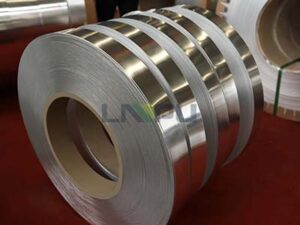
Basic Physical Properties of Aluminum Foil Aluminum is an abundant metallic element in nature, and its physical properties make aluminum foil a competitive transformer winding material. In terms of electrical conductivity, the conductivity of pure aluminum is approximately 61% to 62% of that of copper (copper is 100% under IACS standards). This means that under the same cross-sectional area, the resistance of aluminum is approximately 1.64 times that of copper.
However, this conductivity difference can be effectively compensated for through reasonable cross-sectional area design adjustments. In terms of thermal properties, the thermal conductivity of aluminum is approximately 237 W/(m·K), lower than copper’s 401 W/(m·K), but still exhibits good heat dissipation performance. The coefficient of thermal expansion of aluminum is approximately 23.5 × 10⁻⁶/°C, slightly higher than copper’s 17.5 × 10⁻⁶/°C; this difference needs to be considered in structural design.
In terms of mechanical properties, aluminum has a density of only 2.7 g/cm³, approximately 30% of that of copper (8.9 g/cm³). This characteristic gives aluminum foil windings a significant weight advantage. Aluminum foil also has a wide range of tensile strengths, varying from 30 MPa (soft state) to 200 MPa (hard state) depending on the alloy state.
Core Advantages of Aluminum Foil in Automotive Transformers
Core Advantages of Aluminum Foil in Automotive Transformers Cost Advantage is one of aluminum foil’s most significant market competitive advantages. The market price of aluminum is typically about one-third that of copper. Based on current market prices, if an electric vehicle’s onboard transformer uses approximately 30 kg of copper, replacing it with aluminum can save material costs ranging from several thousand to tens of thousands of yuan.
This cost advantage will generate significant economic benefits in large-scale production. Lightweight Advantage is particularly important for electric vehicles. The overall vehicle weight directly affects energy consumption and driving range.
Replacing copper windings with aluminum foil windings can reduce the winding weight of a single vehicle by approximately 10% to 20%. With battery technology bottlenecks yet to be overcome, every kilogram of weight reduction translates into a potential increase in driving range. The advantages of resource sustainability are increasingly valued.
Aluminum is one of the most abundant metallic elements in the Earth’s crust, with global aluminum reserves far exceeding copper reserves. From the perspective of supply chain security and sustainable development, using aluminum materials can reduce dependence on scarce resources and mitigate supply chain risks. In terms of processability, aluminum foil possesses excellent ductility and formability.
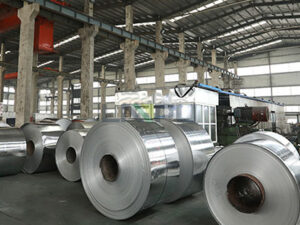
Through mature rolling processes, aluminum foil products with uniform thickness and excellent surface quality can be produced, meeting the precision requirements of transformer windings.
Performance Comparison of Aluminum Foil with Other Materials
Performance Comparison of Aluminum Foil with Other Materials In the selection of transformer winding materials, copper, aluminum, and copper-aluminum alloys are the three main options. A comprehensive comparative analysis from a technical performance perspective is as follows: In terms of electrical conductivity, copper has the highest conductivity, followed by aluminum, while copper-aluminum alloys vary depending on their alloy composition. In terms of thermal conductivity, copper is superior to aluminum, with copper-aluminum alloys falling in between.
In terms of density, aluminum is the lightest, followed by copper-aluminum alloys, with copper being the heaviest. In terms of cost, aluminum has a clear advantage, while copper-aluminum alloys fall in between. Regarding processing difficulty, copper has the most mature welding technology, aluminum welding requires special protective processes, and copper-aluminum alloys are relatively more difficult to process.
Overall, the advantages of aluminum foil in terms of cost and lightweight make it an ideal choice for cost-sensitive and weight-sensitive automotive transformer applications.
Specific Applications of Aluminum Foil in Automotive Transformers
Winding Structure Design
Winding Structure Design In electric vehicle transformers, aluminum foil is mainly used as the winding material, and the winding structure design directly affects the transformer’s electrical performance and reliability. In terms of winding form, layered winding is the most common design. Aluminum foil is processed into continuous narrow strips and wound layer by layer onto an insulating frame according to the designed number of turns.
Each layer is electrically isolated by insulating materials (such as insulating paper or insulating film). For high-voltage applications, a segmented layered winding structure may be necessary to reduce interlayer voltage stress. In terms of conductor size design, the thickness of aluminum foil is typically selected from 0.8 mm to 3.0 mm, and the width from 10 mm to 25 mm.
Wider aluminum foil can be used for high-power transformers. The specific size selection needs to comprehensively consider factors such as current capacity, skin effect, proximity effect, and heat dissipation conditions. For high-frequency applications (such as switching power supply transformers), the selection of aluminum foil thickness also needs to consider the increase in AC resistance.
In terms of insulation class, the insulation class of automotive transformer windings is usually required to reach Class 155 (Class F, 155°C), Class 180 (Class H, 180°C), or higher. Aluminum foil windings need to be used in conjunction with high temperature resistance insulation materials, such as polyimide film (PI film) and aramid paper.
Application in DC-DC Converters
Application in DC-DC Converters In DC-DC converters, aluminum foil winding transformers undertake the core function of energy conversion. Since DC-DC converters typically operate at frequencies ranging from 20 kHz to 100 kHz or even higher, the design of aluminum foil windings needs to fully consider the effects of high frequencies. Regarding core selection, high-frequency DC-DC converters usually employ ferrite or nanocrystalline cores.
These core materials exhibit low iron losses at high frequencies, making them suitable for high-frequency switching power supply applications. The design of the aluminum foil windings in conjunction with the cores requires comprehensive consideration of factors such as magnetic flux density, winding fill factor, and heat dissipation channels. In terms of efficiency optimization, DC-DC converters using aluminum foil windings can achieve conversion efficiencies exceeding 95% through proper winding design.
Efficiency improvements primarily rely on reducing winding losses (by increasing the cross-sectional area to reduce DC resistance), optimizing core design (reducing core losses), and improving switching strategies (reducing switching losses).
Application in On-Board Chargers (OBCs)
Application in On-Board Chargers (OBCs) In OBC applications, aluminum foil windings (transformers) also play a crucial role. OBCs typically operate in a lower frequency range (usually the mains frequency of 50 Hz to 100 Hz, or higher frequencies after PFC circuitry), and the design requirements for aluminum foil windings differ from those of DC-DC converters. In terms of power ratings, 6.6 kW, 11 kW, and 22 kW are common OBC power ratings.
Higher power ratings require larger winding cross-sectional areas and greater heat dissipation. Aluminum foil windings, by increasing their cross-sectional area, can meet the current carrying requirements of high-power OBCs. In the power factor correction (PFC) stage, boost inductors are typically used.
Aluminum foil flat wire performs well in this application due to its excellent heat dissipation and high fill factor.
Other Power Electronic Applications
Other Power Electronic Applications Besides DC-DC converters and OBCs, aluminum foil windings are widely used in other power electronic devices in electric vehicles. In inverters, aluminum foil windings are used in the design of DC-side filter inductors to help smooth DC voltage fluctuations and reduce harmonic content. In on-board power systems (OBC+DCDC integrated units), aluminum foil windings (transformers) and inductors are core magnetic components.
Integrated design places higher demands on the power density of magnetic components, and aluminum foil windings, due to their flexible formability, have an advantage in this field. In high-frequency switching power supplies related to battery management systems (BMS), aluminum foil winding low-power transformers are also widely used.
Key Performance Indicators and Quality Requirements
Technical Specifications of Aluminum Foil Materials
Technical Specifications of Aluminum Foil Materials Aluminum foil used in electric vehicle on-board transformers needs to meet stringent technical specifications. In terms of chemical composition, aluminum foil for transformers typically uses 1xxx series (pure aluminum) or 8xxx series (aluminum-tin) alloys. Purity requirements are usually above 99.5%, with strict control over the content of impurities such as iron and silicon.
Increased impurity content reduces conductivity and increases winding losses. Regarding dimensional tolerances, thickness tolerances are typically required to be controlled within the range of ±0.02 mm to ±0.05 mm. Width tolerances are typically required to be controlled within the range of ±0.1 mm to ±0.2 mm.
Strict dimensional tolerances are fundamental to ensuring consistent winding electrical performance. Regarding mechanical properties, tensile strength needs to be selected based on the application scenario. Soft aluminum foil (tensile strength 30-40 MPa) is suitable for applications requiring complex shapes.
Hard aluminum foil (tensile strength 80-200 MPa) is suitable for applications with higher mechanical strength requirements. Semi-hard aluminum foil is a compromise. Elongation is typically required to be above 2% to ensure processability.
Regarding surface quality, the surface should be clean, smooth, and free from defects such as cracks, peeling, corrosion, and scratches. Edges should be neat and free of burrs. Surface roughness Ra is typically required to be below 0.8 μm.
Quality Control of Winding Manufacturing
Quality Control of Winding Manufacturing The manufacturing quality of aluminum foil windings directly determines the final performance and reliability of the transformer. In terms of winding process, winding tension needs precise control. Excessive tension may cause deformation or damage to the aluminum foil, while insufficient tension may lead to loose windings and a reduced fill factor.
Constant tension winding technology is crucial for ensuring winding quality. Winding density is measured by the turn fill factor (window fill factor), typically requiring a value of 0.4 to 0.6. Regarding insulation, interlayer insulation in the windings typically uses insulating paper (such as Nomex paper or Denison paper) or insulating film (such as polyester film or polyimide film).
Insulation thickness is selected according to the voltage level, typically ranging from 0.05 mm to 0.25 mm. The insulation at the winding ends requires special reinforcement to prevent surface discharge. In terms of welding process, aluminum welding requires special techniques.
Commonly used welding methods include TIG welding, laser welding, and resistance welding. Weld quality needs to be verified through visual inspection, tensile testing, and electrical testing. The resistance of the weld joint should be as low as possible to reduce heat loss.
Testing and Verification Requirements
Testing and Verification Requirements Before being put into use, aluminum foil windings (transformers) must undergo a series of tests and verifications. For electrical performance testing, open-circuit testing (verifying turns ratio), short-circuit testing (measuring impedance parameters), insulation resistance testing (verifying insulation condition), and withstand voltage testing (verifying electrical strength) are required. For high-frequency applications, high-frequency performance testing is also necessary, including high-frequency impedance characteristics and leakage inductance parameters.
For thermal performance testing, temperature rise testing is required to verify whether the temperature rise of the winding and core is within the allowable range under operating load conditions. Temperature rise testing is typically performed after continuous operation at rated power until thermal stability. Thermal cycling testing verifies the impact of temperature changes on winding reliability.
For mechanical performance testing, vibration testing verifies the structural integrity of the winding under vibration. Shock testing verifies the winding’s ability to withstand mechanical shocks. Vibration frequency and acceleration must meet relevant automotive standards.
For environmental adaptability testing, damp heat testing verifies the reliability of the winding in high-temperature and high-humidity environments. Salt spray testing (for specific application scenarios) verifies corrosion resistance. Temperature shock testing verifies the impact of drastic temperature changes on the winding structure.
Process Challenges and Solutions
Contact Resistance Issues
Contact Resistance Issues Contact resistance exists at the interface between aluminum and copper or aluminum and aluminum. An oxide film (Al₂O₃) easily forms on the aluminum surface. This oxide film has high resistivity, which can lead to poor contact and localized overheating during long-term use.
The main solutions to this problem include: In terms of surface plating, tin (Sn) or nickel (Ni) plating is a common process for aluminum foil. Tin plating effectively prevents aluminum oxidation and provides good solderability. Nickel plating provides better corrosion resistance and wear resistance.
The plating thickness is typically in the range of 3 μm to 15 μm. In terms of contact structure design, using a press-fit connection structure instead of a welded structure facilitates later maintenance and replacement. Selecting appropriate contact pressure and contact area ensures the stability of the contact resistance.
Regarding material selection, using a copper-aluminum composite transition material when connecting aluminum foil and copper leads can reduce electrochemical corrosion caused by potential differences.
Thermal Expansion Difference Issues
Thermal Expansion Differences Aluminum and copper have different coefficients of thermal expansion (approximately 23.5 × 10⁻⁶/°C vs 17.5 × 10⁻⁶/°C). Under temperature cycling conditions, the difference in thermal expansion between the aluminum winding and copper leads, or between the aluminum winding and insulation material, may lead to accumulated mechanical stress, affecting structural reliability. Solutions include: reserving thermal expansion compensation space in the structural design to avoid stress concentration; using elastic support structures to absorb displacement caused by thermal expansion; selecting materials with a thermal expansion coefficient similar to aluminum for structural components; and employing flexible transition designs at critical connection points.
Welding Process Challenges
Welding Process Challenges Welding aluminum is more complex than welding copper, primarily due to the following challenges: Aluminum readily forms a dense oxide film (Al₂O₃) on its surface, and the melting point of this oxide film (2072°C) is much higher than that of aluminum (660°C), requiring its removal before welding. Aluminum is sensitive to moisture, easily generating porosity during welding. Appropriate shielding gas (high-purity argon) and controlled welding parameters are necessary.
Commonly used welding methods include: TIG welding (tungsten inert gas welding) is suitable for precision welding, producing high-quality welds, but with relatively low efficiency. Laser welding is highly efficient with a small heat-affected zone, but requires high precision in workpiece assembly. Resistance spot welding is suitable for mass production, but involves significant equipment investment.
Ultrasonic welding is suitable for welding thin foil materials.
Skin Effect and Proximity Effect
Skin Effect and Proximity Effect Under high-frequency application conditions, the uneven distribution of current in a conductor (skin effect) and the mutual influence of current distribution between adjacent conductors (proximity effect) lead to increased AC resistance and winding losses. For high-frequency applications, the design of aluminum foil windings needs to consider the following factors: Selecting an appropriate aluminum foil thickness. For a specific frequency range, there exists an optimal thickness selection.
The formula for calculating the skin depth δ is: δ = √(2/ωμσ), where ω is the angular frequency, μ is the permeability, and σ is the conductivity. Using a layered winding structure can reduce the impact of proximity effects. Adding a shielding layer between winding layers can reduce interlayer proximity effects.
Selection Recommendations and Industry Outlook
Key Points in Selecting Aluminum Foil Transformers
Key Points for Aluminum Foil Transformer Selection When selecting an aluminum foil automotive transformer, it is recommended to focus on the following aspects: Regarding aluminum foil materials, it is necessary to confirm that the supplier can provide aluminum foil materials that meet the technical specifications. Pay attention to parameters such as the chemical composition, mechanical properties, and surface quality of the material. Prefer suppliers with complete material testing reports.
Regarding design capabilities, the supplier should have transformer design capabilities and be able to perform specialized designs according to application requirements. Design capabilities are reflected in key aspects such as core selection, winding design, and heat dissipation design. In terms of manufacturing processes, the maturity of the winding manufacturing process directly affects product quality.
Suppliers using automated winding equipment and possessing comprehensive process control are preferred. Regarding certifications, products should have necessary certifications, such as UL certification (for the North American market) and CE certification (for the European market). IATF 16949 certification (automotive industry quality management system) is a basic requirement for suppliers entering the automotive supply chain.
Industry Development Trends
Industry Development Trends The application of aluminum foil in the field of electric vehicle transformers shows the following development trends: In terms of power density improvement, the power density of automotive transformers continues to increase through improved winding design, the use of new magnetic core materials, and improved heat dissipation. Higher power density means smaller volume and weight, which reflects the lightweight requirements of electric vehicles. In terms of efficiency improvement, the application of new switching devices (such as SiC and GaN) allows for further increases in switching frequency, thus allowing for the use of smaller magnetic components.
Aluminum foil windings combined with new magnetic core materials can achieve higher conversion efficiency. Regarding integration trends, the application of OBC and DC-DC integrated units (Combo Units) is becoming increasingly common. Integrated design places higher demands on the size and performance of magnetic components, in which aluminum foil windings have advantages.
In terms of standardization and platformization, OEMs are increasingly inclined to adopt platform-based design approaches, and the standardization of key components such as the transformer is continuously improving. This is beneficial for the large-scale application and cost optimization of aluminum foil transformers.
Technology Innovation Directions
Technological Innovation Directions Technological innovation in aluminum foil transformers mainly focuses on the following directions: In terms of material innovation, the development of new aluminum alloy materials may further improve the electrical conductivity and mechanical properties of aluminum. The application of composite materials (such as aluminum-copper composite strips) may combine the advantages of both materials. In terms of process innovation, the application of new welding processes (such as friction stir welding) may solve the process challenges of aluminum welding.
More precise winding processes can improve the winding fill factor and electrical performance. In terms of design innovation, the application of computer-aided design (CAD) and finite element analysis (FEA) makes transformer design more refined. The application of thermal-structural coupling analysis can optimize heat dissipation design and mechanical structure design.
As a mature industrial material, aluminum foil’s application in the field of electric vehicle transformers is technically mature. Through reasonable material selection, structural design, process control, and testing verification, aluminum foil winding transformers can meet the multiple requirements of electric vehicles for reliability, efficiency, and cost
From a technical perspective, although aluminum foil’s conductivity is inferior to copper, this gap can be compensated for by increasing the cross-sectional area. In terms of heat dissipation performance, aluminum foil, combined with a reasonable heat dissipation structure design, can meet the heat dissipation requirements of automotive transformers. In terms of mechanical properties, aluminum’s lightweight advantage and good formability make it an ideal choice for automotive applications
From an economic perspective, the cost and lightweight advantages of aluminum foil can be transformed into significant market competitive advantages under large-scale mass production conditions. With the continued growth of the new energy vehicle market, the application prospects of aluminum foil transformers will be even broader. From a reliability perspective, although aluminum foil transformers present technical challenges in areas such as contact resistance, thermal expansion, and welding processes, these challenges can be effectively addressed through mature solutions and rigorous quality control
Overall, the application of aluminum foil in electric vehicle transformers is a result of the combined effects of technical feasibility, economic rationality, and market demand. For electric vehicle manufacturers pursuing cost competitiveness and lightweighting goals, aluminum foil winding transformers are a technical option worthy of serious consideration.