

Application of Enameled Copper Wire in High-Power UPS Systems: Technical Characteristics, Selection Considerations, and Industry Analysis Introduction Uninterruptible power supplies (UPS) systems, as core equipment for power security, function to provide stable and continuous power supply to critical loads when the mains power is abnormal or interrupted. In application areas with stringent requirements for power continuity, such as data centers, medical facilities, industrial control systems, communication base stations, and financial transaction systems, UPS systems play an irreplaceable role. High-power UPS systems typically refer to models with a rated power of 10kVA or higher. These systems have extremely stringent performance requirements for their internal key components. Transformers and inductors, as core magnetic components of UPS systems, directly affect the system’s efficiency, heat dissipation, reliability, and service life through the selection of their winding materials. Enameled copper wire, with its excellent conductivity, good thermal stability, and mature manufacturing process, has become the mainstream material choice for transformer and inductor windings in high-power UPS systems. This article will systematically analyze the technical characteristics, product classification, selection considerations, and industry development trends of enameled copper wire in high-power UPS system applications, providing professional reference for UPS system design engineers and purchasing decision-makers.
Chapter 1 Technical Characteristics and Basic Principles of Enameled Copper Wire
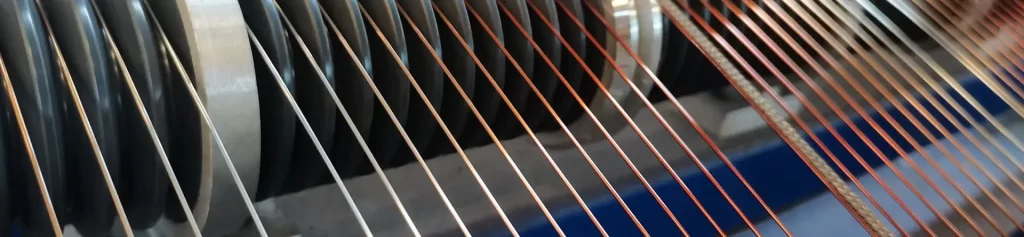
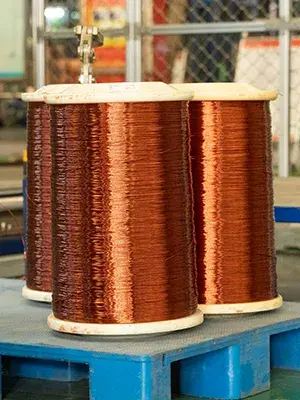
1.1 Definition and Composition of Enameled Copper Wire Enameled wire, also known as magnet wire or winding wire, is a special type of electrical wire made by coating an insulating layer onto a conductive copper conductor and then baking and curing it. The basic structure of enameled wire consists of two layers from the inside out: the core is the conductive copper conductor, and the outer layer is the insulating coating. The insulating coating is the key difference between enameled wire and ordinary copper wire. It not only provides electrical insulation but also plays an important role in protecting the conductor and supporting the winding structure. The manufacturing process of enameled wire typically includes conductor drawing, cleaning, coating, baking, and cooling. The conductor drawing process gradually pulls the electrolytic copper rod into the required wire diameter; the cleaning process removes oil and oxides from the conductor surface, ensuring good adhesion of the enamel coating; the coating process evenly covers the conductor surface with insulating varnish; and the baking process cross-links and cures the enamel coating, forming a dense insulation layer. Depending on the insulation class and performance requirements, these processes may be repeated multiple times to achieve the desired enamel coating thickness. Enameled wire can be classified into two main categories according to conductor shape: round wire and flat wire (rectangular wire); according to insulation material type, it can be divided into multiple series such as polyester enameled wire, polyester imide enameled wire, polyimide enameled wire, and polyurethane enameled wire; and according to thermal class, it can be divided into different specifications such as Class 130 (Class B), Class 155 (Class F), Class 180 (Class H), Class 200 (Class N), and Class 220 (Class R).

1.2 Physical and Electrical Properties of Copper Conductor Copper, as a high-quality conductive material, is widely used in electrical engineering. Copper has a density of approximately
8.9 g/cm³, a melting point as high as 1085°C, and a conductivity of up to 100% IACS (International Annealed Copper Standard). Copper’s tensile strength is typically in the range of 220-250 MPa, exhibiting good mechanical strength and processing performance. Key electrical parameters of copper conductor include: resistivity of approximately
1.72 × 10⁻⁸ Ω·m (20°C), temperature coefficient of resistance of approximately 0.0039/°C, and coefficient of thermal expansion of approximately 17 × 10⁻⁶/°C. These parameters determine the electrical performance of the copper conductor under different operating conditions and are important bases for the design of UPS system transformers and inductors. Based on different oxygen contents and manufacturing processes, copper conductors used for enameled wire can be divided into two categories: oxygen-free copper rods and ordinary copper rods. Oxygen-free copper rods have an oxygen content controlled below 20 ppm and a copper purity exceeding 99.95%, resulting in superior conductivity and ductility, making them particularly suitable for the production of ultra-fine diameter wires. Ordinary copper rods have a relatively higher oxygen content, but still meet the performance requirements of most wires. The main difference in the final performance of oxygen-free and ordinary copper rods lies in products with extremely fine diameters (below
0.1 mm). For wires with standard diameters, the performance difference is not significant.
1.3 Insulation System and Thermal Class Wires: The insulation system is the core competitive advantage of these wires. Insulating enamel coating materials have evolved from natural resins to synthetic polymers. Currently, the mainstream insulating enamel materials on the market include: polyester enameled wire (PEW/QZ): Thermal class B (130°C), possessing excellent mechanical and electrical properties, balanced thermal shock resistance and solvent resistance, and economical price, making it the most widely used general-purpose enameled wire. Suitable for ordinary coil windings in general motors and electrical appliances. polyester imide enameled wire (QZY): Thermal class H (180°C), introducing an imide structure into polyester, significantly improving heat resistance, thermal shock resistance, and chemical resistance. Polyester imide enameled wire combines excellent comprehensive performance with high cost-effectiveness, making it a common choice for high-power UPS system transformers. Polyimide enameled wire (PIW/QZY): Thermal class C (above 220°C), it is currently the best-performing enameled wire in commercial applications in terms of heat resistance. Polyimide enameled wire has excellent high-temperature resistance, radiation resistance, and solvent resistance, but its price is relatively high, typically used in applications with extremely demanding heat resistance requirements. Polyurethane enameled wire (UEW/QA): Thermal class BE (130-155°C), its outstanding feature is excellent direct soldering performance; it can be soldered directly without removing the enameled coating. Furthermore, polyurethane enameled wire also has excellent dielectric loss performance and high-frequency resistance, suitable for high-frequency transformers, inductors, and other applications. The selection of thermal class requires comprehensive consideration of factors such as the operating environment temperature, heat dissipation conditions, and load fluctuations of the equipment. For high-power UPS systems, it is recommended to use enameled wire of at least Class H (180°C) or higher thermal class to ensure sufficient safety margin and long-term reliability.
1.4 NEMA Insulation Thickness Rating Standards According to the NEMA MW 1000 standard, the insulation thickness of magnetic wire is divided into four levels: – Single Build: The thinnest of the four NEMA standard film insulations, suitable for general applications. – Heavy Build: The insulation thickness is approximately twice that of single-layer insulation, providing stronger insulation protection and mechanical strength. – Triple Build: The insulation thickness is approximately three times that of single-layer insulation, suitable for applications with high electrical strength requirements. – Quadruple Build: The insulation thickness is approximately four times that of single-layer insulation, suitable for extreme operating conditions. The choice of insulation thickness needs to strike a balance between electrical strength, heat dissipation performance, and slot fill factor. Heavy insulation and triple insulation offer higher electrical strength and better mechanical protection, but reduce slot fill factor and affect heat dissipation. Designers need to make a reasonable choice based on specific application requirements.
Chapter 2 Technical Requirements of High-Power UPS Systems for enameled wire
2.1 High Efficiency and Low Loss High-power UPS systems typically require continuous operation and have strict requirements for energy efficiency. During continuous operation, the transformer and inductor inside the UPS generate copper losses (I²R losses) and iron losses (core losses). Copper losses are directly related to the resistance of the winding material. Copper, as one of the best commonly used conductive materials, has a resistivity far lower than other metals such as aluminum. Under the same cross-sectional area, the resistance of the copper conductor is significantly lower, which means that under the same current load, the power loss of copper windings is lower. For high-power UPS systems that require long-term continuous operation, this means lower operating costs and better energy efficiency. Furthermore, copper has excellent thermal conductivity (approximately 400 W/m·K), which is beneficial for the conduction and dissipation of heat from the windings. This is especially important for UPS systems with high power density designs, as good heat dissipation is one of the key factors ensuring long-term reliable operation of the equipment.
2.2 Excellent Thermal Stability Under full load operation, the internal temperature of a high-power UPS system may reach high levels. The operating temperature of the transformer and inductor windings depends on various factors such as ambient temperature, load rate, and heat dissipation conditions. In enclosed cabinets or high-temperature environments, winding temperatures may exceed 100°C. Enameled copper wire typically has a thermal class above 180°C, and polyimide wire can reach above 220°C, providing ample thermal safety margin for the windings. High thermal class enameled wire can maintain stable insulation performance and mechanical strength in high-temperature environments, without softening, shedding, or degradation. This is crucial for ensuring long-term reliable operation of the UPS system under various operating conditions.
2.3 Superior Insulation Reliability UPS systems have extremely high requirements for power quality; any insulation failure can lead to output interruption or damage to the load equipment. The uniform and dense insulation layer provided by enameled wire effectively prevents electrical contact and breakdown between conductors and between conductors and the magnetic core. The insulation performance of enameled wire includes key indicators such as dielectric strength, voltage resistance, and insulation resistance. High-quality enameled wire must pass rigorous voltage resistance testing to ensure that the insulation layer does not break down under abnormal conditions such as overvoltage and surges. Furthermore, the insulation layer must possess good adhesion and abrasion resistance, preventing cracking or detachment under winding and tension.
2.4 Adapting to Automated Winding Processes Transformers and inductors in high-power UPS systems are typically produced using automated winding equipment. Automated winding places stringent requirements on the process performance of enameled wire: good wire diameter consistency, stable tension characteristics, and a moderate surface friction coefficient are necessary to reduce wire breakage and wear during the winding process. High-quality enameled wire products must possess a smooth surface, uniform enamel coating thickness, good flexibility, and resilience to adapt to the continuous operation requirements of high-speed automated winding equipment.
Chapter 3 Selection Guide for Enameled Copper Wire in High-Power UPS Systems
3.1 Conductor Selection Round Wire Selection: The commonly used round wire specifications for high-power UPS system transformers and inductors range from 0.5-5.0mm. The wire diameter selection is mainly based on the current load and fill factor requirements. For high-current applications, it may be necessary to use multi-strand parallel winding to reduce the skin effect. Flat Wire Selection: Flat wire (rectangular wire) has advantages in high power density applications. Its rectangular cross-section can better utilize winding space and improve slot fill factor. Commonly used flat wire specifications are: thickness 1.5-6.0mm, width 3-25mm. The use of flat wire needs to match the core slot design. Cross-sectional Area Calculation: The calculation of the winding cross-sectional area needs to comprehensively consider factors such as current carrying capacity, allowable temperature rise, and fill factor. The allowable current density of the copper conductor is usually in the range of 3-5 A/mm², and the specific value depends on the heat dissipation conditions and operating mode.
3.2 Insulation Type Matching with Thermal Class Polyester Enameled Wire (QZY): Thermal class H (180°C), with excellent comprehensive performance and outstanding cost-effectiveness, it is the preferred insulation type for high-power UPS systems. Widely used in UPS systems with power ranging from 10-500kVA. Polyimide Enameled Wire (PIW): Thermal class C (above 220°C), suitable for applications with high operating temperatures or extremely high reliability requirements. Used in ultra-high power (above 500kVA) or special operating conditions UPS systems. Polyurethane Enameled Wire (UEW): Although its thermal class is relatively low (130-155°C), its excellent direct soldering performance makes it widely used in components such as high-frequency inductors and filters. Insulation Class Selection Recommendations: For UPS systems in standard commercial environments, it is recommended to use Class H (180°C) insulation to provide a safety margin of 20-30°C for actual operating temperatures. For applications in high-temperature environments or where heat dissipation is limited, Class N (200°C) or Class R (220°C) insulation should be used.
3.3 Selection of Oxygen-Free Copper Rods vs. Ordinary Copper Rods The main differences in the performance of oxygen-free copper rods and ordinary copper rods are as follows: Conductivity: The difference between the two is minimal; for products with conventional wire diameters, the conductivity is essentially the same. Ductility and Machinability: Oxygen-free copper rods are slightly superior, especially suitable for the production of ultra-fine wire diameters (below 0.1mm). Surface Quality: Oxygen-free copper rods have extremely low oxygen content, resulting in a smoother surface that facilitates uniform enamel coating adhesion. Price: Oxygen-free copper rods are typically 10%-20% more expensive than ordinary copper rods. Selection Recommendations: For high-power UPS systems using wire diameters of 0.5mm or larger, ordinary copper rods (enameled wire) fully meet performance requirements and offer better cost-effectiveness. For special high-frequency applications or ultra-fine wire diameter requirements, oxygen-free copper rods can be considered.
3.4 Selection of Self-bonding Wire vs. Conventional Enameled Wire Self-bonding wire has a self-adhesive coating on the insulation layer. After winding, the coil can be self-bonded by heating or solvent activation. For transformers and inductors in UPS systems, self-bonding wire simplifies the process and improves production efficiency, but the cost is usually higher than conventional enameled wire. In high-power UPS transformer applications, conventional enameled wire remains the mainstream choice. Self-adhesive wires are more commonly used in precision inductors, small transformers, or production scenarios requiring a high degree of automation.
3.5 Standards and Certification Requirements High-power UPS systems using enameled copper wires should meet the following standards and certification requirements: International Standards: – IEC 60317 series standards “Specifications for winding wires for transformers and machines” – NEMA MW 1000 “Magnet wire” standard – GB/T 7673 “Chinese National Standard for Winding Wires” Safety and Environmental Certifications: – UL certification (Underwriters Laboratories, USA) – RoHS compliance (EU Hazardous Substances Restriction Directive) – REACH compliance (EU Chemicals Registration and Evaluation Directive) Supplier Qualification Certifications: – ISO 9001 Quality Management System Certification – ISO 14001 Environmental Management System Certification When selecting enameled wires, high-power UPS manufacturers should require suppliers to provide complete product specifications, test reports, and certification certificates to ensure that the products meet design requirements and the operating environment.
Chapter 4 Design Considerations for High-Power UPS Systems
4.1 Transformer Types and Applications Transformers in high-power UPS systems mainly include two categories: power frequency transformers and high-frequency transformers. Their structural characteristics and application requirements differ.
Power Frequency Transformer: Operating frequency is 50/60Hz, characterized by high power, high efficiency, and high reliability. Power frequency transformers typically use flat wire with a large cross-section, many winding layers, and high fill factor requirements. Key considerations for using enameled copper wire in power frequency transformers include: sufficient conductor cross-sectional area to reduce copper losses; appropriate insulation thickness to ensure electrical strength; and good adaptability to winding processes. High Frequency Transformer: Operating frequency is typically in the 20-100kHz range, with high power density and small size. High frequency transformers have fewer winding turns, but significant skin effect and proximity effect, requiring special specifications for conductors and winding processes. In high frequency applications, the use of stranded wire and Litz wire can effectively reduce skin effect losses.
4.2 Skin Effect and Winding Design The phenomenon that alternating current tends to distribute on the conductor surface when it passes through a conductor is called the skin effect. Skin depth is a key parameter describing this phenomenon, and it decreases as frequency increases. At high frequencies, the skin depth may be smaller than the conductor radius, leading to a reduction in the effective conductive area and an increase in AC resistance. For UPS high-frequency transformers operating at high frequencies (above 20kHz), the winding design must consider the skin effect. Common countermeasures include: using multi-strand fine wires wound in parallel instead of a single heavy-duty wire; using Litz wire (braided from multi-strand insulated fine wires) to reduce AC resistance; and selecting appropriate conductor specifications to ensure the skin depth is greater than the conductor radius. The skin depth of copper is approximately 0.47mm at 20kHz and approximately 0.21mm at 100kHz. Therefore, high-frequency transformer windings commonly use 0.3-0.5mm enameled copper wire, or multi-strand fine wires less than 0.2mm wound in parallel.
4.3 Heat Dissipation Design and Temperature Rise Control The temperature rise of the transformer and inductor directly affects the lifespan and reliability of the insulation system. According to the general law of insulation material aging, the insulation life is approximately halved for every 10°C increase in operating temperature. Therefore, temperature rise control is one of the core considerations in the design of high-power UPS transformers. The thermal conductivity of the windings has a significant impact on the heat dissipation of the windings. The heat inside the windings is mainly conducted longitudinally to the wire ends and iron core through the conductors, and then dissipated to the surrounding environment through convection and radiation. Optimizing the winding structure design, increasing the fill factor, and improving heat dissipation conditions can effectively control the temperature rise. In the design of high-power UPSs, the following heat dissipation measures are usually adopted: forced air cooling, impregnation treatment (filling the winding gaps with insulating resin to improve heat conduction), and using insulating materials with better thermal conductivity.
4.4 Insulation Coordination and Safety Margin The transformer design needs to consider various overvoltage conditions, including: lightning impulse voltage, switching overvoltage, short-circuit overvoltage, etc. The principle of insulation coordination design is to ensure that the equipment does not experience insulation breakdown under various overvoltage conditions, while avoiding waste caused by over-design of insulation. The insulation withstand voltage capability of an inductor is typically characterized by its breakdown voltage or voltage resistance test value. In transformer design, it is necessary to ensure that the rated withstand voltage level of the inductor is higher than the maximum possible overvoltage value, and to maintain an appropriate safety margin. For high-voltage side windings, heavy insulation or triple insulation is typically used to enhance insulation strength.
Chapter 5 Inductor Design Considerations for High-Power UPS Systems
5.1 Inductor Types and Applications Inductors in high-power UPS systems mainly include AC filter inductors, DC filter inductors, and energy storage inductors. Different types of inductors have different performance requirements. AC Filter Inductors: Used to filter out harmonic components at the UPS output, operating in the power frequency or low-frequency range. AC filter inductors are typically wound with a large cross-section round wire or flat wire, with many turns and a large inductance. The key considerations for the application of enameled wire in this type of inductor are: sufficient conductor cross-sectional area to withstand the rated current; good insulation performance to cope with grid overvoltage; and adaptability to multi-turn winding process performance. DC filter inductors: Used to smooth the rectified DC current, commonly found in UPS power factor correction (PFC) circuits. DC filter inductors typically have a large current and contain ripple components. The selection of enameled wire should consider: conductor cross-sectional area to meet the DC rated current requirements; insulation class to accommodate temperature rise caused by ripple; and multi-strand parallel winding to reduce the skin effect. Energy storage inductors: Used for energy storage during UPS uninterrupted power supply, requiring high standards for both the magnetic core and windings. The design of energy storage inductors needs to comprehensively consider factors such as energy storage capacity, current stress, and heat dissipation conditions; the selection of enameled wire must match these design requirements.
5.2 Core Saturation and Ampere-Turns Design The inductance of an inductor is directly proportional to the number of turns in the winding and the permeability of the magnetic core. In the design, it is necessary to ensure that the magnetic core operates in the linear region to avoid core saturation. Core saturation causes a sharp drop in inductance, resulting in loss of filtering or energy storage functions. The design principle to avoid core saturation is to ensure that the designed ampere-turns (NI) is lower than the core’s rated ampere-turns capability. This requires appropriate selection of core size, winding turns, and conductor specifications given the inductance requirement. The conductor cross-sectional area directly affects the amount of current that can flow and the selection of the number of turns.
5.3 Temperature Rise and Heat Dissipation Design Inductors generate copper losses when continuously carrying rated current, leading to an increase in winding temperature. Iron losses in high-frequency inductors are also a heat source. Excessive temperature rise accelerates insulation aging, affecting the inductor’s reliability and lifespan. The thermal class and heat dissipation conditions determine the temperature rise limit that the inductor can withstand. In the design, the thermal class and specifications of the inductor must be appropriately selected based on the inductor’s operating mode (continuous operation, short-time operation, intermittent operation, etc.) and heat dissipation conditions. Chapter Six: Industry Applications and Market Analysis
6.1 Data Center Sector Data centers are one of the most important application areas for high-power UPS systems. With the rapid development of technologies such as cloud computing, big data, and artificial intelligence, the construction scale and power density of data centers are constantly increasing, placing higher demands on the power capacity, energy efficiency, and reliability of UPS systems. Large data centers typically use modular UPS systems, with single-unit power ranging from 100-500kVA, and the total system capacity reaching several megawatts. The characteristics of the requirements for UPS in such applications include: large-scale standardization, strict performance consistency requirements, high energy efficiency and low loss orientation, and high reliability and long lifespan requirements.
6.2 Medical Facility Sector Medical facilities have extremely stringent requirements for power supply continuity. Critical loads such as operating rooms, ICUs, and imaging diagnostic equipment cannot tolerate any power interruption. UPS systems for such applications are typically designed according to the highest reliability standards, with extremely high quality requirements for key materials such as UPS. The selection of UPS for medical equipment typically prioritizes: higher thermal class and insulation reliability; stricter quality control and testing requirements; and longer lifespan and warranty commitments.
6.3 Industrial Control Sector: In industrial control systems, automated production lines, programmable logic controllers (PLCs), and other applications, UPS systems ensure the stable operation of control systems and communication equipment. These applications may face harsh environmental conditions, including temperature fluctuations, vibration, dust, and chemical corrosion. Industrial applications require UPS systems with: a wide temperature range; good environmental resistance; reliable insulation life; and stable quality to adapt to industrial environments.
6.4 Communication Infrastructure Sector: Communication base stations, data transmission equipment, network switching equipment, and other communication infrastructure rely on a stable power supply. These applications typically use wall-mounted or small UPS systems with a single unit power ranging from 1-20kVA. UPS systems for communication equipment are characterized by their large number, wide distribution, and limited maintenance conditions. Therefore, high requirements are placed on the reliability and ease of maintenance of the UPS system. Accordingly, the selection of UPS systems must balance performance and cost-effectiveness to support the economic viability of large-scale deployment.
Chapter 7 UPS Technology Development Trends and Prospects
7.1 High Efficiency and Energy Saving Orientation With rising energy costs and increased environmental awareness, optimizing the energy efficiency of UPS systems has become an important development direction. High-efficiency UPS means lower operating costs and a smaller cooling system load. As a key material for the core magnetic components of UPS systems, the performance of UPS directly affects system efficiency. Future development directions for UPS technology include: developing new copper alloy conductor materials with lower resistivity; optimizing insulating varnish formulations to reduce dielectric loss; and improving the thermal conductivity of UPS coatings to improve heat dissipation performance. These technological advancements will help further improve the overall energy efficiency of UPS systems.
7.2 Environmental Protection and Sustainability Environmental regulations and sustainable development concepts are driving the UPS industry towards a more environmentally friendly direction. Environmental directives such as RoHS and REACH impose strict restrictions on the use of hazardous substances. The research and application of environmentally friendly insulating materials such as water-based paints and solvent-free paints are accelerating. Furthermore, the sustainable use of copper as a scarce resource has also garnered attention. Improving product performance and extending lifespan while reducing material consumption and waste generation are crucial pathways to achieving sustainable development.
7.3 Smart Manufacturing and Quality Improvement The application of smart manufacturing technologies is transforming the production methods of [enameled wire]. The introduction of technologies such as high-speed automated production lines, online quality inspection, and intelligent process control has significantly improved the production efficiency and quality consistency of [enameled wire]. For high-power UPS manufacturers, the supplier’s smart manufacturing capabilities and quality control level are important factors in evaluating cooperation. Stable and reliable quality is the foundation for ensuring the long-term reliable operation of UPS systems.
7.4 New Opportunities from Wide Bandgap Semiconductors The development of wide bandgap semiconductor technologies such as silicon carbide (SiC) and gallium nitride (GaN) has brought higher switching frequencies and lower switching losses to UPS systems. This means that the demand for high-frequency [transformers] and inductors will further increase. Wide bandgap semiconductor applications place new technical requirements on [enameled wire]: conductor designs adapted to higher switching frequencies (such as Litz wire applications); lower-loss insulation materials; and better high-frequency performance, etc. The enameled wire industry needs to keep pace with the development of power semiconductor technology to provide material support for next-generation UPS systems.
Conclusion As a key material for core magnetic components in high-power UPS systems, the technical characteristics and quality level of enameled copper wire directly affect the performance, reliability, and lifespan of the UPS system. In the design of high-power UPS systems, the selection of enameled wire needs to comprehensively consider the following core factors: Conductor Material Selection: Copper conductors, with their excellent electrical conductivity, thermal conductivity, and machinability, are the preferred material for high-power UPS transformers and inductors. Insulation Type Matching: Based on operating temperature and reliability requirements, select polyester imide or polyimide enameled wire of thermal class H (180°C) or higher to provide sufficient thermal safety margin for the system. Conductor Specifications Determination: Based on factors such as current load, fill factor, and skin effect, rationally select round wire or flat wire specifications to ensure a balance between electrical performance and heat dissipation performance. Supplier Qualification Verification: Select suppliers with a sound quality management system and the ability to provide complete certification documents to ensure that the enameled wire products meet design and application requirements. With the continuous expansion of UPS applications and the increasing demands of the market, enameled copper wire technology will also develop towards higher efficiency, greater environmental friendliness, and greater intelligence. High-power UPS manufacturers should establish long-term and stable cooperative relationships with professional enameled wire suppliers to jointly promote technological progress and industrial upgrading in the UPS industry.
Manufacturer Information: Zhengzhou LP Industry Co., Ltd. is a source manufacturer with 30 years of experience in the electrical wire industry, specializing in a full range of products including copper wire, aluminum wire, and copper-clad aluminum composite materials. The company has a 60-acre modern production base and has passed ISO9001/ISO14001/ISO45001 triple certification. Its products have obtained international authoritative certifications such as UL/REACH/RoHS and comply with mainstream standards such as IEC/GB/JIS/NEMA. Our company offers a complete range of product specifications, covering the full range of round wire (0.016-7.0mm), flat wire (0.8-10mm thickness), and width (2-25mm), providing high-quality, cost-effective enameled copper wire solutions for high-power UPS industry customers.