

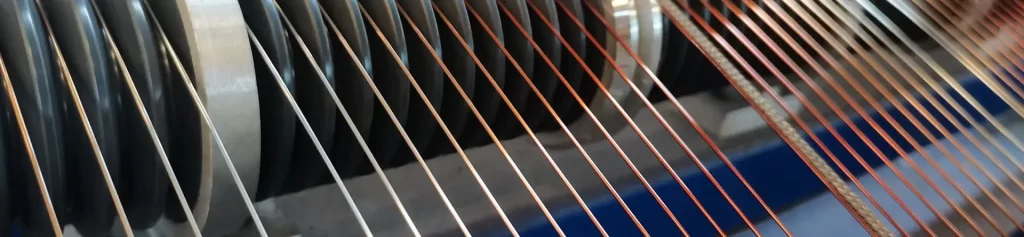
Magnet wire is an indispensable conductive material in motors, transformers, and electromagnetic equipment. By coating a thin layer of insulating enamel on the conductor surface, magnet wire enables high-density winding arrangement in compact spaces while ensuring good electrical insulation performance.
With the rapid development of power electronics, new energy vehicles, energy storage systems, and industrial automation, market requirements for magnet wire performance are increasingly diverse. Different application scenarios have differentiated demands for magnet wire’s thermal class, insulation strength, mechanical properties, and chemical stability. Understanding the classification system of magnet wire and the technical characteristics of each type is the foundation for engineering technicians in material selection and procurement decisions.
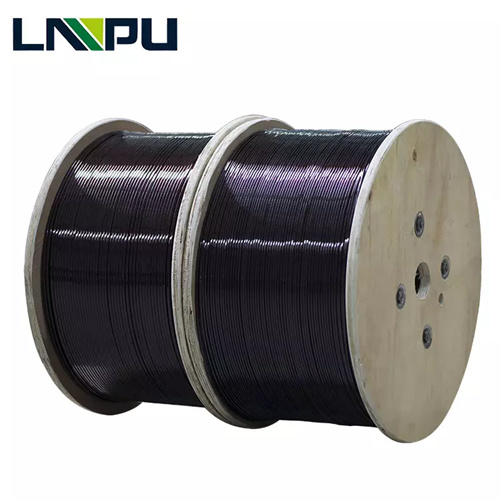
This article systematically reviews the classification system of magnet wire from five dimensions: insulation enamel systems, conductor materials, wire shapes, thermal classes, and special magnet wires, providing a comprehensive and practical technical guide for engineers and procurement decision-makers.
I. Classification by Insulation Enamel System
The insulation enamel system is the core basis for magnet wire classification, directly determining the wire’s thermal class, chemical properties, and mechanical characteristics.
1.1 Polyurethane Enameled Wire (UEW)
Polyurethane enameled wire is one of the most commonly used magnet wire types, with the following characteristics:
Thermal Class: Class 130 (B) or Class 155 (F)
Core Advantages:
- Direct Solderability: Can be soldered directly without enamel stripping, with soldering temperatures typically between 380-450°C, significantly improving production efficiency
- Good Flexibility: Suitable for high-speed winding, with enamel film resistant to cracking during the winding process
- Excellent Electrical Insulation: High breakdown voltage, suitable for precision electronic components
Primary Applications: Relays, electronic transformers, sensor coils, home appliance motors, communication equipment
1.2 Polyester Enameled Wire (PEW)
Polyester enameled wire is the most widely used magnet wire type in the industrial motor field:
Thermal Class: Class 130 (B) or Class 155 (F)
Core Advantages:
- Excellent Overall Performance: Achieves a good balance between heat resistance, mechanical strength, and electrical insulation
- Good Solvent Resistance: Can withstand solvent exposure during varnish impregnation treatment
- Good Abrasion Resistance: Suitable for high-speed automatic winding
Primary Applications: Small and medium motors, industrial transformers, pump motors, fan motors
1.3 Polyesterimide Enameled Wire (PEIW/EIW)
Polyesterimide enameled wire is an improved high-temperature magnet wire based on polyester:
Thermal Class: Class 155 (F)
Core Advantages:
- Excellent Heat Resistance: Can operate stably for extended periods at 155°C
- Good Thermal Shock Resistance: Enamel film resistant to cracking under rapid temperature changes
- Good Refrigerant Resistance: Suitable for sealed motors and compressor motors
Primary Applications: Industrial motors, compressors, traction motors, high-power transformers
1.4 Polyesterimide/Polyamide-imide Composite Enameled Wire (EI/AIW)
This is one of the highest thermal class composite magnet wires currently available:
Thermal Class: Class 180 (H) or Class 200 (N)
Core Advantages:
- Top-Level Heat Resistance: Can operate for extended periods at 180-200°C high temperatures
- Excellent Chemical Resistance: Outstanding resistance to acids, alkalis, and solvents
- Excellent Corona Resistance: Suitable for inverter motors and high-frequency applications
- Good Mechanical Strength: High tensile strength, suitable for high-intensity winding
Primary Applications: New energy vehicle drive motors, inverter motors, aviation motors, special transformers
1.5 Polyimide Enameled Wire (AIW/QZY)
Polyimide enameled wire is the highest thermal class magnet wire type:
Thermal Class: Class 220 (C) or higher
Core Advantages:
- Extreme Heat Resistance: Can operate at temperatures above 220°C
- Excellent Radiation Resistance: Suitable for nuclear industry and aerospace applications
- Excellent Low-Temperature Performance: Maintains flexibility even in extremely low-temperature environments
Primary Applications: Aerospace, military, nuclear industry, extreme high-temperature motors
II. Classification by Conductor Material
2.1 Copper Enameled Wire
Copper enameled wire is the most traditional magnet wire type, using electrolytic copper (purity ≥99.9%) as the conductor:
Conductivity: 100% IACS (International Annealed Copper Standard)
Advantages:
- Optimal conductivity, lowest copper losses
- High mechanical strength, suitable for various winding processes
- Mature connection processes, both welding and crimping available
- Technically mature, long application history
Limitations:
- Higher raw material cost
- High density (8.96 g/cm³), heavier weight
Primary Applications: High-power motors, precision transformers, high-end home appliance motors, new energy vehicle drive motors
2.2 Aluminum Enameled Wire
Aluminum enameled wire uses electrical aluminum (purity ≥99.5%) as the conductor:
Conductivity: 61% IACS
Advantages:
- Significant cost advantage, raw material cost 20-30% lower than copper wire
- Low density (2.70 g/cm³), approximately 60% lighter weight
- Good heat dissipation performance
Limitations:
- Lower conductivity than copper wire, requires increased cross-section for compensation
- Higher connection process requirements, requires specialized welding technology
Primary Applications: Home appliance compressor motors, small and medium motors, distribution transformers, lighting ballasts
2.3 Copper Clad Aluminum Enameled Wire (CCA)
Copper clad aluminum enameled wire is a bimetallic composite material with an aluminum core as the inner layer and a copper cladding layer as the outer layer:
Conductivity: 61-65% IACS
Advantages:
- Combines copper’s connection performance with aluminum’s lightweight advantages
- AC resistance at high frequencies approaches pure copper (skin effect)
- Lower cost than pure copper wire
Primary Applications: High-frequency transformers, relays, micro motors, electronic ballasts
III. Classification by Wire Shape
3.1 Round Enameled Wire
Round enameled wire is the most common magnet wire shape, with wire diameters ranging from 0.016mm to 7.0mm:
Advantages:
- Mature production process, lower cost
- Suitable for various winding equipment
- Complete specifications, wide selection range
Primary Applications: Motor windings, transformer windings, inductor coils
3.2 Flat Enameled Wire
Flat enameled wire has a rectangular cross-section, with thickness typically 0.8-10mm and width 2-25mm:
Advantages:
- High space utilization, slot fill rate can exceed 90%
- Large heat dissipation area, good cooling effect
- Suitable for high-power, high-density windings
Primary Applications: New energy vehicle drive motors, large transformers, high-frequency inductors, traction motors
3.3 Self-Bonding Enameled Wire
Self-bonding enameled wire has a layer of thermoplastic or thermosetting self-bonding enamel coated on the outer layer of the insulation film. After heating, the coil can self-form:
Advantages:
- Coil self-forming, no bobbin or varnish impregnation required
- High production efficiency, suitable for mass production
- Compact coil structure, small volume
Primary Applications: Relay coils, sensor coils, automotive ignition coils, solenoid valves
IV. Classification by Thermal Class
Thermal class is one of the most important technical indicators for magnet wire. According to IEC 60317 standard, the thermal class classification of magnet wire is as follows:
| Thermal Class | Max Operating Temperature | Common Insulation Systems | Primary Application Areas |
|---|---|---|---|
| Class A (105°C) | 105°C | Oil-based varnish, asphalt varnish | Traditional motors, low-end applications (phasing out) |
| Class B (130°C) | 130°C | Polyester, polyurethane | Home appliance motors, small/medium motors, transformers |
| Class F (155°C) | 155°C | Polyesterimide | Industrial motors, compressors, traction motors |
| Class H (180°C) | 180°C | Polyesterimide/Polyamide-imide | New energy vehicle motors, inverter motors |
| Class C (220°C+) | Above 220°C | Polyimide, silicone resin | Aerospace, military, nuclear industry |
4.1 Principles for Selecting Thermal Class
When selecting the thermal class of magnet wire, the following factors need to be considered:
Operating Temperature: Select the appropriate thermal class based on the maximum operating temperature of the motor or transformer, typically with a 10-20°C margin.
Environmental Conditions: High-temperature environments, enclosed spaces, or poorly cooled situations require higher thermal class magnet wire.
Life Requirements: Long-life applications (such as industrial motors requiring 15-20 year life) need high thermal class magnet wire to ensure long-term reliability.
Cost Budget: Higher thermal class magnet wire comes at higher cost. Under the premise of meeting usage requirements, choose the most cost-effective thermal class.
V. Special Magnet Wires
In addition to conventional magnet wires, there are special magnet wires that meet specific application requirements:
5.1 Corona-Resistant Enameled Wire
In inverter motors and high-frequency applications, high-frequency pulse voltages can produce corona discharge, accelerating the aging of ordinary magnet wire insulation. Corona-resistant enameled wire significantly improves the corona resistance of the enamel film by adding nano inorganic fillers (such as alumina, silica, etc.) to the film.
Primary Applications: Inverter motors, wind turbine generators, high-speed motors
5.2 Refrigerant-Resistant Enameled Wire
In sealed compressors, magnet wire needs long-term contact with refrigerants (such as R134a, R600a, etc.). The enamel film of refrigerant-resistant enameled wire is specially formulated to resist refrigerant degradation, ensuring insulation performance does not deteriorate due to refrigerant contact.
Primary Applications: Air conditioning compressors, refrigerator compressors, heat pumps
5.3 Ultra-Fine Enameled Wire
Ultra-fine enameled wire with wire diameters less than 0.05mm is used in micro motors, precision instruments, and medical devices. The production of ultra-fine enameled wire requires high-precision drawing and enameling equipment, with high technical barriers.
Primary Applications: Micro motors, precision sensors, medical devices, optical instruments
5.4 High-Temperature Self-Bonding Enameled Wire
Combining high-temperature enamel film with self-bonding characteristics, this wire can self-form coils in high-temperature environments, suitable for sensor and relay applications in high-temperature conditions.
Primary Applications: Automotive sensors, high-temperature relays, solenoid valves
VI. Selection Recommendations
When selecting magnet wire, it is recommended to conduct comprehensive evaluation from the following dimensions:
- Operating Temperature: Select the appropriate thermal class based on the maximum operating temperature of the application environment.
- Electrical Performance: Consider operating voltage, frequency, and insulation strength requirements.
- Mechanical Performance: Consider winding speed, bend radius, and tensile strength requirements.
- Chemical Environment: Consider whether there is exposure to refrigerants, solvents, acids, alkalis, or other chemical media.
- Cost Budget: Under the premise of meeting technical requirements, choose the most cost-effective product.
- Certification Requirements: Ensure the product meets the certification requirements of the target market (such as UL, IEC, NEMA, etc.).
Conclusion
The classification system of magnet wire covers multiple dimensions including insulation enamel systems, conductor materials, wire shapes, thermal classes, and special applications. Different types of magnet wire each have their unique technical characteristics and applicable scenarios. Polyurethane enameled wire excels in direct solderability, polyester enameled wire wins with overall performance, polyesterimide/polyamide-imide composite enameled wire demonstrates outstanding heat resistance, and polyimide enameled wire is the preferred choice for extreme high-temperature applications.
Engineering technicians and procurement decision-makers should comprehensively consider factors such as operating temperature, electrical performance, mechanical performance, chemical environment, and cost budget based on specific application needs, selecting the most suitable magnet wire type. Correct selection not only ensures product performance and reliability but also achieves cost optimization while meeting technical requirements.