

What is Polyamide-imide Overcoated Enameled Copper Wire?
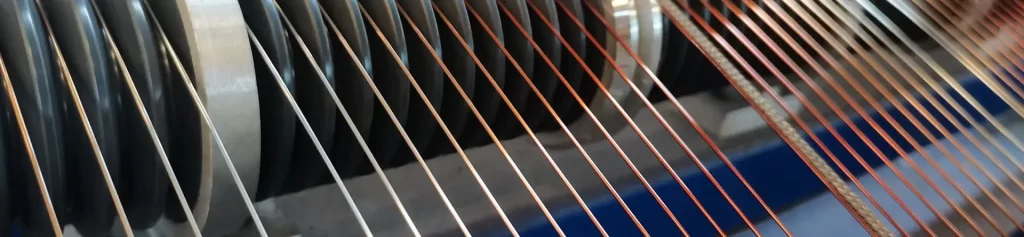
Polyamide-imide (PAI) overcoated enameled copper wire represents one of the highest-performance wire products available for demanding electrical applications. This wire features a base coating of polyesterimide (PEI) or polyester (PE) covered with an outer layer of polyamide-imide resin, combining the excellent bonding properties of the base coat with the superior thermal and chemical resistance of the PAI outer layer.
The manufacturing process applies the base insulation first, then adds the PAI topcoat through successive coating and baking cycles. This double-layer construction delivers performance that neither material could achieve alone. The result is wire suitable for the most demanding applications where other wire products would fail prematurely.
Key Properties of PAI Overcoated Wire
Exceptional Thermal Performance
PAI overcoated wire achieves Class H thermal rating (180°C), placing it among the highest temperature-rated wire products commercially available. The PAI outer layer provides excellent heat resistance, while the base coat ensures good bonding and flexibility. This thermal capability allows motors and transformers to operate at higher temperatures or with greater safety margins compared to Class F (155°C) or Class B (130°C) alternatives.
Thermal aging resistance proves particularly impressive. Accelerated aging tests demonstrate that PAI overcoated wire maintains functional properties significantly longer than lower-rated products at equivalent temperatures. For applications requiring extended service life, this translates to reduced maintenance and replacement costs over equipment lifetime.
Outstanding Chemical Resistance
The polyamide-imide outer coating provides exceptional resistance to a wide range of chemical substances. This property proves critical in applications involving refrigerant exposure, oil contamination, or chemical processing environments. PAI-coated wire demonstrates superior resistance to:
- Refrigerants used in compressors and HVAC systems
- Industrial lubricating oils and cutting fluids
- Cleaning solvents and process chemicals
- Humidity and moisture exposure
This chemical resistance contributes to the wire’s long service life even in environments that would rapidly degrade lesser insulation materials.
Superior Mechanical Properties
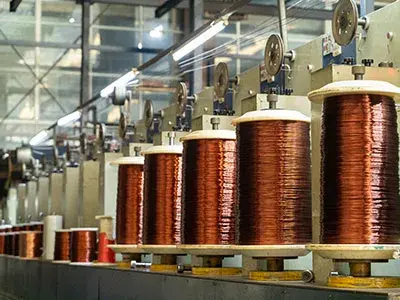
PAI overcoated wire offers outstanding mechanical performance across multiple dimensions. The coating adheres strongly to the copper conductor, maintaining integrity through tight winding operations, thermal cycling, and vibration exposure. Key mechanical characteristics include:
- High adhesion strength between insulation and conductor
- Excellent flexibility for complex winding configurations
- Outstanding abrasion resistance during handling and insertion
- Low springiness reducing coil distortion after winding
- Resistance to thermal shock and rapid temperature changes
Electrical Performance
Electrical properties meet or exceed requirements for demanding high-voltage applications. Breakdown voltage typically exceeds 8kV, providing substantial safety margins for applications up to several kilovolts. The PAI coating maintains its dielectric properties throughout thermal cycling and chemical exposure, ensuring consistent insulation performance throughout equipment service life.
Applications Requiring PAI Overcoated Wire
Refrigeration Compressor Motors
Compressor motors represent one of the most demanding applications for enameled wire. These machines operate in environments containing refrigerant gases and lubricating oils that aggressively attack standard insulation materials. PAI overcoated wire’s superior chemical resistance makes it the preferred choice for hermetic and semi-hermetic compressor designs found in refrigeration systems, air conditioners, and heat pumps.
The combination of high thermal rating and refrigerant resistance allows compressor motors to achieve reliable performance even as refrigerants cycle through pressure and temperature extremes during operation.
High-Temperature Industrial Motors
Industrial processes frequently require motors operating in elevated ambient temperatures or with limited cooling. PAI overcoated wire enables motor designs that exceed Class F performance, achieving Class H capability in appropriately designed equipment. Applications include:
- Furnace fan motors in steel mills
- Oil refinery and petrochemical process motors
- Glass manufacturing equipment
- Aluminum smelting plant machinery
Power Transformers and Reactors
Large power transformers often operate at elevated temperatures due to continuous load cycling and limited cooling in their installation environments. PAI overcoated wire provides the thermal margin necessary for transformers designed with high efficiency or compact dimensions where heat dissipation proves challenging.
Automotive Electrical Systems
Modern vehicles place increasing electrical demands on motors and actuators throughout the drivetrain and body systems. PAI-coated wire appears in various automotive applications where its combination of thermal performance, vibration resistance, and chemical tolerance meets demanding automotive requirements.
Comparison with Other Wire Types
PAI vs. Standard Polyester (PE) Wire
Standard polyester wire offers good general-purpose performance at Class B temperatures (130°C). It provides adequate electrical insulation and reasonable mechanical properties at economical pricing. However, polyester falls short in several critical areas compared to PAI overcoated products:
- Maximum temperature rating 50°C lower than PAI
- Limited chemical resistance, particularly to refrigerants
- Reduced thermal aging resistance
- Lower breakdown voltage capability
PAI vs. Polyesterimide (PEI) Wire
PEI wire represents a significant upgrade from standard polyester, achieving Class F ratings (155°C) through improved thermal properties. It offers good value for many industrial applications. PAI overcoated wire provides additional advantages:
- Additional 25°C thermal margin over PEI
- Superior chemical resistance compared to PEI
- Better abrasion resistance for demanding winding conditions
- Enhanced performance in refrigerant environments
PAI vs. Polyimide (PI) Wire
Polyimide wire (marketed under brands like Kapton) offers excellent high-temperature performance approaching Class N (200°C). However, polyimide has limitations that PAI addresses:
- PI bonds poorly to many surfaces without special treatments
- PAI offers better adhesion characteristics during winding
- PAI provides superior abrasion resistance
- PAI delivers excellent cost-to-performance ratio compared to premium PI products
Technical Specifications
PAI overcoated enameled copper wire is manufactured to meet or exceed international standards including IEC 60317 for international requirements and NEMA MW 1000 for North American specifications. Common specifications include:
- Thermal Class: Class H (180°C)
- Standard Sizes: 0.20mm to 5.00mm diameter range
- Breakdown Voltage: Typically exceeds 8kV
- Elongation: Minimum 30%, often 35-40%
- Adhesion: Excellent, maintaining coating integrity through demanding windings
- Chemical Resistance: Superior to most alternative insulation systems
Sourcing Considerations
Quality Verification
When sourcing PAI overcoated wire, verify manufacturer capabilities through appropriate testing documentation. Request certificates demonstrating compliance with applicable IEC or NEMA standards, along with specific test results for thermal life, breakdown voltage, and chemical resistance as relevant to your application.
Application Matching
While PAI overcoated wire offers exceptional performance, its premium pricing means it shouldn’t be specified indiscriminately. Reserve PAI products for applications genuinely requiring its capabilities—refrigerant exposure, temperatures exceeding Class F limits, or demanding chemical environments. Using standard products where adequate saves cost without performance sacrifice.
Supplier Relationships
Establish relationships with suppliers capable of providing consistent quality and technical support. Direct factory relationships offer advantages including competitive pricing, customization capability for specific requirements, and access to engineering expertise for specification optimization.
Cost Considerations
PAI overcoated wire costs approximately 20-40% more than standard polyester products and 10-20% more than polyesterimide alternatives. This premium reflects the advanced materials and more complex manufacturing process required. However, the cost premium often proves justified by:
- Extended equipment service life in demanding applications
- Reduced warranty claims and field failures
- Ability to use smaller, more efficient designs
- Avoidance of costly repairs in difficult-to-service equipment
Contact Our Technical Team
LP Industry supplies comprehensive PAI overcoated enameled copper wire for demanding applications worldwide. Our technical specialists can discuss your specific requirements and recommend optimal wire specifications for your applications. We maintain stocks of standard sizes and offer customization for unique application needs.