


The manufacturing of enameled aluminum wire is a complex process involving metal working, heat treatment, and chemical coating. From aluminum rod to finished enameled wire, the material must pass through multiple critical processes including wire drawing, annealing, enameling, and baking. The parameter control and quality inspection of each process directly affects the final product’s conductivity, insulation performance, and mechanical properties.
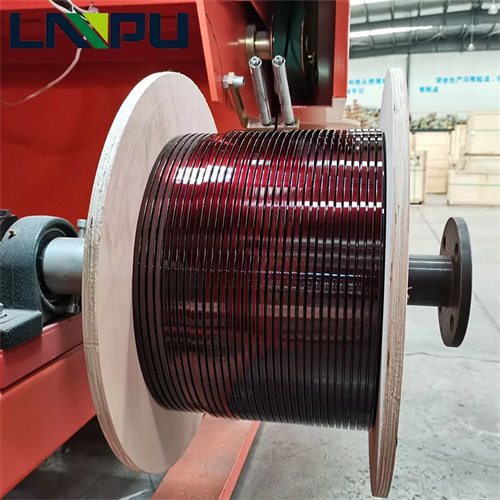
For technical personnel in electromagnetic wire manufacturing enterprises, quality management staff, and procurement professionals seeking to understand the production process of enameled aluminum wire, comprehensive mastery of the manufacturing process and quality control points is of great significance. This article systematically analyzes the complete manufacturing process of enameled aluminum wire from six dimensions: raw material preparation, core production processes, key process parameter control, quality inspection systems, common quality issues, and development trends.
I. Raw Material Preparation
1.1 Selection of Aluminum Rods
The manufacturing of enameled aluminum wire begins with high-quality aluminum rods. Common aluminum rod materials are 1350 or 1370 series electrical aluminum, with aluminum purity no less than 99.5%. High-purity aluminum rods ensure that the drawn conductor has good conductivity (≥61% IACS) and sufficient mechanical strength.
Aluminum rod diameters are typically 8-12mm. Before entering the wire drawing process, surface inspection and dimensional inspection must be conducted to ensure no oxide scale, cracks, inclusions, or other defects.
1.2 Selection of Insulating Enamel
Insulating enamel is one of the core raw materials for enameled wire. Based on the product’s thermal class and application scenarios, commonly used insulating enamels include:
- Polyurethane Enamel (UEW): Good solderability, suitable for home appliances and electronic transformers
- Polyester Enamel (PEW): Good overall performance, suitable for general industrial motors
- Polyesterimide Enamel (PEIW/EIW): Excellent heat resistance, suitable for Class F/H motors
- Polyamide-imide Enamel (AIW): Exceptional heat resistance, suitable for Class H applications
Before use, insulating enamel must undergo viscosity testing, solid content testing, and uniformity testing to ensure the enamel liquid meets process requirements.
II. Core Production Process Flow
The complete manufacturing process for enameled aluminum wire can be summarized as follows:
Aluminum Rod Preparation → Wire Drawing → Annealing → Enameling → Baking → Finished Product Inspection → Packaging
2.1 Wire Drawing
Wire drawing is a plastic deformation process in which thick aluminum rods are gradually drawn to the target wire diameter through a series of diamond dies.
Process Flow:
The aluminum rod first passes through a multi-stage wire drawing machine. Each pass through a die reduces the wire diameter once. A typical multi-stage drawing machine has 13-21 passes, reducing the wire diameter from 8-12mm gradually to 0.016-7.0mm (depending on product specifications).
Key Control Parameters:
- Drawing Speed: Set reasonably based on wire diameter and number of passes; fine wire can reach 30-40m/s, thick wire 5-15m/s
- Drawing Temperature: Control coolant temperature to prevent aluminum wire from overheating and annealing
- Pass Reduction Rate: Each pass reduction rate is controlled between 10-30%, avoiding excessive deformation that leads to breakage
- Die Maintenance: Regularly inspect die wear and replace timely to ensure wire diameter precision and surface quality
Quality Requirements:
The wire diameter tolerance of drawn aluminum wire is typically controlled within ±0.002mm, with a smooth surface free of scratches and conductivity ≥61% IACS.
2.2 Annealing
Aluminum wire after cold working deformation contains residual stress, and conductivity and flexibility are reduced. The annealing process restores the aluminum wire’s grain structure through heating and slow cooling, eliminating internal stress and restoring conductivity and flexibility.
Annealing Process:
The aluminum wire is heated to 300-500°C in a protective atmosphere (typically nitrogen or nitrogen-hydrogen mixture), held for a certain period, and then slowly cooled. The protective atmosphere prevents the aluminum wire from oxidizing at high temperatures.
Key Control Parameters:
- Annealing Temperature: Set based on aluminum wire specifications and target performance, typically in the 300-500°C range
- Holding Time: Ensure the aluminum wire fully recrystallizes, typically indirectly controlled through production line speed
- Protective Atmosphere Purity: Oxygen content controlled at ppm levels to prevent aluminum wire surface oxidation
- Cooling Rate: Control cooling rate to obtain desired grain size and mechanical properties
Quality Requirements:
After annealing, the aluminum wire conductivity should recover to ≥61% IACS, elongation ≥20%, and the surface should be free of oxidation discoloration.
2.3 Enameling
Enameling is the core process of enameled wire manufacturing, determining the thickness, uniformity, and adhesion of the insulating enamel film.
Enameling Methods:
- Felt Enameling: The aluminum wire passes through felt impregnated with insulating enamel, and the enamel liquid adheres to the wire surface. This method is suitable for fine wire with good enameling uniformity.
- Dip Coating: The aluminum wire is immersed in an enamel tank and then passes through a sizing die to remove excess enamel. Suitable for medium and thick wire.
- Die Coating: Film thickness is controlled through precision dies, suitable for high-precision products.
Key Control Parameters:
- Enamel Viscosity: Adjusted based on wire diameter and enameling method, typically 15-30 seconds (Zahn cup No. 4)
- Enameling Temperature: Control enamel liquid temperature at 25-35°C to ensure viscosity stability
- Film Thickness: Single coating thickness is typically controlled at 5-15μm, with multiple thin coatings to ensure film quality
- Environmental Cleanliness: The enameling workshop must be kept clean to prevent dust particles from adhering to the enamel film
2.4 Baking (Curing)
After enameling, the aluminum wire enters the baking oven, where high temperatures cause the solvents in the enamel to evaporate and the resin to cure, forming a durable insulating film.
Baking Process:
Enameled aluminum wire typically requires 8-15 enameling and baking cycles, with a thin layer of enamel applied each time, cured by baking before the next layer is applied. This “thin coat, multiple layers” process ensures the enamel film is uniform, dense, and bubble-free.
The baking oven is typically divided into multiple temperature zones:
- Preheating Zone: 150-250°C, solvents begin to evaporate
- High-Temperature Curing Zone: 350-550°C, resin fully cures
- Cooling Zone: Natural or forced cooling to room temperature
Key Control Parameters:
- Baking Temperature: Set based on insulating enamel type; polyurethane enamel has lower baking temperatures (350-450°C), while polyesterimide enamel has higher baking temperatures (450-550°C)
- Baking Time: Controlled through production line speed to ensure full film curing
- Oven Atmosphere: Sufficient oxygen is needed to promote curing, but solvent vapor concentration must be controlled to prevent explosion
- Exhaust Gas Treatment: Organic exhaust gases generated during baking must be treated through catalytic combustion to meet environmental emission standards
III. Key Process Parameter Control Table
| Process | Key Parameter | Control Range | Inspection Frequency |
|---|---|---|---|
| Wire Drawing | Wire Diameter | ±0.002mm | Continuous online inspection |
| Wire Drawing | Drawing Speed | 5-40m/s (depends on wire diameter) | Continuous monitoring |
| Annealing | Annealing Temperature | 300-500°C | Continuous monitoring |
| Annealing | Protective Atmosphere O&sub2; | <50ppm | Per shift inspection |
| Enameling | Enamel Viscosity | 15-30 seconds (Zahn cup No. 4) | Every 2 hours |
| Enameling | Film Thickness | 5-15μm per coat | Per batch sampling |
| Baking | Baking Temperature | 350-550°C | Continuous monitoring |
| Baking | Production Line Speed | Set according to specifications | Continuous monitoring |
IV. Quality Inspection System
4.1 Online Inspection
Modern enameled wire production lines are equipped with various online inspection devices:
- Wire Diameter Detection: Laser diameter gauges continuously monitor wire diameter, automatically feeding back to adjust drawing parameters
- Spark Testing: High-voltage spark detectors test film continuity, automatically alarming when breakdown points are detected
- Visual Inspection: CCD vision inspection systems detect enamel film surface defects
4.2 Factory Inspection
Finished enameled aluminum wire must undergo comprehensive performance testing before leaving the factory:
- Conductor Resistivity: Confirm conductivity ≥61% IACS
- Breakdown Voltage: Test the insulation strength of the enamel film, typically requiring ≥1000V
- Flexibility: Confirm no film cracking through mandrel wrap test
- Film Continuity: Spark testing confirms no breakdown points
- Dimensional Inspection: Outer diameter, film thickness, etc. meet standard requirements
- Thermal Performance: Thermal class confirmation, thermal shock test confirms no film cracking
4.3 Certification Requirements
Export products must meet relevant international certification requirements, such as UL, IEC, NEMA, REACH, RoHS, and other standards.
V. Common Quality Issues and Solutions
5.1 Film Pinholes
Phenomenon: Spark testing detects breakdown points.
Causes: Impurities or bubbles in the enamel liquid; insufficient cleanliness in the enameling environment; excessively high baking temperature causing film foaming.
Solutions: Strengthen enamel liquid filtration; improve workshop cleanliness; optimize the baking temperature curve.
5.2 Poor Film Adhesion
Phenomenon: Film peeling during mandrel wrap test or scraping test.
Causes: Oil or oxide layer on the aluminum wire surface; improper enamel liquid formulation; insufficient baking temperature leading to incomplete curing.
Solutions: Strengthen aluminum wire surface cleaning; adjust enamel liquid formulation; ensure sufficient baking temperature and time.
5.3 Non-Uniform Wire Diameter
Phenomenon: Wire diameter fluctuation exceeds tolerance range.
Causes: Die wear; unstable drawing tension; uneven annealing temperature.
Solutions: Regularly replace dies; inspect tension control system; calibrate annealing furnace temperature.
VI. Development Trends in Manufacturing Technology
6.1 Automation and Intelligence
Modern enameled wire production lines are developing towards high automation and intelligence. Through PLC control systems and MES systems, real-time monitoring of production parameters, automatic adjustment, and quality traceability are achieved.
6.2 Green Manufacturing
With increasingly strict environmental regulations, enameled wire manufacturing enterprises are adopting more environmentally friendly production processes, including low-VOC insulating enamels, efficient exhaust gas treatment systems, and energy-saving baking ovens.
6.3 High-Performance Materials
The development of new insulating materials has continuously improved the thermal class, corona resistance, and refrigerant resistance of enameled aluminum wire, meeting the needs of emerging applications such as new energy vehicles and energy storage systems.
Conclusion
The manufacturing of enameled aluminum wire is a precision process involving multiple stages and multiple parameter controls. From raw material selection to finished product factory release, every link requires strict quality control. The wire drawing process determines the conductor’s dimensional precision and mechanical properties, the annealing process restores the conductor’s conductivity and flexibility, and the enameling and baking processes determine the quality and reliability of the insulating enamel film.
With the continuous advancement of manufacturing technology, the production efficiency, product quality, and environmental performance of enameled aluminum wire are continuously improving. For buyers, understanding the manufacturing process of enameled aluminum wire helps to better evaluate the supplier’s technical strength and product quality, making more informed procurement decisions.