


Fiberglass Covered Wire in Substations
I. Introduction
Substations are critical nodes in power systems, undertaking the important functions of voltage conversion, power distribution, and electric energy transmission. High-voltage equipment within substations faces multiple challenges during operation, including high voltage, large current, strong magnetic fields, thermal stress, and environmental stress, placing extremely stringent requirements on electrical insulation materials.
Fiberglass covered wire, as a high-performance wrapped insulation wire, plays an irreplaceable role in substation equipment manufacturing due to its excellent high-temperature resistance, superior electrical insulation characteristics, good mechanical strength, and weather resistance.
This article systematically elaborates on the basic concepts, technical characteristics, specific applications in substations, and selection points of fiberglass covered wire, providing professional reference for substation design engineers and equipment procurement personnel.
II. Basic Concepts of Fiberglass Covered Wire
2.1 Definition
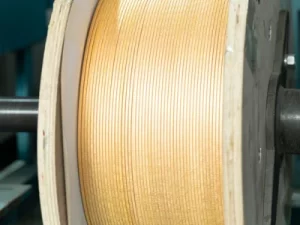
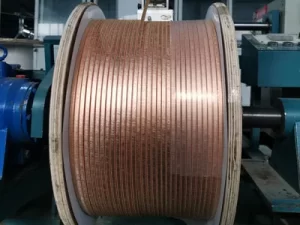
Fiberglass covered wire is a special magnetic wire made by wrapping copper or aluminum conductor with glass fiber threads and impregnating them with insulating resin. The glass fiber wrapped layer serves as the main insulation medium, providing multiple functions including electrical insulation, thermal protection, and mechanical reinforcement.
Unlike enameled wire, fiberglass covered wire has a thicker insulation layer, typically ranging from 0.5 mm to 2.0 mm, capable of withstanding higher voltage levels and temperature stress. The wrapped structure gives the insulation layer higher fill factor and better heat dissipation performance.
2.2 Basic Structure
The basic structure of fiberglass covered wire, from inside to outside, includes:
- Conductor Layer: High-purity copper or aluminum conductor with excellent conductivity.
- Wrapped Layer: Glass fiber threads wrapped around the conductor surface at a specific angle, forming a continuous insulation barrier.
- Impregnated Layer: Insulating resin impregnated into the glass fiber to enhance insulation performance and bonding strength.
- Outer Protective Layer (Optional): An additional protective coating may be applied on the outermost layer as needed.
2.3 Differences from Conventional Magnetic Wire
| Comparison Items | Fiberglass Covered Wire | Conventional Enameled Wire |
|---|---|---|
| Insulation Structure | Wrapping + Impregnation | Coating + Baking |
| Insulation Thickness | 0.5 mm – 2.0 mm | 0.02 mm – 0.10 mm |
| Temperature Resistance | Up to 800°C (depending on material) | Typically ≤240°C |
| Voltage Level | Medium/High/Extra-High Voltage | Low/Medium Voltage |
| Main Applications | Transformers/Reactors | Motors/Precision instruments |
III. Core Technical Characteristics and Parameter Requirements
3.1 Core Technical Characteristics
- Excellent Temperature Resistance: Glass fiber itself can withstand temperatures above 500°C. After impregnating with heat-resistant resin, the overall thermal class can reach Class C (above 200°C) or higher, meeting the application requirements of high-temperature environments in substations.
- Superior Electrical Insulation Performance: The glass fiber wrapped layer is dense and uniform, with breakdown electric field strength reaching over 20 kV/mm, maintaining reliable insulation performance in high-voltage environments.
- Good Weather Resistance: Glass fiber materials have chemically stable properties, with resistance to moisture, salt spray, and UV radiation, suitable for harsh outdoor substation environmental conditions.
- Excellent Heat Dissipation Performance: The wrapped structure of fiberglass covered wire forms longitudinal channels, facilitating heat dissipation and effectively reducing operating temperature rise.
- Reliable Mechanical Strength: Glass fiber provides additional mechanical reinforcement, giving the wrapped wire excellent tensile strength, bending resistance, and vibration resistance.
3.2 Key Parameter Requirements
| Parameter | Requirements | Description |
|---|---|---|
| Conductor Material | Copper or Aluminum | Selected according to design requirements |
| Conductivity | Copper ≥101% IACS | Ensure low resistance |
| Glass Fiber Content | ≥60% | Ensure insulation performance |
| Breakdown Voltage | ≥15 kV/mm | Ensure insulation reliability |
| Thermal Class | Class C (200°C+) | Meet high-temperature environments |
| Tensile Strength | ≥200 MPa | Ensure mechanical performance |
3.3 Common Specification Ranges
Conductor Cross-Sectional Area: 10 mm² – 2000 mm²
Insulation Thickness: 0.5 mm – 2.0 mm (customized according to voltage level)
Wrapping Method: Single-layer/Double-layer/Multi-layer wrapping
IV. Specific Applications in Substations
4.1 Power Transformers
Winding Wire: In large power transformers, fiberglass covered wire is used as the main wire material for high-voltage and low-voltage windings. Its high insulation strength and temperature resistance ensure the safe operation of transformers under rated load and overload conditions.
Regulating Windings: The windings of on-load tap changers in transformers need to withstand frequent voltage regulation operations. The temperature resistance and mechanical performance of fiberglass covered wire can meet these working condition requirements.
Series Reactors: In series reactors, high-voltage coils wound with fiberglass covered wire can operate stably for a long time under high voltage and high current conditions.
4.2 Shunt Reactors
High-Voltage Shunt Reactors: Used to compensate for the capacitive reactive power of extra-high-voltage transmission lines, with windings subjected to high voltage levels. The high insulation strength and excellent heat dissipation performance of fiberglass covered wire can effectively reduce reactor temperature rise and improve operating efficiency.
Neutral Point Reactors: Used to limit single-phase ground fault currents, usually wound with fiberglass covered wire to ensure reliability under abnormal working conditions.
4.3 Instrument Transformers
Current Transformers (CT): In high-voltage current transformers, fiberglass covered wire is used to manufacture primary and secondary windings, needing to withstand the thermal shock of high voltage and short-circuit current.
Voltage Transformers (VT/PT): The high-voltage windings of voltage transformers use fiberglass covered wire. Its excellent insulation performance and temperature stability ensure voltage measurement accuracy and equipment lifespan.
4.4 Busbar Systems
Enclosed Busbars: The main busbars in substations are covered with glass fiber insulation material, forming an enclosed insulated busbar trough, significantly improving safety and reliability.
Branch Busbars: Branch busbars connecting transformers and switching equipment use glass fiber insulation to ensure safe operation in high-voltage environments.
4.5 Switching Equipment
High-Voltage Circuit Breakers: In some types of high-voltage circuit breakers, fiberglass covered wire is used to make arc extinguishing coils and operating mechanism coils, needing to withstand high voltage and thermal stress.
Disconnect Switch Operating Mechanisms: The coils of operating mechanisms use fiberglass covered wire to ensure reliability under frequent operating conditions.
V. Selection Guide
5.1 Selection Based on Voltage Level
| Voltage Level | Recommended Insulation Thickness | Wrapping Layers | Description |
|---|---|---|---|
| 10 kV Class | 0.5 mm – 1.0 mm | 1 – 2 layers | Standard application |
| 35 kV Class | 1.0 mm – 1.5 mm | 2 – 3 layers | Medium voltage application |
| 110 kV Class | 1.5 mm – 2.0 mm | 3 – 4 layers | High voltage application |
| 220 kV and above | Custom design | Multi-layer | Extra-high voltage customization |
5.2 Selection Based on Temperature Resistance Requirements
- Standard Temperature Resistance (Class C 200°C): Suitable for most substation environments.
- Ultra-High Temperature Resistance (250°C+): Suitable for special applications in high-altitude or high-temperature environments.
- Low-Temperature Special Specifications: Suitable for substations in extremely cold regions.
5.3 Selection Based on Conductor Material
| Conductor Material | Conductivity | Applicable Scenarios |
|---|---|---|
| Copper Conductor | ≥101% IACS | High current, high load scenarios |
| Aluminum Conductor | ≥102% IACS (annealed) | Lightweight, cost-sensitive scenarios |
VI. Quality Control and Testing
6.1 Raw Material Control
- Conductor Quality: Strictly control the purity and mechanical properties of copper/aluminum conductors.
- Glass Fiber Quality: Select high-quality glass fiber threads to ensure chemical stability and mechanical strength.
- Insulating Resin Quality: Select insulating resins with excellent temperature resistance to ensure impregnation quality.
6.2 Process Control
| Process | Control Points | Inspection Items |
|---|---|---|
| Wire Drawing | Dimensional accuracy, surface quality | Diameter tolerance, appearance |
| Wrapping | Wrapping tension, angle, overlap rate | Insulation thickness, uniformity |
| Impregnation | Resin viscosity, impregnation time, curing | Impregnation degree, curing degree |
| Testing | Full performance testing | Electrical performance, mechanical performance |
6.3 Finished Product Testing Items
- Electrical Strength Test: Verify the insulation layer’s ability to withstand rated voltage.
- Partial Discharge Test: Evaluate the integrity of the insulation system.
- Temperature Resistance Test: Verify performance stability in high-temperature environments.
- Mechanical Performance Test: Verify tensile strength and bending resistance.
VII. Conclusion
Fiberglass covered wire, as a key material in substation equipment manufacturing, plays an irreplaceable role in high-voltage equipment such as power transformers, reactors, instrument transformers, and busbar systems, due to its excellent temperature resistance, superior electrical insulation characteristics, good mechanical strength, and weather resistance.
With the continuous advancement of power grid construction and the increasing voltage levels, the performance requirements for fiberglass covered wire are becoming increasingly stringent. Upstream manufacturers should continuously optimize material formulations and process levels to provide higher-performance and more reliable fiberglass covered wire products for substation equipment.
Zhengzhou LP Industry Co., Ltd. is a professional manufacturer specializing in the R&D, production, and sales of magnetic wire for over 30 years. Our fiberglass covered wire products cover multiple series with customizable insulation thickness and voltage levels covering 10 kV – 220 kV, widely used in power transformers, reactors, instrument transformers, and other substation equipment fields.
Our factory is certified by ISO9001/ISO14001/ISO45001, and our products comply with IEC/GB international standards, and have been exported to over 50 countries and regions worldwide.
Contact us for a professional quote:
Email: office@cnlpzz.com | WhatsApp: 0086-19337889070