

Introduction
Copper prices have nearly tripled over the past decade, putting sustained pressure on manufacturers of motors, transformers, inductors, and consumer electronics. At the same time, weight reduction has become a design priority across automotive, aerospace, and portable-device markets. Enameled copper clad aluminum wire — universally abbreviated as ECCA wire — addresses both pressures in a single engineered product.
ECCA wire is not a compromise material or a “cheap substitute.” It is a purpose-engineered conductor built on decades of bimetallic wire science, now manufactured to international standards including IEC 60317, NEMA MW1000, and JIS C3202. This guide covers everything you need to make an informed purchasing decision: how ECCA wire is constructed, how its properties compare to solid copper, which insulation grades suit which applications, and what to check before placing a bulk order.
What Is Enameled Copper Clad Aluminum Wire?
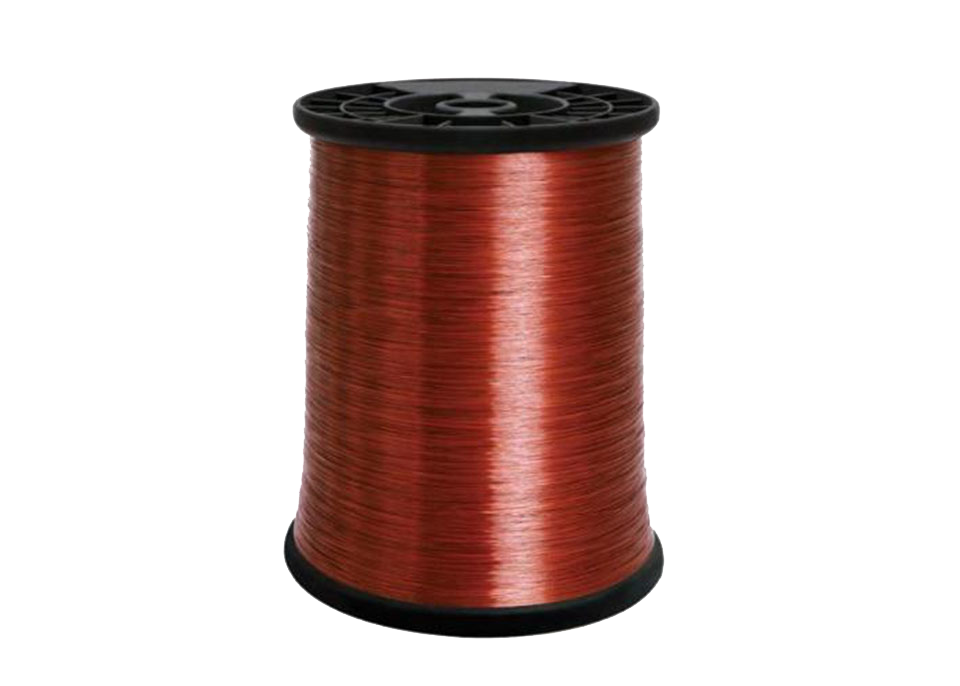
Enameled copper clad aluminum wire (ECCA wire) is a type of magnet wire that uses a copper-clad aluminum (CCA) rod as its conductor, coated with a thin enamel insulation layer. The conductor itself has two distinct zones: a solid aluminum core that provides low density and low cost, and a concentric copper cladding that provides conductivity, solderability, and oxidation resistance.
The enamel coating — applied by a continuous dipping or spraying process followed by thermal curing — provides electrical insulation between adjacent turns in a coil winding, preventing short circuits without requiring bulky jacketing.
How the CCA Conductor Is Made
Copper cladding is applied to the aluminum rod by one of two methods:
- Electroplating: Copper ions are deposited onto the aluminum surface through an electrochemical reaction, producing a uniform layer with tight thickness control.
- Hot-dipping / cladding: The aluminum rod is passed through molten copper or a copper strip is pressure-bonded concentrically onto it at high temperature, creating a metallurgical bond.
After cladding, the bimetallic rod is drawn through progressive dies to the target diameter, then annealed to restore ductility. The resulting CCA wire is then fed into the enameling machine for insulation coating.
Structure at a Glance
| Layer | Material | Function |
|---|---|---|
| Core | Aluminum (typically 85–90% by volume) | Low weight, low cost, structural body |
| Cladding | Pure copper (typically 10–15% by volume) | Conductivity, solderability, oxidation barrier |
| Enamel coating | Polyurethane, polyester, polyesterimide, or PAI | Electrical insulation between turns |
ECCA Wire vs. Solid Copper Wire: A Technical Comparison
Understanding the trade-offs is the foundation of any buying decision. The table below compares ECCA wire directly to solid copper enameled wire of the same diameter.
| Property | Solid Copper Enameled Wire | ECCA Wire |
|---|---|---|
| Electrical conductivity | Benchmark (100%) | ~61–63% of copper |
| DC resistance (same diameter) | 1× | ~1.45× higher |
| Density | 8.9 g/cm³ | ~3.6–4.0 g/cm³ |
| Weight vs. copper (same diameter) | 100% | ~40–45% |
| Wire length per ton (same diameter) | 1× | 2.6–3.2× |
| Solderability | Excellent | Excellent (copper surface) |
| Oxidation resistance | Good | Good (copper surface protects Al core) |
| High-frequency performance | Good | Near-equivalent (skin effect) |
| Relative raw material cost | Higher | Substantially lower |
The Skin Effect Advantage
In DC and low-frequency AC circuits, current distributes evenly across the full cross-section of a conductor. At higher frequencies, current migrates toward the outer surface — a phenomenon called the skin effect. The skin depth in copper at 1 MHz is roughly 66 µm, meaning most of the current flows through the outermost layers of the conductor.
Because the “skin” of ECCA wire is pure copper, it performs nearly equivalently to solid copper in RF, voice-coil, and high-frequency transformer applications. This is one of the primary technical reasons ECCA has displaced solid copper in speaker voice coils, audio inductors, wireless charging coils, and communication cable windings, without any measurable loss in performance.
Where Solid Copper Retains the Advantage
For high-power DC applications — heavy-duty motor windings, power transformers with large cross-section conductors, and high-current busbars — the 1.45× higher resistance of ECCA at equivalent diameter is a real constraint. In these designs, engineers must upsize the ECCA conductor to achieve the same current-carrying capacity, which partially offsets the weight and cost benefits. For such applications, solid copper remains the preferred choice unless weight reduction is a primary engineering objective.
Enamel Insulation Types and Thermal Classes
The enamel coating determines how much heat the wire can sustain in continuous operation. Thermal class (defined by IEC 60085) is the most important insulation specification to check before ordering. Selecting a class lower than your application’s operating temperature will cause accelerated insulation degradation and premature failure.
A useful rule of thumb: specify a thermal class at least 10–20°C above your application’s worst-case operating temperature to maintain a safe margin.
Polyurethane (PU) — Class 130 or 155
Polyurethane enamel is the easiest to process: it can be soldered directly without stripping, which significantly reduces assembly time and cost. It offers good electrical properties but moderate heat resistance. Polyurethane-coated ECCA is the standard choice for:
- Audio voice coils in headphones and speakers
- Small transformer windings with low thermal demand
- RF antenna coils
- Signal inductors in consumer electronics
Polyester (PE) — Class 155
Polyester enamel provides improved thermal stability over polyurethane and good chemical resistance. It is widely used in household appliance motors, relay coils, and small motor windings where operating temperatures are moderate and direct soldering is not required.
Polyesterimide (PEI) — Class 180
Polyesterimide combines good mechanical strength, high-temperature resistance, and good resistance to refrigerants and solvents. It is a versatile mid-grade insulation used in:
- Air-conditioner and refrigerator compressor motors
- Industrial motor windings
- Medium-duty transformers
- Demagnetizing and deflection coils
Polyamide-imide (PAI) / Composite PEI+PAI — Class 200 or 220
The highest-performance grades use polyamide-imide as a topcoat over a polyesterimide base. This combination delivers outstanding heat resistance, excellent mechanical toughness, high thermal shock resistance, and good resistance to refrigerants and chemicals. It is the specification of choice for:
- Electric vehicle (EV) traction motor windings
- High-duty industrial motors subject to rapid start/stop cycles
- Aerospace winding components
- High-frequency transformers in demanding environments
Insulation Grade Summary
| Enamel Type | Thermal Class | Key Benefit | Typical Application |
|---|---|---|---|
| Polyurethane (PU) | 130 / 155°C | Direct solderability | Voice coils, RF coils, small transformers |
| Polyester (PE) | 155°C | Chemical resistance | Appliance motors, relays |
| Polyesterimide (PEI) | 180°C | Heat + solvent resistance | Compressors, industrial motors |
| PEI + PAI composite | 200–220°C | Maximum durability | EV motors, aerospace, heavy-duty industrial |
Key Applications of ECCA Wir
ECCA wire is found in a wide range of industries. Understanding where it excels helps you assess fit for your own production requirements.
Motors and Compressors
In household motors, miniature motors, and HVAC compressors, ECCA reduces the overall weight of the winding assembly without sacrificing performance. Refrigerant-resistant insulation grades (PEI or PEI+PAI) make it directly compatible with hermetic compressor environments.
Transformers and Inductors
ECCA is used extensively in small and medium power transformers, ballasts, and inductors where a balance of conductivity, cost, and compact winding is required. The lighter weight also reduces stress on transformer cores and mounting structures.
Speaker Voice Coils and Audio Equipment
The lightweight aluminum core means a voice coil wound with ECCA wire is significantly lighter than a pure-copper equivalent. A lighter voice coil has lower inertia and can respond faster to rapid signal changes, improving high-frequency transient response. ECCA is the dominant choice in headphone drivers and many high-performance loudspeaker voice coils.
Wireless Charging Coils
Wireless charging (Qi and similar standards) operates at frequencies of 100–200 kHz, firmly in the regime where the skin effect is relevant. ECCA wire performs comparably to solid copper at these frequencies while saving weight and cost — an important consideration in the tight form factors of mobile devices and wearables.
Automotive Electronics
In non-critical automotive wiring, sensors, and actuator coils, ECCA contributes to vehicle weight reduction. Electric and hybrid vehicle designs are particularly weight-sensitive; every kilogram saved in wiring and winding assemblies translates to improved range. Automotive-grade ECCA with high thermal class insulation is also used in EV motor windings.
Communication and Signal Cables
ECCA wire is used in communication cable winding, telephone line components, and data transmission applications where its high-frequency performance is fully adequate and the cost and weight savings are commercially attractive.
Copper Content Ratio: How to Choose
The copper-to-aluminum volume ratio is a critical specification that directly affects performance, weight, and cost. Most manufacturers offer standard ratios and can customize on request.
- 10% copper by volume (approximately 3:7 copper-to-aluminum by weight): The most cost-effective option. Adequate for most general-purpose applications where solderability and oxidation resistance are the primary benefits sought.
- 15% copper by volume (approximately 4:6 by weight): The industry’s most popular ratio. Provides a good balance between cost reduction and performance closely matching pure copper wire. Recommended as the default for most buyers.
- 20%+ copper by volume: Higher copper ratios improve conductivity and reduce DC resistance, approaching the performance of solid copper more closely. Suitable for demanding applications where full conductor upsize is not practical.
Key principle: For high-frequency applications, 10–15% copper is entirely sufficient because current flows in the copper skin regardless of the core size. For DC or low-frequency power applications, a higher copper ratio or a larger wire diameter will be needed to compensate for the higher resistivity of the aluminum core.
How to Evaluate ECCA Wire Quality: A Buyer’s Checklist
The quality gap between ECCA wire manufacturers is significant. Substandard product can have uneven copper layer thickness, poor bonding between the copper and aluminum, inconsistent enamel coverage, or conductor diameter variation outside tolerance. Use this checklist when vetting suppliers.
1. Copper Layer Uniformity and Adhesion
Request a cross-section photograph or independent measurement of the copper layer. The copper cladding must be uniform in both the circumferential and longitudinal directions. Poor concentricity causes inconsistent conductivity and can lead to delamination during winding.
2. Enamel Breakdown Voltage
Each insulation grade has a minimum dielectric breakdown voltage specification under IEC 60317. Ask the supplier to provide test reports confirming the wire meets this threshold. Typical values for round enameled wire range from 3 kV to over 10 kV depending on diameter and insulation build.
3. Elongation and Flexibility
ECCA wire used in precision winding must meet minimum elongation requirements. Wire that is too brittle will fracture during high-speed winding operations. IEC 60317 specifies elongation minimums; request the tensile test report.
4. Solderability
For polyurethane-coated ECCA, confirm the wire passes a standard solder bath test (IEC 60317-13 or equivalent) at the specified temperature and dip duration. Solderability failure is a common quality issue with lower-grade product.
5. Diameter Tolerance
Request a dimensional report confirming the conductor diameter and the total enamel-build diameter are within specified tolerances across the reel length. Diameter variation causes impedance inconsistency in precision coil designs.
6. International Standards Compliance
Specify one of the following standards on your purchase order: IEC 60317 (international), NEMA MW1000 (North American), or JIS C3202 / ASTM B 566-93 (Japan / US). Reputable manufacturers should be able to provide compliance documentation for your chosen standard without hesitation.
7. Samples and Test Reports Before Bulk Order
Any credible ECCA wire supplier should offer samples (typically up to 0.5 kg free of charge, with the buyer covering freight) along with a current batch quality inspection report. Winding the sample yourself before committing to a full order is the most reliable quality verification.
ECCA Wire Specifications: What to Include in Your RFQ
When requesting a quotation, provide the following information to ensure you receive an accurate offer and technically correct product:
- Conductor diameter: in mm or AWG
- Enamel type: PU / PE / PEI / PEI+PAI
- Thermal class: 130 / 155 / 180 / 200 / 220°C
- Insulation build: single or heavy (double)
- Copper content ratio: 10%, 15%, 20%, or custom
- Shape: round or flat (rectangular)
- Spool type and weight: DIN 100, 160, 200, 250mm; kg per spool
- Applicable standard: IEC 60317, NEMA MW1000, or JIS C3202
- Required quantity and delivery schedule
- Special requirements: self-bonding topcoat, refrigerant resistance, radiation resistance, etc.
Is ECCA Wire Right for Your Application? A Decision Framework
Use the following framework to make the choice quickly:
Choose ECCA wire if:
- Your application operates at high frequency (above ~10 kHz) and the skin effect makes copper content near the surface the primary performance driver
- Weight reduction is a design priority (aerospace, automotive, portable electronics, wearables)
- Raw material cost is a significant production cost driver and the application does not demand absolute minimum resistance
- You need a lightweight alternative to solid copper in voice coil, inductor, or small transformer windings
- Your production volumes are large enough that per-unit material cost is a meaningful lever
Stick with solid copper enameled wire if:
- The application is a high-power DC winding where cross-sectional resistance must be minimized
- Space constraints make conductor upsize impossible or impractical
- Regulatory, certification, or customer specifications explicitly require solid copper
- The application involves repeated mechanical flexing at the connection point where the Al-Cu interface could be stressed
Frequently Asked Questions
Q: What does ECCA stand for? A: ECCA stands for Enameled Copper Clad Aluminum. It refers to a magnet wire product in which a copper-clad aluminum (CCA) conductor is coated with an insulating enamel layer. The acronym is used interchangeably with “CCAW” (Copper Clad Aluminum Wire) in some markets.
Q: Is ECCA wire as conductive as pure copper wire? A: No. ECCA wire has an electrical conductivity of approximately 61–63% that of solid copper, and its DC resistance is approximately 1.45 times higher for the same diameter. However, at high frequencies (above ~10 kHz), the skin effect concentrates current in the outer copper layer, making ECCA nearly equivalent to solid copper in high-frequency performance.
Q: Can ECCA wire be soldered directly? A: Yes, when the enamel coating is polyurethane (PU). PU-coated ECCA wire burns away during soldering, allowing direct tin bonding without mechanical stripping. Other insulation grades (PE, PEI, PAI) require mechanical or chemical stripping before soldering.
Q: What is the typical copper content in ECCA wire? A: The standard copper volume ratio is 10–15%, which corresponds to a copper weight ratio of roughly 30–40% of total conductor weight. A 15% copper volume ratio is the most widely used because it closely matches pure copper wire performance at a substantially lower cost. Higher ratios (20–40%) are available by custom order.
Q: What quality standards should ECCA wire meet? A: The key international standards are IEC 60317 (globally recognized), NEMA MW1000 (North America), and JIS C3202 / ASTM B 566-93 (Japan / United States). Always specify the applicable standard on your purchase order and request a compliance test report from the supplier.
Q: How does ECCA wire help manufacturers reduce costs? A: Because the aluminum core is far less dense than copper, one metric ton of CCA raw material yields 2.6–3.2 times more wire length than one ton of pure copper at the same diameter. This translates directly into a lower material cost per meter or per coil winding, with the savings increasing as copper commodity prices rise.
Q: Is ECCA wire suitable for electric vehicle motors? A: ECCA wire with high thermal class insulation (PEI+PAI, Class 200–220°C) is used in some EV motor and specialty transformer winding applications where weight reduction is a priority. However, many high-power EV traction motor designs still specify solid copper due to the current density demands of the application. Confirm with your motor design engineer before substituting.
Conclusion
Enameled copper clad aluminum wire delivers a compelling value proposition for the right buyer: substantial cost savings from the lower-density aluminum core, significant weight reduction, excellent solderability from the copper surface, and performance that is virtually indistinguishable from solid copper in high-frequency applications. The skin effect is not a limitation — it is ECCA’s greatest technical ally.
The key to a successful deployment is precision specification. Define your thermal class, copper volume ratio, enamel type, and target standard before engaging suppliers. Request samples and test reports before placing volume orders. And apply the decision framework above to confirm that your application’s electrical and mechanical requirements are a genuine fit for ECCA rather than solid copper.
When used in the right application with properly specified insulation, ECCA wire is not the “budget option” — it is the smart engineering option.