

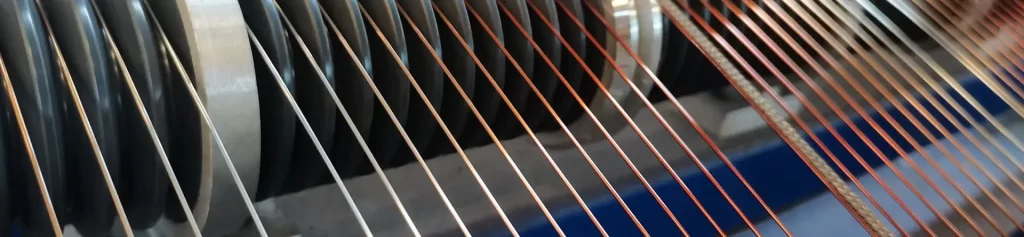
In the selection of transformer and motor winding conductors, Paper Covered Wire and Polyurethane Enameled Wire (UEW) are two commonly used but fundamentally different types of insulated conductors. They differ significantly in insulation system, applicable voltage levels, process characteristics, and application scenarios.
Many procurement decision-makers and engineering technicians often face the question of “should I choose paper covered wire or polyurethane wire” when working on specific projects. This article provides a systematic and objective comparative analysis of these two conductors from five dimensions: insulation principles, performance parameters, application scenarios, process characteristics, and cost structure, to help readers make correct selection decisions.
I. Basic Concepts of the Two Conductors
1.1 Paper Covered Wire
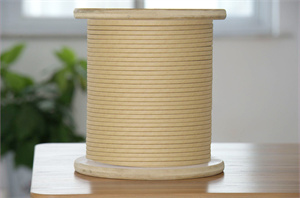
Paper covered wire is an insulated conductor made by spirally wrapping insulating paper tapes around a conductor (copper or aluminum). The insulating paper is typically manufactured from sulfate wood pulp (Kraft Paper), with thickness ranging from 0.04-0.20mm, and the number of wrapping layers varies from 2 to 8 depending on the voltage level.
The core characteristic of paper covered wire is: the insulation layer is relatively thick, suitable for medium and high voltage windings, and must be used in combination with transformer oil to achieve optimal insulation performance. After oil impregnation, the paper-oil composite insulation system’s breakdown voltage and partial discharge performance improve significantly, making it the mainstream choice for oil-immersed power transformer windings.
1.2 Polyurethane Enameled Wire (UEW)
Polyurethane enameled wire is an insulated conductor made by coating a conductor surface with polyurethane resin enamel film, which is then cured through high-temperature baking. The polyurethane enamel film thickness is typically 0.02-0.06mm, much thinner than the insulation layer of paper covered wire.
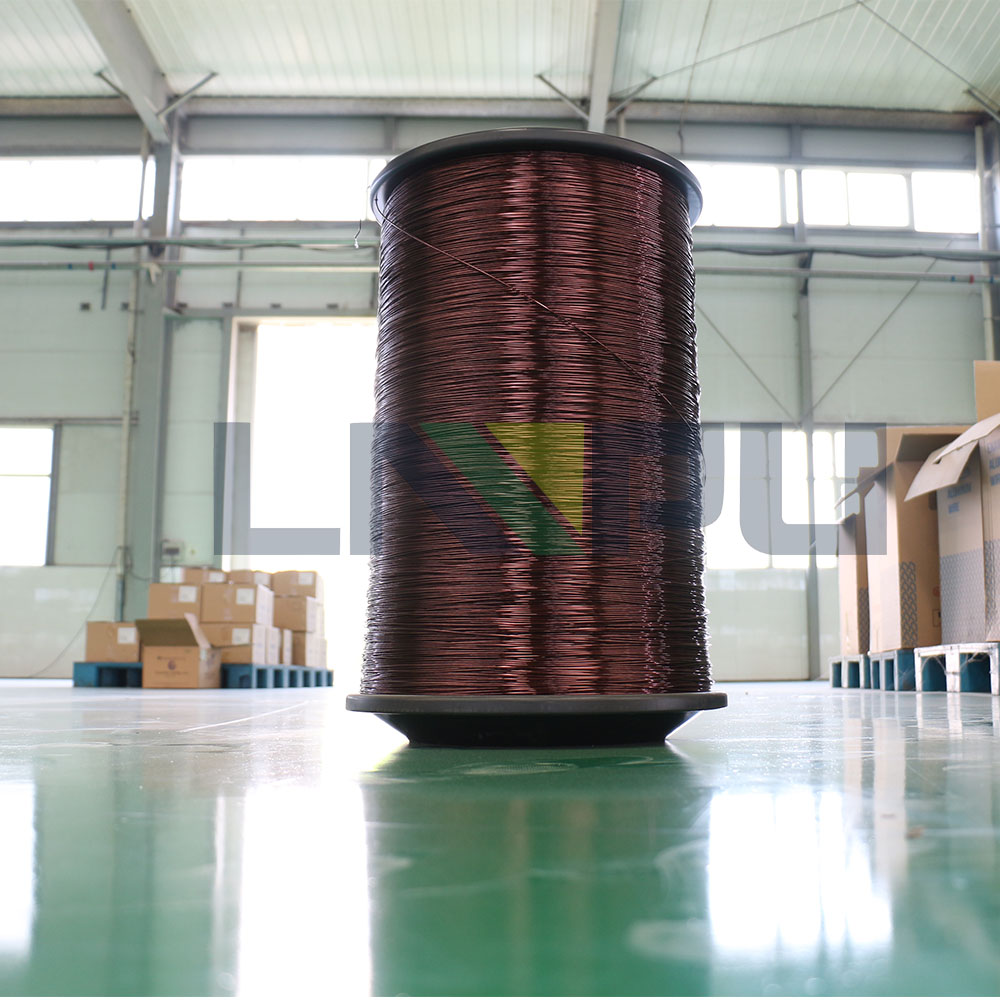
The most prominent characteristic of polyurethane enameled wire is its solderability — it can be directly soldered without removing the enamel film. This feature gives it significant advantages in the automated production of electronic transformers, small relays, and precision instruments. Its thermal class is Class B (130°C), suitable for low and medium voltage windings.
II. Core Performance Parameter Comparison
2.1 Insulation Performance
| Comparison Dimension | Paper Covered Wire | Polyurethane Enameled Wire (UEW) |
|---|---|---|
| Breakdown Voltage | ≥40kV/2mm (after oil impregnation) | ≥800V (dry state) |
| Partial Discharge | ≤10-50pC (after oil impregnation) | ≤200pC |
| Volume Resistivity | ≥10¹²Ω·cm (after oil impregnation) | ≥10¹³Ω·cm |
| Dielectric Loss Factor | 0.005-0.01 (after oil impregnation) | 0.03 |
The advantage of paper covered wire in insulation performance lies in its high breakdown voltage and low partial discharge, especially the significant improvement after oil impregnation. This is the fundamental reason why paper covered wire can be used in 110-500kV high voltage transformers.
The breakdown voltage and partial discharge performance of polyurethane enameled wire are relatively lower, making it suitable for medium and low voltage scenarios below 10kV. However, within its applicable range, the insulation performance of polyurethane enamel film is fully adequate.
2.2 Thermal Performance
| Comparison Dimension | Paper Covered Wire | Polyurethane Enameled Wire (UEW) |
|---|---|---|
| Thermal Class | Class A (105°C) | Class B (130°C) |
| Long-term Operating Temperature | ≤105°C | ≤130°C |
| Thermal Life | 20,000+ hours | 20,000 hours |
In terms of thermal class, polyurethane enameled wire has better thermal performance than paper covered wire. However, it should be noted that the thermal performance of paper covered wire improves after oil impregnation, and the cooling conditions of oil-immersed transformers are better than dry-type transformers. Therefore, in practical applications, the thermal performance of paper covered wire in oil-immersed environments is not poor.
2.3 Mechanical Performance
| Comparison Dimension | Paper Covered Wire | Polyurethane Enameled Wire (UEW) |
|---|---|---|
| Film/Paper Layer Thickness | 0.075-0.8mm (multiple layers) | 0.02-0.06mm |
| Abrasion Resistance | Excellent | Moderate |
| Flexibility | Good | Superior |
| Scratch Resistance | Excellent | Good |
The thicker insulation layer of paper covered wire provides better mechanical protection, making it suitable for high voltage, high current industrial environments. The thinner enamel film of polyurethane enameled wire offers better flexibility, suitable for precision winding and miniaturized applications.
III. Application Scenario Comparison
3.1 Typical Applications of Paper Covered Wire
The core applications of paper covered wire are concentrated in the medium and high voltage power equipment sector:
Oil-Immersed Power Transformers: Power transformer windings at 10-500kV voltage levels represent the largest application market for paper covered wire. From 10kV distribution transformers to 500kV ultra-high voltage transformers, paper covered wire is the preferred winding insulation solution.
Reactor Windings: In high-voltage shunt reactors and series reactors, paper covered wire is the mainstream choice, with voltage levels up to 220-750kV.
Instrument Transformer Windings: The high-voltage windings of current transformers and voltage transformers widely use paper covered wire. After oil impregnation, the excellent partial discharge performance meets high-precision measurement requirements.
Special Transformers: In rectifier transformers, electric furnace transformers, traction transformers, and other special transformers, paper covered wire is widely adopted due to its strong overload capacity and high mechanical strength.
3.2 Typical Applications of Polyurethane Enameled Wire
The core applications of polyurethane enameled wire are concentrated in the low voltage electronics and precision equipment sector:
Electronic Transformers: High-frequency transformers, pulse transformers, and other switching power supply transformers benefit significantly from the solderability of polyurethane enameled wire, greatly improving production efficiency.
Small Relays: Relay coils require fine winding, and the thin enamel film and superior flexibility of polyurethane enameled wire are ideally suited for this scenario.
Precision Instruments: Windings in measuring instruments, sensors, and other precision equipment have extremely high requirements for conductor dimensional accuracy and welding processes, making polyurethane enameled wire the ideal choice.
Micro Motors: The windings of stepper motors, servo motors, and other micro motors typically use polyurethane enameled wire to meet miniaturization requirements.
3.3 Application Scenario Summary Comparison
| Application Field | Recommended Choice | Reason |
|---|---|---|
| 500kV Ultra-High Voltage Transformers | Paper Covered Wire | Breakdown voltage and partial discharge requirements |
| 220kV Power Transformers | Paper Covered Wire | Mature oil-immersed insulation system |
| 10-35kV Distribution Transformers | Paper Covered Wire | Balance of cost and insulation performance |
| Switching Power Supply Transformers | Polyurethane Enameled Wire | Solderability, miniaturization |
| Relay Coils | Polyurethane Enameled Wire | Fine winding, direct soldering |
| Micro Motors | Polyurethane Enameled Wire | Thin film, high space utilization |
| Instrument Transformers | Paper Covered Wire | Low partial discharge requirements |
IV. Process Characteristic Comparison
4.1 Winding Process
The winding process of paper covered wire is relatively simple, mainly using spiral wrapping. The overlap rate of paper tape is controlled at 30-50% to ensure no weak points in the insulation layer. The tension control requirements for paper covered wire are moderate, typically within 15-25% of the conductor’s breaking strength.
The winding process of polyurethane enameled wire has higher requirements. Due to the thinner enamel film, excessive winding tension can cause film damage, while insufficient tension can result in loose windings. It is recommended to control winding tension within 10-20% of the conductor’s breaking strength. Polyurethane enameled wire has excellent high-speed winding performance, suitable for automated production lines.
4.2 Welding Process
This is the process step with the greatest difference between the two conductors.
For paper covered wire welding, the insulation paper layer must first be removed, typically using mechanical stripping or chemical dissolution methods, before the conductor can be welded. This process adds production steps and labor costs.
The greatest advantage of polyurethane enameled wire is its solderability. During welding, the soldering iron temperature (approximately 350-400°C) can directly decompose the polyurethane enamel film, allowing welding without pre-stripping. This feature significantly improves production efficiency, with particular advantages in the mass production of electronic transformers and relays.
4.3 Impregnation Treatment
Paper covered wire is typically used after oil impregnation, and the paper layer has excellent compatibility with transformer oil. After oil impregnation, the paper layer fiber pores are filled with transformer oil, forming a paper-oil composite insulation system with significantly improved insulation performance.
Polyurethane enameled wire generally does not undergo oil impregnation treatment, but in some applications, varnish impregnation treatment is performed to further improve insulation performance and mechanical strength. Polyurethane enamel film is compatible with most impregnating resins.
V. Cost Structure Comparison
5.1 Raw Material Costs
The insulation material (insulating paper) cost of paper covered wire is relatively low, but the production efficiency of paper covered wire is relatively lower, with higher labor costs. The choice of conductor material (copper or aluminum) for paper covered wire has a significant impact on total cost.
The enamel film material cost of polyurethane enameled wire is slightly higher than insulating paper, but the production efficiency of polyurethane enameled wire is much higher than paper covered wire, especially on automated production lines, where the manufacturing cost per unit length is actually lower.
5.2 Full Life-Cycle Cost
From a full life-cycle cost perspective, paper covered wire in oil-immersed transformers can achieve a service life of 30-40 years, with low maintenance costs and excellent long-term economics. Polyurethane enameled wire in electronic equipment typically has a service life of 15-20 years, but in its applicable scenarios, due to high production efficiency and simplified welding processes, the comprehensive cost remains competitive.
VI. Selection Decision Recommendations
6.1 Scenarios for Choosing Paper Covered Wire
If your project involves the following situations, paper covered wire is the more appropriate choice:
- Voltage levels at 10kV and above
- Oil-immersed power transformers
- Strict partial discharge requirements (≤50pC)
- Service life requirements of 30+ years
- High short-circuit current impact environments
6.2 Scenarios for Choosing Polyurethane Enameled Wire
If your project involves the following situations, polyurethane enameled wire is the more appropriate choice:
- Voltage levels below 10kV
- Electronic transformers and switching power supplies
- Need for direct soldering processes to improve production efficiency
- Miniaturization and precision requirements
- Micro motor and relay windings
6.3 Pragmatic Selection Strategy
Many projects are not an either-or choice. In large power equipment, high-voltage windings use paper covered wire, while low-voltage control windings and auxiliary windings may use polyurethane enameled wire. According to the different parts and functional requirements of the windings, flexibly combining the use of both conductors can meet technical requirements while optimizing overall cost.
Conclusion
Paper covered wire and polyurethane enameled wire are not in a competitive relationship, but rather a complementary one. Paper covered wire occupies an irreplaceable position in medium and high voltage, long service life, and oil-immersed insulation scenarios, while polyurethane enameled wire plays a unique role in low voltage, precision, and automated production scenarios.
The correct selection strategy is to conduct a comprehensive evaluation based on voltage levels, insulation requirements, process conditions, service life, and cost budget, and choose the conductor type most suitable for the specific application scenario.