

Wind power generation, as one of the core drivers of global renewable energy development, has achieved explosive growth over the past two decades. From onshore wind to offshore wind, from distributed wind farms to large-scale wind power bases, the continuous increase in installed wind capacity has placed higher demands on supporting power equipment.
In wind power electrical equipment, wind power transformers (including collector transformers, pad-mounted transformers, and step-up transformers) serve as the critical hub connecting wind turbine generators to the power grid. Aluminum foil, as an important conductor material for the low-voltage windings of wind power transformers, is playing an increasingly important role in this field due to its unique physical characteristics and process advantages.
This article provides a complete technical reference guide for engineers and procurement decision-makers on aluminum foil windings from multiple dimensions: material characteristics, wind transformer operating condition requirements, technical advantages of aluminum foil windings, manufacturing process key points, and selection specifications.
I. Basic Concepts and Technical Principles of Aluminum Foil Windings
1.1 What is Aluminum Foil Winding
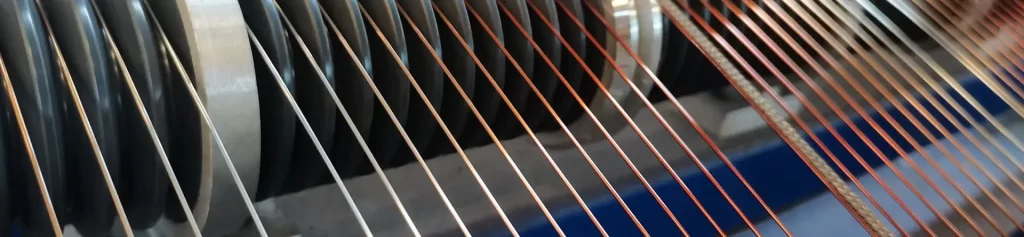
Aluminum foil winding is a type of transformer winding. Unlike traditional round wire or flat wire windings, aluminum foil winding uses thin aluminum strips with thickness typically between 0.2-2.0mm as conductors, wound layer by layer along the axial direction of the winding. Each layer of aluminum foil constitutes one turn layer, and adjacent layers are insulated from each other by insulating materials such as insulating paper, Nomex paper, or epoxy resin.
The most significant feature of this winding type is that each layer has only one turn, making the interlayer voltage equal to the turn-to-turn voltage. This results in extremely uniform interlayer voltage distribution, fundamentally eliminating the risk of turn-to-turn short circuits.
1.2 Aluminum Foil Material Characteristics
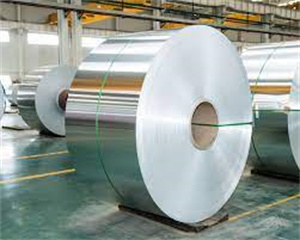
Aluminum foil used for transformer windings is typically manufactured from high-purity electrolytic aluminum (purity ≥ 99.5%) through rolling processes. Its core material characteristics include:
Conductivity: High-purity aluminum can achieve a conductivity of 61% IACS. Although lower than copper (100% IACS) at the same cross-sectional area, equivalent conductivity can be fully achieved by increasing the cross-sectional area.
Lightweight: The density of aluminum is 2.70 g/cm³, which is only about 30% of the density of copper (8.96 g/cm³). For transformers installed in turbine towers or nacelles, lightweight is a critical consideration.
Thermal Conductivity: The thermal conductivity of aluminum is 237 W/(m·K), which performs well in winding heat dissipation. Particularly in dry-type transformers, good thermal conductivity helps reduce winding hotspot temperature and extends transformer service life.
Workability: Aluminum foil has good ductility and plasticity, and can achieve precise control of thickness and width through precision rolling processes to meet the needs of various winding specifications.
1.3 Structural Characteristics of Aluminum Foil Windings
Compared with traditional round wire windings, aluminum foil windings have the following structural characteristics:
Uniform Interlayer Voltage Distribution: Since each layer has only one turn, the interlayer voltage equals the turn-to-turn voltage, and the voltage gradient distribution is uniform, avoiding interlayer insulation weak points in round wire windings caused by winding process.
High Radial Fill Factor: Aluminum foil layers are tightly packed with a radial fill factor of over 95%, effectively utilizing winding space.
Good Axial Heat Dissipation Channels: Aluminum foil windings form a continuous heat dissipation surface along the axial direction, with better heat dissipation than round wire windings.
Strong Short-Circuit Resistance: When subjected to short-circuit current impact, the electromagnetic force distribution in aluminum foil windings is more uniform, with lower risk of winding deformation.
II. Operating Condition Requirements for Wind Power Transformers
2.1 Types of Wind Power Transformers
In wind power generation systems, transformers are mainly classified into the following types:
Collector Transformers (Nacelle Transformers/Tower-Bottom Transformers): Installed at the bottom of the turbine tower or in the nacelle, these step up the low-voltage output from the generator (typically 690V or 1140V) to collector line voltage (typically 35kV). This is the most widespread application scenario for aluminum foil windings.
Pad-Mounted Transformers: Installed within the wind farm, these further step up the collector line voltage from multiple turbines to transmission line voltage.
Step-Up Transformers (Main Transformers): Located in the wind farm substation, these step up the entire wind farm’s electrical energy to transmission line voltage levels (typically 110kV or 220kV).
2.2 Special Operating Conditions of Wind Power Transformers
Compared with conventional distribution transformers, wind power transformers face a more stringent operating environment:
Wide Temperature Range: Onshore wind transformer operating temperature ranges are typically -40°C to +40°C, with some high-altitude areas even lower. Offshore wind transformers also face high salt spray corrosion environments. This wide temperature range places higher demands on the thermal expansion coefficient and mechanical strength of insulating materials.
Large Load Fluctuations: The instability of wind speed causes frequent load fluctuations in wind transformers. Unlike conventional transformers with stable load patterns, wind transformers may switch from zero load to full load, or even overload operation, within a very short time. This load fluctuation is a significant test of the winding’s thermal cycling performance and mechanical strength.
High Harmonic Content: Wind turbine generators typically use frequency converters to convert the generator’s variable-frequency output to power frequency, a process that generates significant harmonics. High-order harmonics lead to increased winding additional losses and localized temperature rise, requiring windings with better heat dissipation performance and harmonic resistance.
Space Constraints: The space within turbine towers or nacelles is extremely limited, requiring transformers with higher power density and more compact designs. Aluminum foil windings, with their high radial fill factor and low insulation distance requirements, are ideally suited for such compact design needs.
Maintenance Difficulty: Particularly for offshore wind transformers, once a failure occurs, repair costs can be extremely high, reaching 3-5 times that of onshore repairs. Therefore, the reliability requirements for wind transformers are significantly higher than for conventional transformers.
2.3 Insulation Class Requirements
The insulation class of wind transformers typically requires reaching Class F (155°C) or Class H (180°C) to ensure sufficient insulation margin under harsh operating conditions. Aluminum foil windings have a natural advantage in achieving insulation class due to their interlayer insulation structure — the selection of interlayer insulation materials is more flexible, and corresponding insulation systems can be chosen for different insulation classes.
III. Core Advantages of Aluminum Foil Windings in Wind Power Transformers
3.1 Short-Circuit Resistance
The low-voltage side of wind transformers is directly connected to wind turbine generators, and during short-circuit faults, the impact of short-circuit current is extremely large. Aluminum foil windings have significant advantages in this regard.
Each layer of an aluminum foil winding is a continuous conductor, with layers separated by insulating materials. Under short-circuit current impact, the electromagnetic force in aluminum foil windings is distributed more uniformly in both radial and axial directions, without localized stress concentration. In contrast, electromagnetic forces in round wire windings concentrate at conductor contact points, which can easily lead to winding deformation.
Additionally, the high radial fill factor of aluminum foil windings means almost no gaps between layers, providing better mechanical support under short-circuit impact and reducing the risk of winding deformation.
3.2 Interlayer Insulation Reliability
The reliability of interlayer insulation directly determines the transformer’s service life. Aluminum foil windings, with only one turn per layer, have uniform interlayer voltage distribution without the interlayer insulation weak points that can occur in round wire windings due to winding process.
In wind transformer applications, due to frequent load fluctuations, winding temperature cycling is intense, and insulation materials undergo repeated thermal expansion and contraction. The interlayer insulation structure of aluminum foil windings performs better under such temperature cycling than round wire windings, as the interlayer insulation material deformation is smaller and less prone to micro-cracking.
3.3 Heat Dissipation Performance
Heat dissipation performance is a key factor determining transformer capacity and life. Aluminum foil windings have better heat dissipation than round wire windings for the following reasons:
Aluminum foil windings form a continuous heat dissipation surface along the axial direction, allowing heat to be conducted rapidly along the axial path. The thermal conductivity of aluminum foil (237 W/(m·K)) is higher than that of insulating materials, resulting in more uniform temperature distribution within the winding. The uniform thickness of interlayer insulation material avoids the localized hotspots that can occur in round wire windings due to uneven winding.
In dry-type transformers, aluminum foil windings have larger surface heat dissipation area and better convective cooling effect. In oil-immersed transformers, the oil channel design of aluminum foil windings is more flexible, effectively reducing winding hotspot temperature.
3.4 Compact Design
Space constraints within turbine towers are an important factor that transformer design must consider. The high radial fill factor (over 95%) and low insulation distance requirements of aluminum foil windings allow transformers of the same capacity to be designed more compactly.
Specifically, the volume of aluminum foil winding transformers is typically 10-20% smaller than round wire winding transformers, which is an important advantage for space-constrained turbine tower installation scenarios.
3.5 Cost Advantage
Aluminum foil windings have dual cost advantages. In raw material costs, aluminum prices are approximately 1/4 to 1/5 of copper prices, and at equivalent conductivity, the material cost of aluminum foil winding conductors is significantly lower than copper wire windings.
In manufacturing processes, the winding process of aluminum foil windings can achieve a high degree of automation, with production efficiency higher than round wire windings. Particularly in large-capacity transformers, the manufacturing cost advantage of aluminum foil windings is even more pronounced.
IV. Key Manufacturing Process Points for Aluminum Foil Windings
4.1 Raw Material Selection
Aluminum foil used for wind transformer windings must meet strict material standards. The following are key material indicator requirements:
Aluminum purity should be no less than 99.5% to ensure conductivity reaches above 61% IACS. Impurity elements, particularly iron and silicon content, need to be strictly controlled, as they affect the ductility and conductivity of aluminum foil.
Aluminum foil thickness tolerance should be controlled within ±0.01mm to ensure uniformity and consistency of interlayer insulation. Width tolerance should be controlled within ±1mm to ensure winding neatness and insulation distance.
4.2 Winding Process
The winding of aluminum foil windings is a precision winding process requiring attention to the following key process points:
Tension Control: Tension control during aluminum foil winding is critical. Excessive tension can cause aluminum foil stretching deformation or even breakage; insufficient tension can result in loose layers, affecting winding mechanical strength. Tension is typically controlled within 10-15% of the aluminum foil’s tensile strength.
Insulation Material Wrapping: Interlayer insulation material wrapping must ensure no wrinkles, no bubbles, and no damage. For dry-type transformers, Nomex paper or epoxy resin is typically used as interlayer insulation; for oil-immersed transformers, cable paper or high-density insulating paper is used.
End Treatment: The ends of aluminum foil windings require dedicated welding or riveting processes to ensure reliable connection between lead wires and aluminum foil. Welding joint resistance should be as low as possible to avoid localized overheating during long-term operation.
4.3 Insulation System
The insulation system selection for wind transformer aluminum foil windings needs to comprehensively consider insulation class, environmental conditions, and economics:
Class F (155°C) Insulation System: Suitable for most onshore wind transformers, interlayer insulation typically uses Nomex paper or DMD composite insulation materials.
Class H (180°C) Insulation System: Suitable for high-temperature environments or wind transformers with higher reliability requirements, interlayer insulation uses modified Nomex paper or polyimide film.
For offshore wind transformers, the salt spray corrosion resistance of insulation materials also needs to be considered, and moisture-proof and anti-corrosion treatment layers are typically added to the insulation system.
4.4 Quality Testing
Aluminum foil windings must undergo multiple quality tests before leaving the factory:
Conductor resistivity testing ensures conductivity meets requirements. Interlayer withstand voltage testing verifies interlayer insulation reliability, with test voltage typically 2-3 times the rated voltage. Visual inspection ensures no damage to the aluminum foil surface and no insulation layer damage. Dimensional testing confirms winding outer diameter, height, and insulation distance meet design requirements.
V. Aluminum Foil Selection Guide for Wind Transformers
5.1 Specification Selection
The specification selection of aluminum foil for wind transformers needs to consider the following factors:
Transformer capacity determines the conductor cross-sectional area of the winding. The larger the capacity, the greater the thickness or width of aluminum foil required. For 630-2500kVA wind collector transformers, aluminum foil with thickness 0.5-1.5mm and width 100-500mm is typically selected.
Low-voltage side voltage level affects interlayer insulation thickness. The higher the voltage level, the thicker the interlayer insulation.
Cooling conditions affect the current density selection of aluminum foil. The current density of dry-type transformers is typically lower than oil-immersed transformers, because air cooling is less effective than oil cooling.
5.2 Insulation Class Matching
The insulation class selection should match the overall design of the wind transformer. For onshore wind collector transformers, Class F insulation class is typically sufficient. For offshore wind or high-temperature environment transformers, Class H insulation class is recommended.
5.3 Environmental Adaptability
Different installation environments have different requirements for aluminum foil windings:
Onshore Wind: Focus on temperature cycling performance and vibration resistance. The interlayer insulation of aluminum foil windings needs good fatigue resistance.
Offshore Wind: Focus on salt spray corrosion resistance and moisture-proof performance. The insulation system needs higher protection levels, with moisture-proof coatings added as necessary.
High-Altitude Areas: Thin air reduces cooling capacity, requiring appropriate reduction in current density or enhanced cooling design.
Conclusion
As an important conductor material for the low-voltage windings of wind power transformers, aluminum foil is being increasingly widely applied in the wind transformer field due to its core advantages of strong short-circuit resistance, reliable interlayer insulation, excellent heat dissipation performance, compact design, and controllable cost.
Against the backdrop of continued development in the wind power industry, particularly the rapid growth of offshore wind and large-capacity units, the performance requirements for wind transformers will continue to increase. Aluminum foil winding technology, with its inherent structural advantages and continuously improving manufacturing processes, will continue to play an important role in this field.
For wind equipment manufacturers and procurement decision-makers, the rational selection of aluminum foil specifications, insulation class, and insulation system is key to ensuring the reliability and economics of wind transformers.