

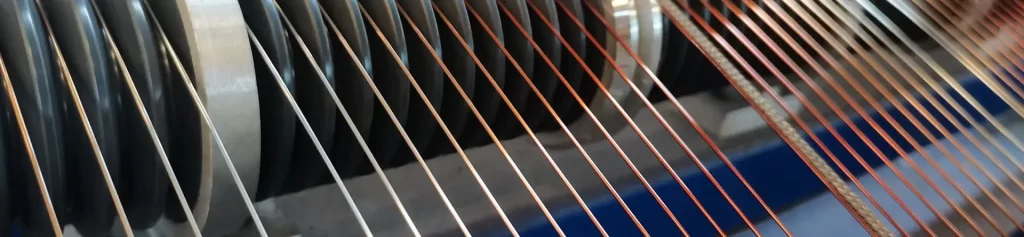
Enameled Copper Wire for Home Appliance Motors
I. Introduction
Household appliance motors are indispensable core driving components in modern family life. From air conditioner compressors and refrigerator compressors to washing machine motors and vacuum cleaner motors, the reliable operation of household appliance motors directly affects the quality of life of millions of families.
Enameled copper wire, as a core material in the manufacture of household appliance motors, directly determines the efficiency, lifespan, and reliability of the motor through its electrical, thermal, and mechanical properties. With the continuous improvement of energy efficiency standards for household appliances, the performance requirements for enameled copper wire used in motors are becoming increasingly stringent.
This article systematically elaborates on the technical advantages, key parameter requirements, selection points, and quality assurance measures of enameled copper wire in the application of household appliance motors, providing professional reference for household appliance motor manufacturers and purchasing technicians.
II. Basic Concepts and Structure of Enameled Copper Wire
2.1 Definition
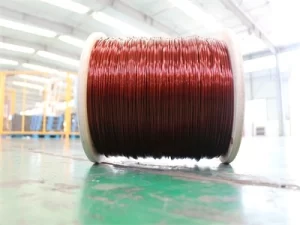
Enameled copper wire is an electrical wire material with high-purity oxygen-free copper as the conductor matrix and an insulating coating on the surface. The copper conductor typically has a conductivity of no less than 101% IACS (International Annealed Copper Standard), exhibiting excellent conductivity and machinability.
The enamel coating is formed through a multi-coating-baking process, creating a continuous, uniform, and dense insulation layer with a thickness typically ranging from 0.020 mm to 0.080 mm, meeting the insulation requirements for household appliance motors.
2.2 Basic Structure
The basic structure of enameled copper wire, from the inside out, includes:
- Conductor Layer: Made of high-purity oxygen-free copper rod through drawing and annealing, with high conductivity and smooth surface.
- Primer Layer: Coated on the conductor surface to enhance the adhesion between subsequent enamel layers and the conductor.
- Insulating Varnish Layer: Formed through multiple coating and baking processes to form a continuous insulating film, providing core insulation.
- Topcoat Layer (Optional): Provides additional surface protection and lubrication, facilitating winding operations.
2.3 Mainstream Enamel Types
| Enamel Type | Thermal Class | Code | Main Features |
|---|---|---|---|
| Polyester Enamel | Class B (130°C) | PEW / QZ | Lower cost, suitable for widely used household appliance motors |
| Polyester Imide Enamel | Class F (155°C) | PEIW / QZY | Excellent overall performance, good heat resistance |
| Modified Polyester Imide Varnish | Class F (155°C) | QZY-1 | Excellent refrigerant resistance, suitable for air conditioner compressor motors |
III. Core Technological Advantages in Home Appliance Motors
3.1 Excellent Conductivity
One of the core advantages of enameled copper wire lies in the superior conductivity of the copper conductor.
- High Conductivity: The conductivity of oxygen-free copper is not less than 101% IACS. Under the same cross-sectional area, the copper conductor has the lowest resistance and the lowest I²R loss. This means higher motor operating efficiency and lower heat generation.
- Temperature Stability: The temperature coefficient of resistance of copper is relatively stable. Within the common operating temperature range of household appliances (-30°C to +130°C), the resistance change is predictable, which is beneficial to the precise design of the motor control system.
- Oxidation Resistance: The oxide film formed on the surface of the copper conductor has a certain protective effect, maintaining stable conductivity under the intermittent operation mode of household appliances.
3.2 Superior Insulation Performance
The enameled copper wire insulation provides reliable electrical insulation for household appliance motors.
- High Dielectric Strength: The breakdown electric field strength of high-quality insulating varnish can reach 80 kV/mm – 120 kV/mm, ensuring safe operation of the motor windings under rated voltage and starting overvoltage conditions.
- Excellent Refrigerant Resistance: For air conditioner and refrigerator compressor motors, the insulation coating needs to withstand the corrosion of refrigerants (R410A, R32, R134a, etc.). Modified polyester imide varnish (QZY-1) is specially formulated to have excellent refrigerant resistance, enabling long-term stable operation in refrigerant environments.
- Low Dielectric Loss: The dielectric loss factor (tanδ) of the insulating varnish is typically below 0.02 under 90°C testing conditions, which helps reduce dielectric loss during motor operation and improve efficiency.
3.3 Reliable Mechanical Performance
The manufacturing process of household appliance motors requires enameled copper wire to have good machinability.
- Winding Adaptability: High-quality enameled copper wire is not easily damaged during high-speed automated winding processes; the insulation layer does not crack or peel off, resulting in high production efficiency.
- Insertion Adaptability: In the slot embedding process commonly used in household appliance motors, enameled copper wire can withstand the mechanical pressure of the embedding tool without damaging the insulation.
- Solderability: For motor winding ends requiring solder connections, the enameled copper wire’s coating can be removed through a burn-off process, facilitating soldering operations.
3.4 Cost Advantage
Although the unit price of copper conductor is higher than that of aluminum conductor, enameled copper wire only accounts for 5% to 15% of the total cost of household appliance motors. Its superior performance brings efficiency and reliability improvements far outweighing the material cost difference.
Furthermore, the high conductivity of copper conductor allows for the use of less copper at the same power output, offsetting the material cost difference to some extent.
IV. Key Parameter Requirements
4.1 Conductor Specifications
| Parameter | Requirements | Explanation |
|---|---|---|
| Conductor Material | Oxygen-free copper, purity ≥99.95% | Ensure high conductivity and processing performance |
| Conductivity | ≥101% IACS | Reduce copper loss and improve efficiency |
| Conductor Tolerance | ±0.005 mm (high precision) | Ensure winding size consistency |
| Surface Quality | Smooth, scratch-free, oil-free | Ensure insulation layer adhesion |
4.2 Insulation Performance Parameters
| Parameter | Requirements | Explanation |
|---|---|---|
| Dielectric Strength | ≥80 kV/mm | Ensure electrical insulation reliability |
| Dielectric Loss Factor | ≤0.02 (at 90°C) | Reduce dielectric loss |
| Insulation Resistance | ≥10¹² Ω·cm | Ensure isolation effect |
| Refrigerant Resistance | Must meet relevant standards | Dedicated for air conditioner/refrigerator compressor motors |
4.3 Thermal Class Selection
Based on the type and operating conditions of the household appliance motor, select the appropriate thermal class:
- Ordinary household appliance motors (such as fan motors, washing machine motors): Usually Class B (130°C) or Class F (155°C) is selected.
- Air conditioner compressor motors: Usually Class F (155°C) modified polyester imide varnish (refrigerant resistant type) is selected.
- Refrigerator compressor motors: Usually Class F (155°C) refrigerant resistant enameled copper wire is selected.
4.4 Specification Range
Round Wire Specifications: Conductor diameter 0.20 mm – 2.00 mm
Flat Wire Specifications (for some products): Conductor thickness 0.80 mm – 3.00 mm, width 2.00 mm – 10.00 mm
V. Key Quality Control Points
5.1 Raw Material Control
- Copper Rod Quality: High-purity oxygen-free copper rods are selected, with a conductivity of not less than 101% IACS and low impurity content.
- Insulating Varnish Quality: Well-known brand insulating varnish is selected to ensure batch stability. For air conditioner/refrigerator compressor motors, a refrigerant-resistant special paint must be selected.
5.2 Process Control
| Process | Control Points | Inspection Items |
|---|---|---|
| Wire Drawing | Die precision, lubricant cleanliness | Diameter tolerance, surface quality |
| Annealing | Annealing temperature, cooling rate | Elongation, hardness |
| Coating | Paint viscosity, coating speed, baking temperature | Enamel coating thickness, curing degree |
| Winding | Tension control, winding neatness | Appearance quality, jumper inspection |
5.3 Finished Product Inspection
Enameled copper wire for household appliance motors must pass the following key tests:
- Electrical Strength Test: Verifies the insulation layer’s ability to withstand rated voltage.
- Dielectric Loss Test: Assess the dielectric loss level of the insulation system.
- Flexibility Test: Verifies the adaptability of the winding process.
- Refrigerant Resistance Test (Applicable Products): Verifies insulation stability in a refrigerant environment.
- Thermal Aging Test: Verifies heat resistance life.
VI. Selection Guide
6.1 Selection Based on Motor Type
| Motor Type | Recommended Enamel Type | Thermal Class | Notes |
|---|---|---|---|
| Air Conditioner Compressor Motor | Modified Polyester Imide Enamel | Class F (155°C) | Refrigerant resistant (R410A/R32) |
| Refrigerator Compressor Motor | Modified Polyester Imide Enamel | Class F (155°C) | Refrigerant resistant (R134a/R600a) |
| Washing Machine Motor | Polyester Imide Enamel | Class F (155°C) | Excellent overall performance |
| Fan/Ventilation Motor | Polyester Enamel | Class B (130°C) | Cost-effective |
| Vacuum Cleaner Motor | Polyester Imide Enamel | Class F (155°C) | High-speed operation |
6.2 Selection Based on Voltage Level
| Voltage Level | Insulation Thickness Range | Explanation |
|---|---|---|
| Low Voltage (≤220V) | 0.020 mm – 0.040 mm | Household appliance standard |
| Low Voltage (220V – 380V) | 0.040 mm – 0.060 mm | Some three-phase household appliance motors |
6.3 Selection Based on Working Environment
- Refrigerant-Containing Environments (Air Conditioner/Refrigerator Compressors): Refrigerant-resistant enameled copper wire must be selected.
- High-Temperature Environments (e.g., kitchen appliances): Select Class F or higher thermal class.
- Humid Environments (e.g., washing machines): Select enamel with excellent moisture-proof properties.
VII. Conclusion
Enameled copper wire, as a core material in the manufacture of household appliance motors, plays a crucial role in improving the energy efficiency, reliability, and service life of household appliances.
High-quality enameled copper wire possesses excellent electrical conductivity, superior insulation performance, and reliable machinability, meeting the performance requirements of various household appliance motors. Especially for air conditioner and refrigerator compressor motors, refrigerant-resistant enameled copper wire is a key material ensuring the long-term stable operation of the motor in refrigerant environments.
When selecting enameled copper wire for household appliance motors, the type of enamel and specifications should be rationally chosen based on the motor type, operating voltage, refrigerant type, and environmental conditions. Strict control over incoming material quality is essential to ensure the performance and reliability requirements of household appliances.
With the continuous improvement of energy efficiency standards for household appliances and the increasing demands of consumers for product quality, the market demand for high-quality enameled copper wire will continue to grow. Upstream enameled copper wire suppliers should continuously improve product performance and quality stability, working hand in hand with household appliance motor manufacturers to provide consumers with more energy-efficient and reliable products.
Zhengzhou LP Industry Co., Ltd. is a professional manufacturer specializing in the R&D, production, and sales of magnetic wire for over 30 years. Our enameled copper wire products cover multiple series, including polyester enameled wire, polyester imide enameled wire, and refrigerant-resistant enameled wire, with complete specifications. They are widely used in air conditioner compressor motors, refrigerator compressor motors, washing machine motors, fan motors, and other fields.
The factory is ISO9001/ISO14001/ISO45001 triple certified, and our products comply with IEC/GB/JIS/NEMA international standards. Our products have been exported to over 50 countries and regions worldwide.
Contact us for a professional quote:
Email: office@cnlpzz.com | WhatsApp: 0086-19337889070