


What is Insulation Coating on Wire
I. Introduction
Wire insulation coating is one of the most fundamental and crucial material technologies in the field of wire and cable manufacturing. Although many people are familiar with the “outer sheath” of wires, the insulation coating on the surface of the wire and the outer plastic sheath are two completely different material systems.
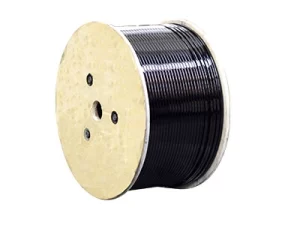
The wire insulation coating is directly applied to the surface of the metal conductor, forming a continuous electrical isolation barrier between the conductor and the external environment. This coating must not only withstand the voltage stress, thermal load, and mechanical action of the conductor under operating conditions, but also maintain long-term stable insulation performance.
This article systematically elaborates on the basic concepts, functional characteristics, main types, coating processes, and selection points of wire insulation coatings, providing professional reference for electrical engineers and related industry practitioners.
II. Basic Concepts of Wire Insulation Coatings
2.1 Definition
Wire insulation coating refers to a functional organic or inorganic material layer coated on the surface of a metal conductor, whose main function is to provide reliable electrical insulation between the conductor and the external environment.
The thickness of the insulation coating is much thinner than the outer sheath of conventional wires and cables. The insulation coating of enameled wire is typically only 0.015 mm to 0.100 mm thick, yet it needs to withstand operating voltages ranging from hundreds to tens of thousands of volts.
2.2 Differences from the Outer Sheath
It is particularly important to clarify that the conductor insulation coating and the wire’s outer sheath (Sheath/Jacket) are two different materials:
| Comparison Items | Insulation Coating | Outer Sheath |
|---|---|---|
| Location | Directly coated on the conductor surface | Covering the outside of the insulation layer |
| Thickness | Extremely thin (0.015 mm – 0.100 mm) | Relatively thick (0.5 mm – several mm) |
| Main Functions | Electrical insulation | Mechanical protection, moisture protection, corrosion protection |
| Material Type | Organic insulating varnish, inorganic coating | PVC, PE, rubber, etc. |
| Manufacturing Process | Coating + baking curing | Extrusion molding |
2.3 Basic Requirements for Insulation Coatings
As the core material for conductor electrical insulation, the insulation coating must meet the following basic requirements:
- Electrical Performance: High dielectric strength, low dielectric loss, stable insulation resistance.
- Thermal Performance: Matching the conductor’s thermal class, good long-term thermal stability.
- Mechanical Properties: Excellent flexibility, strong adhesion, and good abrasion resistance.
- Chemical Properties: Oil-resistant, solvent-resistant, and resistant to acid and alkali corrosion.
- Processing Properties: Uniform coating, complete curing, and no pinholes or bubbles.
III. Core Functions of Conductor Insulation Coatings
3.1 Electrical Insulation Function
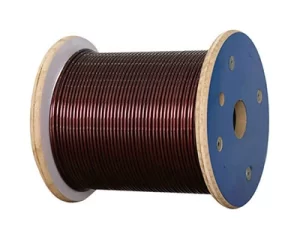
The primary function of an insulation coating is to provide reliable electrical insulation. After applying an insulation coating to the conductor surface, effective electrical isolation is formed between conductors, between conductors and ground, and between conductors and the environment.
The dielectric strength (breakdown electric field strength) of the insulation coating is the core indicator for measuring its insulation performance. A high-quality insulation coating can achieve a breakdown electric field strength of over 100 kV/mm, meaning that a coating thickness of only 0.1 mm can withstand voltages above 10 kV.
3.2 Thermal Protection Function
The insulation coating must be able to withstand the heat generated by the conductor during operation and effectively transfer the heat to the external environment. The thermal conductivity, heat capacity, and thermal coupling degree of the coating directly affect the conductor’s operating temperature and load capacity.
Simultaneously, the thermal aging characteristics of the insulation coating determine the service life of the conductor. A high quality insulation coating should maintain stable performance for over 20 years at rated operating temperature.
3.3 Mechanical Protection Function
The insulation coating provides a certain degree of mechanical protection to the conductor, including:
- Abrasion Resistance: Prevents surface damage to the conductor during winding and embedding.
- Scratch Resistance: Prevents accidental scratches to the conductor during assembly and use.
- Flexibility: Allows the conductor to bend within a certain range without damaging the insulation layer.
3.4 Environmental Isolation Function
The insulation coating isolates the conductor from moisture, oxygen, dust, and various chemicals in the air, preventing oxidation corrosion and chemical erosion. This function is crucial for ensuring the long-term reliable operation of the conductor in harsh environments.
IV. Main Types of Conductor Insulation Coatings
4.1 Classification by Material Chemical System
Polyester Insulation Coatings:
- Polyester Paint (PE): Thermal Class B (130°C), lower cost, suitable for general industrial applications.
- Polyester Imide Paint (PEI): Thermal Class F (155°C), excellent comprehensive performance, widely used.
- Modified Polyester Imide Paint: Modified based on PEI to improve heat resistance or mechanical properties.
Polyimide Insulation Coatings:
- Polyimide Paint (PI): Thermal Class H (180°C) and above, up to 240°C.
- Polyamide-Imide Paint (PAI): Thermal Class H to C, excellent comprehensive performance.
- Polyimide-Polyamide-Imide Composite Paint (PI/PAI): Combines the advantages of both.
Other Types:
- Polyurethane (PU) varnish: Excellent flexibility, commonly used for direct welding of enameled wires.
- Epoxy varnish: High bonding strength, good chemical corrosion resistance.
- Paper/Fiber insulation: Paper-wrapped wire, fiberglass wire, etc., belonging to the wrapped insulation type.
4.2 Classification by Thermal Class
According to international standards such as IEC 60317 and NEMA MW 1000, insulation coatings are classified by thermal class as follows:
| Thermal Class | Maximum Operating Temperature | Typical Material |
|---|---|---|
| Class Y | 90°C | Paper insulation, etc. |
| Class A | 105°C | Oil-based varnish, cotton yarn, etc. |
| Class E | 120°C | Some polyester varnishes |
| Class B | 130°C | Polyester varnish |
| Class F | 155°C | Polyester imide varnish |
| Class H | 180°C | Polyimide varnish |
| Class C | 200°C – 240°C | Polyimide composite varnish, Teflon, etc. |
4.3 Classification by Coating Process
Enamelled Insulation Coating: Formed through multiple coating-baking processes to form a continuous enamel coating, such as enameled wire.
Wrapped Insulation Layer: Formed by wrapping fiber materials to form insulation layer, such as paper-insulated wire, glass fiber wire.
Extruded Insulation Layer: Coated by extrusion molding to cover the conductor, such as plastic insulated wire.
Impregnated Insulation Layer: Filled with porous insulating materials through impregnation treatment, such as certain special insulation treatments.
V. Core Technical Parameters of Insulation Coatings
5.1 Electrical Performance Parameters
| Parameter | Definition | Typical Indicators |
|---|---|---|
| Dielectric Strength | Maximum electric field strength withstood by the coating | ≥100 kV/mm |
| Dielectric Loss Factor (tanδ) | Energy loss in AC electric field | ≤0.01 (at 90°C) |
| Insulation Resistance | Ability of coating to isolate current | ≥10¹² Ω·cm |
| Partial Discharge Initiation Voltage | Critical voltage for partial discharge | According to product standard |
5.2 Thermal Performance Parameters
| Parameter | Definition | Typical Indicators |
|---|---|---|
| Thermal Conductivity | Ability of coating to transfer heat | 0.1 – 0.3 W/(m·K) |
| Coefficient of Thermal Expansion | Rate of dimensional change with temperature | Matching to conductor |
| Thermal Decomposition Temperature | Critical temperature for thermal decomposition | Above thermal class temperature |
5.3 Mechanical Performance Parameters
| Parameter | Definition | Typical Indicators |
|---|---|---|
| Coating Thickness | Total thickness of insulation layer | Determined by voltage level |
| Flexibility | Ability of coating not to crack after bending | According to standard testing |
| Adhesion | Bond strength between coating and conductor | Coating non-peeling |
| Scratch Resistance | Resistance to mechanical scratching | According to standard testing |
VI. Manufacturing Process of Insulation Coatings
6.1 Enamelling Process
Enamelling is the core process for manufacturing enameled wire. Its basic process is as follows:
- Drawing and Annealing: Draw copper or aluminum rods into target specifications and perform annealing softening treatment.
- Surface Treatment: Clean the conductor surface, remove oil and oxide layers, and ensure good coating adhesion.
- Coating: Apply insulating varnish to the conductor surface through a mold, or impregnate using an immersion method.
- Baking and Curing: The coated conductor enters the baking tunnel and is baked at a temperature of 300°C – 450°C to cross-link and cure the enamel coating.
- Multiple Coatings: Repeat the coating-baking process 4 – 8 times to gradually achieve the target insulation thickness.
- Inspection and Winding: Perform electrical performance testing on the finished product, and wind and package after passing the test.
6.2 Key Quality Control Points
The following key points should be considered for quality control of insulation coatings:
- Paint Viscosity: Affects coating thickness uniformity.
- Coating Speed: Affects enamel coating thickness and surface quality.
- Baking Temperature: Affects enamel coating curing and crosslinking degree.
- Coating Thickness: Must be precisely controlled within the process range.
- Pinhole Detection: Ensures no defects affecting insulation performance.
VII. Insulation Coating Selection Guide
7.1 Selection Based on Operating Temperature
- Operating Temperature ≤ 130°C: Select Class B coating (polyester paint).
- Operating Temperature 130°C – 155°C: Select Class F coating (polyester imide paint).
- Operating Temperature 155°C – 180°C: Select Class H coating (polyimide paint).
- Operating Temperature > 180°C: Select Class C coating (high temperature resistant paint).
7.2 Selection Based on Voltage Level
- Low Voltage (≤ 690V): Insulation coating thickness 0.020 mm – 0.050 mm.
- Medium Voltage (690V – 3300V): Insulation coating thickness 0.050 mm – 0.100 mm.
- High Voltage (3300V – 10kV): Requires a special thick insulation coating or composite insulation structure.
7.3 Selection Based on Application Environment
- Humid Environment: Select a coating with excellent moisture-proof performance.
- Oil Pollution Environment: Select an oil-resistant coating (such as certain polyester imide varnishes).
- Chemical Corrosion Environment: Select a chemically resistant coating.
- Vibration Environment: Select a coating with excellent flexibility and adhesion.
VIII. Conclusion
As a core component of electrical insulation systems, conductor insulation coatings play an irreplaceable and crucial role in wires, cables, and electrical products.
The main types of insulating coatings include various chemical systems such as polyester, polyimide, and polyurethane, and can be classified by thermal class from Y (90°C) to C (240°C and above), meeting the needs of most application scenarios.
During selection and application, the electrical, thermal, mechanical properties, and environmental adaptability of the insulating coating should be emphasized to ensure that the selected product meets the performance requirements and reliability standards of the specific application.
With the rapid development of new energy vehicles, high-efficiency industrial motors, and smart grids, the performance requirements for wire insulating coatings are constantly increasing. In the future, insulating coating materials with higher thermal class, higher dielectric strength, and better environmental protection properties will become a hot research and application area.
Zhengzhou LP Industry Co., Ltd. is a professional manufacturer specializing in the R&D, production, and sales of magnetic wires for over 30 years. Our products cover a variety of insulation coating types for enameled wire, including polyester enameled wire, polyester imide enameled wire, and polyimide enameled wire, with thermal class ranging from B to C.
The factory is ISO9001/ISO14001/ISO45001 triple certified, and our products comply with IEC/GB/JIS/NEMA international standards. Our products have been exported to over 50 countries and regions worldwide.
Contact us for a professional quote:
Email: office@cnlpzz.com | WhatsApp: 0086-19337889070