

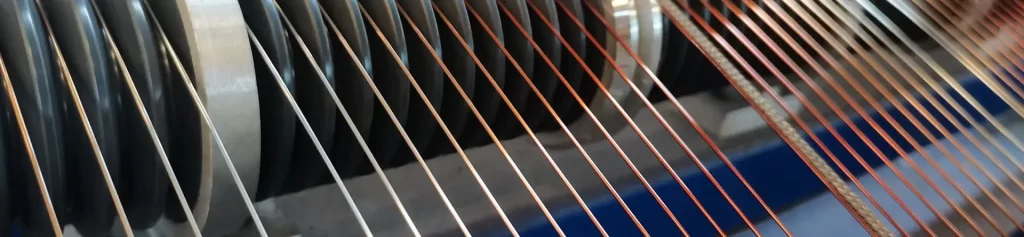
180°C-class enameled aluminum wire is a core material for mid- to high-temperature motors — from new-energy vehicle traction motors and wind turbine pitch motors to home-appliance compressors. But behind those three words “180 class” lies real substance: enamel formulation, coating process, and thermal aging testing. This article helps you identify genuine 180-class manufacturers versus “re-labeled 180 class,” and provides an operational checklist for sourcing.
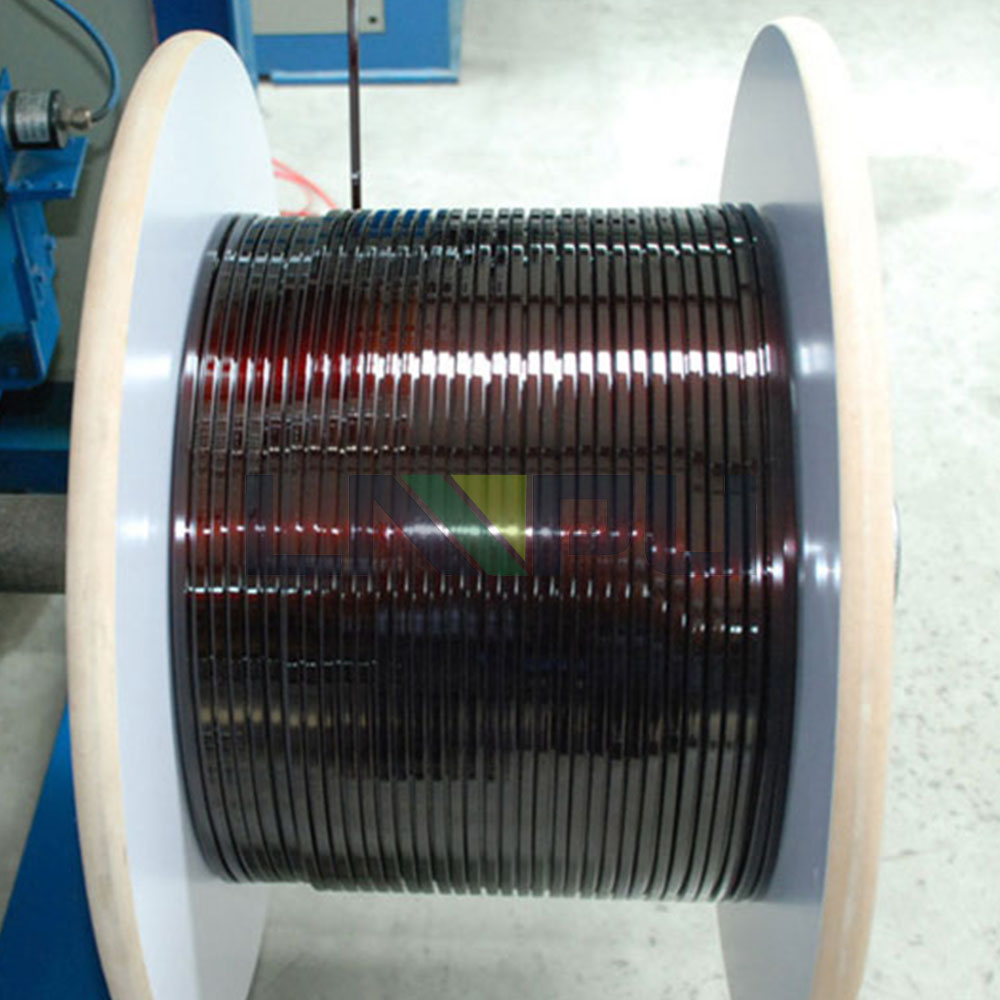
1. What Is 180°C-Class Enameled Aluminum Wire: 3 Core Points
1. Temperature Class Definition: 180°C is the highest operating temperature at which the enameled wire can maintain insulation performance over 20,000 hours (≈2.3 years). This is jointly defined by IEC 60085, NEMA MW 1000, and UL 1446.
2. Main Enamel Types: 180°C class typically uses polyester-imide (PEI) coating, corresponding to standards IEC 60317-8 and NEMA MW 30-C. A single PEI layer reaches 180°C class; a dual layer (PEI + polyamide-imide PAI) can be upgraded to 200-220°C.
3. Differences from Copper 180°C Class: The 180°C-class standard reference for enameled aluminum wire is GB/T 23312.5, IEC 60317-25, and NEMA MW 35-A. Aluminum conductor is softer than copper, so coating process requirements are higher — the drawing modulus, drawing speed, and enamel thickness all need to be re-tuned.
Practical reminder: many manufacturers equate “180°C temperature resistance” with “instantaneous 180°C resistance” — these are completely different things. Enameled wire is measured by long-term thermal aging (20,000h) capability, not short-term melting point.
180°C-class enamel must also withstand thermal shock (after thermal aging, 155°C × 30min, 180° bend without cracking), and cut-through resistance (temperature resistance to cut-through ≥ 300°C). These three indicators combined define “true 180°C class” — focusing only on a single temperature number is a costly mistake.
2. Real Profiles of the Four Supplier Types
- Specialized Enamel Manufacturer: Has proprietary enamel synthesis and coating process, with in-house control of the entire aluminum rod → wire drawing → annealing → coating chain. Pros: deep process capability, customizable enamel formulation; cons: high MOQ (usually 1 ton minimum), 20-30 day lead time.
- Integrated Motor Manufacturer: Makes its own motors, buys enameled wire for further processing. Pros: understands the process, strong enamel-application fit; cons: typically does not sell externally or only serves large accounts.
- General Enameled Wire Manufacturer Upgraded: Originally producing 130/155°C class, relying on upgraded enamel formulations to make 180°C class. Pros: 10-15% lower pricing; cons: insufficient enamel stability, prone to cracking during long-term thermal aging.
- Relabel Trader: Buys ready stock and re-labels as “180°C class”. Pros: fast delivery, low MOQ; cons: uneven quality, hard to trace problems when they occur. Last year we audited a trader who was selling 130°C class and 180°C class mixed together in the same warehouse.
3. Six Hard Indicators to Verify “True 180°C Class”
- Enamel Material Proof: Can the supplier provide the PEI enamel technical data sheet (viscosity, solids content, glass transition temperature Tg)? The key indicator for 180°C class is Tg ≥ 180°C.
- Thermal Aging Curve Report: Does the supplier provide a UL 1446 or IEC 60172 compliant 20,000h thermal aging test curve? This is the most critical item — without it, all you have is a “claimed” 180°C class.
- Breakdown Voltage: The breakdown voltage for 180°C-class enameled aluminum wire is ≥ 5.5kV (Grade 1), ≥ 9kV (Grade 2), ≥ 12kV (Grade 3), tested per GB/T 23312.
- Solderability: 180°C-class enamel is generally not solderable (unless PAI or special coatings are added). If the customer needs soldering, confirm that the enamel formulation has been modified.
- Aluminum Conductor Purity: Is the wire made from 99.7%+ electrical-grade aluminum (such as 1050A, 1060, 1350)? Insufficient purity leads to resistance exceeding standards.
- Third-Party Certifications: Are ISO 9001, UL, RoHS, and REACH in place? Can the certificate numbers be verified on the certifying body’s website?
4. Four Common Traps
- “Falsified Class” Trap: Producing 155°C-class enamel but labeling it 180°C class. Identifying point: demand the thermal aging curve report, not vague claims of “180°C temperature resistance”.
- “Enamel Thickness Substituting for Class” Trap: Using 0.10mm thick enamel to pretend it is 180°C class — but enamel thickness ≠ temperature class. Temperature class is determined by enamel chemical structure, not thickness.
- “Aluminum Substituting for Copper Performance Degradation” Trap: The thermal aging life of 180°C-class enameled aluminum wire is 5-10% shorter than 180°C-class enameled copper. Where long life is required (such as nuclear power, 25-year wind power life), additional accelerated aging testing is needed.
- “Price-Only” Trap: 180°C-class enameled aluminum wire is 25-40% more expensive than 130/155°C class. Buying cheap only is most likely getting 155°C-class fakes.
5. Procurement Decision Checklist (5 Steps)
- Define Technical Parameters: Conductor specification (diameter 0.15-4.0mm), temperature class (180°C), enamel grade (Grade 1-3), packaging (PT4-PT25 spools).
- Shortlist 3-5 Candidates: Find manufacturers with hands-on 180°C-class experience via industry shows (WireShow, CWIEME), Made-in-China, and Alibaba — don’t look at age alone.
- Request Samples + Testing: Get 1-2kg samples from each candidate and demand third-party thermal aging reports (UL 1446 or IEC 60172). Then run breakdown voltage, insulation resistance, and solvent resistance tests yourself.
- Audit + Compare Quotes: Audit the factory on-site, focusing on the coating workshop (temperature, humidity, cleanliness). If workshop temperature and humidity are out of control, enamel quality is directly affected.
- Trial Order: Place a 200-500kg trial order first, validate for 3-6 months before scaling up. Trial orders need accelerated aging testing — 220°C × 168h to verify short-term life.
Another point worth mentioning: the thicker the enamel on 180°C-class wire, the better the insulation — but flexibility declines. So Grade 1 (thin), Grade 2 (thick), and Grade 3 (extra thick) should be matched to the application scenario. Low-voltage motors choose Grade 1, high-voltage transformers choose Grade 3, and home-appliance compressors mostly choose Grade 2 — this is a pattern derived from our years of shipment records.
One last word: when selecting a 180°C-class enameled aluminum wire manufacturer, the key is enamel formulation depth and thermal aging data. These two are the hard currency of true 180°C class — without them, everything else is just lip service.
Why is 180°C class so critical? When the downstream automated line discovers that the enameled wire is not heat-resistant, the cost of reworking the entire batch of motors can be 50-100 times the raw material price. We saw a home appliance customer who bought 10 tons of “fake 180°C class” enameled wire, and 3% of the motors produced had winding short circuits during voltage-rise testing, with rework losses exceeding ¥1 million.
So, sourcing 180°C-class enameled aluminum wire is not “sourcing” but “sourcing + verification”. Before receiving the wire, ask the manufacturer for traceable enamel batch numbers plus composition tables — this habit filters out 80% of the fake 180°C-class sources on the market.
One more point: warranty period. Unreliable manufacturers only verbally promise “180°C class” and won’t even write the warranty period into the warranty document. Manufacturers that can provide more than 6 months of warranty are the ones willing to back their quality.